Why Most Futures Journals Fail
Most traders say they “journal” their crypto futures trades. In practice, what they usually mean is a few notes, maybe a screenshot, and a PnL number at the end of the day. That might be enough in spot trading. In futures and perpetuals, it’s almost always useless.
Crypto futures trading amplifies everything. Your edge, your mistakes, your emotions, and your blind spots all get multiplied by leverage. A small execution error that would be survivable in spot becomes a meaningful drawdown in futures. Journaling has to account for that reality, or it becomes a feel-good habit that doesn’t actually change results.
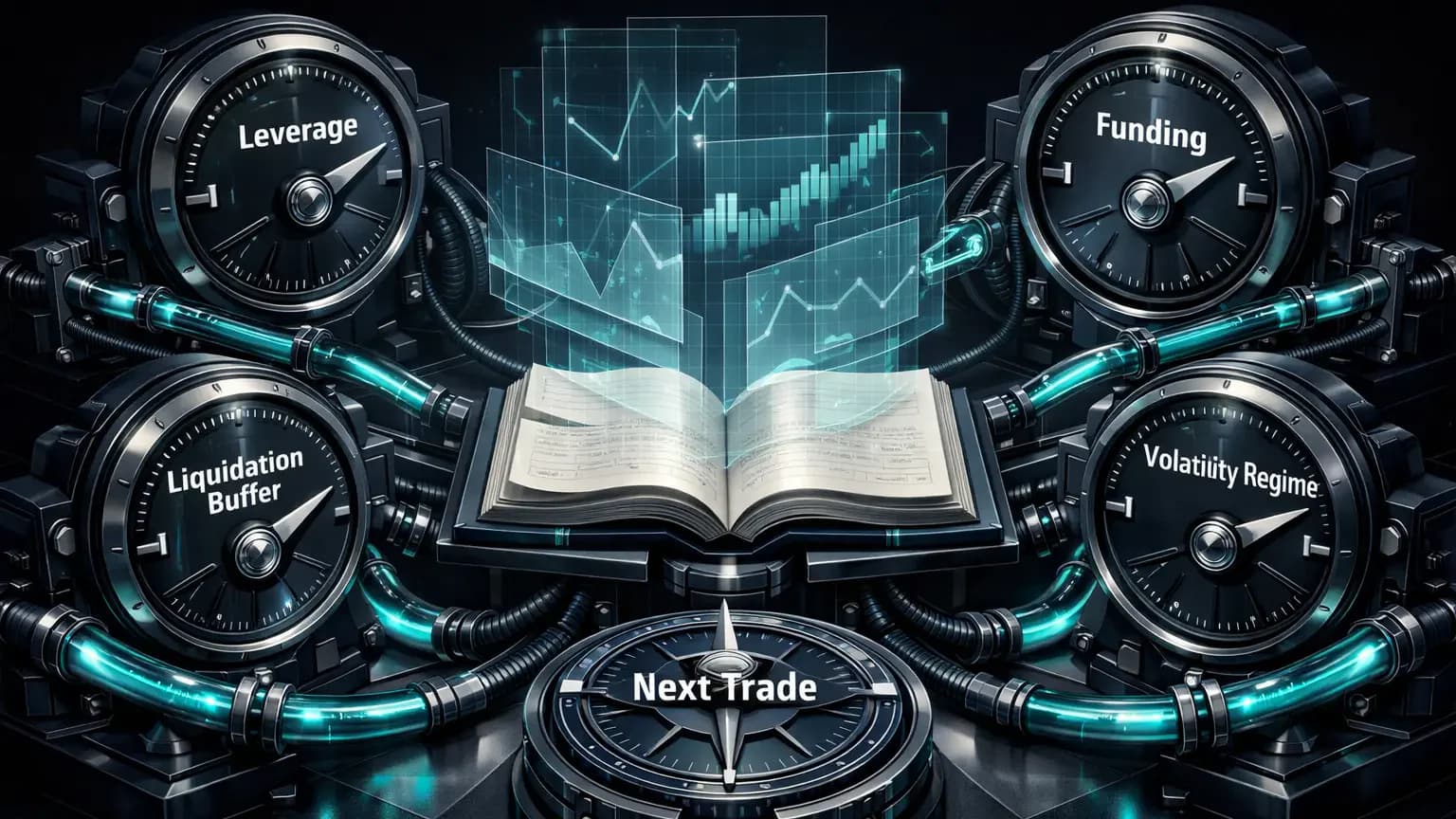
The biggest difference is that futures trades are not just directional bets. Every position carries additional variables that directly affect expectancy. Leverage level, liquidation distance, funding bias, and volatility regime all shape the outcome, often more than the entry itself. If your journal doesn’t capture those variables, you’re reviewing trades in a vacuum.
Time is the next problem. Crypto futures markets never close. There is no clean session reset like in equities. Weekend liquidity behaves differently. Asia, London, and New York overlaps matter. Many traders review trades as if each one exists in isolation, without acknowledging when and where it happened. Over time, this hides patterns that would otherwise be obvious.
Leverage creates a psychological trap unique to this style of trading. When a trader gets liquidated or stopped out quickly, the emotional response is often stronger than the analytical one. Journals turn into emotional dumps instead of diagnostic tools. “I shouldn’t have taken that trade” replaces “My liquidation buffer was too tight for this volatility regime.” One statement feels honest. The other is actually useful.

Generic trading journals are built around markets that don’t behave like crypto perpetuals. They assume limited leverage, defined trading hours, and slower feedback loops. Crypto futures violate all three. That’s why copying a stock or forex journaling approach almost always leads to frustration.
A proper crypto futures trading journal is not about documenting trades. It’s about creating a feedback system that reflects how leveraged crypto markets actually move. When you get that right, patterns start to show up quickly. When you don’t, you keep repeating the same mistakes while convincing yourself you’re “doing the work.”
This difference is the foundation for everything else in this guide.
Turn One Leak Into a Concrete Rule (A Realistic Example)
Consider a futures trader on Binance who has been actively trading BTC and ETH perpetuals for several months. On the surface, their strategy looks solid. Win rate sits around 48 percent. Average R per winner is respectable. Yet the equity curve keeps bleeding lower. The trader feels like they are always one good week away from turning the corner.
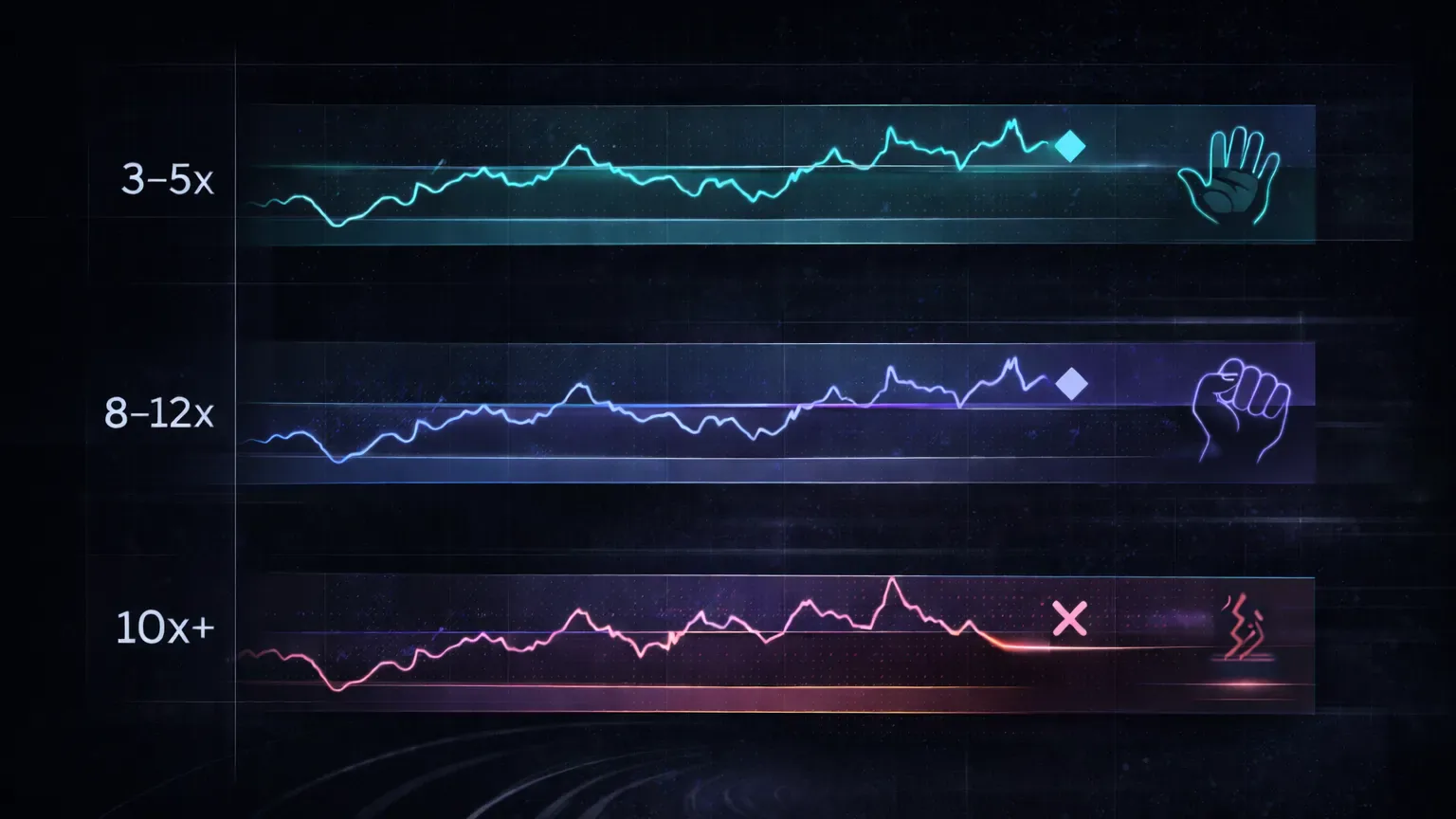
When they finally review their journal with leverage separated out, the problem becomes obvious. Trades taken at 3x to 5x leverage are close to breakeven. Some weeks are positive, some are slightly negative, but the drawdowns are manageable. Trades taken at 8x to 12x leverage tell a very different story. Losses are larger, exits are sloppier, and liquidation scares show up repeatedly in the notes.
Digging deeper, MAE reveals that many of these higher-leverage trades technically respected the stop-loss level. Price didn’t invalidate the setup. But the adverse movement was enough to trigger emotional exits or partial reductions. The trader wasn’t losing because the idea was wrong. They were losing because the position size made normal volatility feel intolerable.
Funding data adds another layer. Most of the high-leverage losses occurred during periods of elevated positive funding on long positions. The trader was paying to sit in chop, then reacting late when volatility finally expanded. At lower leverage, this same behavior was annoying but survivable. At higher leverage, it was destructive.
The adjustment was simple, but not easy. The trader capped leverage at 5x during high funding and low-volatility conditions. Higher leverage was reserved only for clean momentum moves with expanding volume. Within six weeks, average loss dropped significantly while win rate stayed roughly the same. The equity curve flattened, then slowly turned up.
What’s important here is not the specific numbers. It’s the process. This insight didn’t come from intuition or motivation. It came from seeing patterns across dozens of trades. Without a futures-specific journal that separated leverage, funding, and MAE, the trader would have kept blaming discipline instead of structure.
That’s the point of journaling. It turns vague frustration into concrete adjustments.
Track the Hidden Variables That Decide Futures Outcomes
Most losing streaks in crypto futures don’t come from bad ideas. They come from ignoring variables that quietly shape trade outcomes long before price reaches your target or stop. These variables are always present, whether you track them or not. The difference is whether your journal makes them visible.
Leverage is the most obvious one, and also the most misunderstood. Many traders think of leverage as a simple position-sizing tool. In reality, it changes how price movement feels and how errors compound. A setup that works at 3x can become untradeable at 10x, even with the same entry and stop. When traders review these trades without separating leverage levels, they end up blaming “market conditions” instead of their own risk scaling.
Liquidation distance is another variable that rarely gets reviewed properly. Most traders log their stop-loss but ignore how far their liquidation price was from entry. In fast-moving crypto markets, especially during news or high open interest conditions, price doesn’t need to hit your stop to ruin the trade. A wick close to liquidation can trigger panic exits, slippage, or forced reduction. If your journal doesn’t track liquidation buffer relative to volatility, you miss one of the most common causes of poor execution.
Funding rates introduce a structural bias that spot traders never have to think about. Paying funding while holding a long during aggressive trend continuation is very different from paying funding while chopping sideways for hours. Over dozens of trades, this adds up. Traders often assume funding is “too small to matter,” until they finally see the cumulative effect in their data. Journaling funding direction and magnitude helps reveal when holding time, not entry quality, is hurting performance.
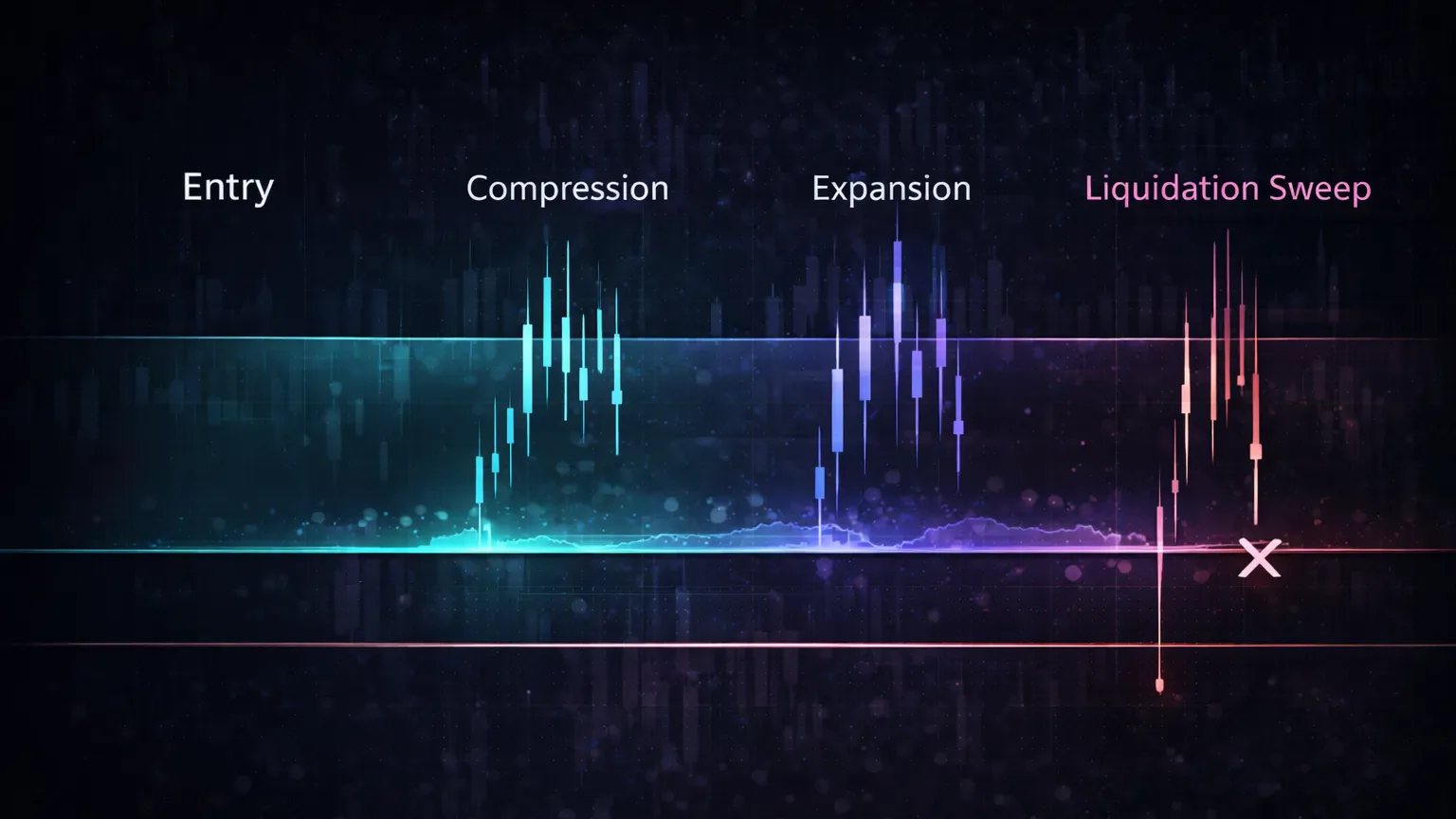
Volatility regime is another silent factor. Crypto futures behave very differently during compression, expansion, and liquidation-driven moves. Stops that work during slow conditions get shredded during high-volatility bursts. Without tagging or noting volatility context, traders mix incompatible trades together in review and draw the wrong conclusions.
Exchange-specific behavior matters as well. Binance, Bybit, OKX, and Coinbase do not move identically during stress. Order book depth, liquidation engines, and mark price behavior can vary enough to affect outcomes. A journal that treats all exchanges as interchangeable loses valuable nuance, especially for scalpers who trade thin margins.

These variables aren’t advanced concepts. They’re practical realities of trading leveraged crypto markets. The problem is that most journals don’t force you to confront them. When you start tracking them consistently, your review process shifts from emotional storytelling to pattern recognition. That’s when improvement actually starts.
Stop “Journaling” That Feels Productive but Changes Nothing
If journaling worked automatically, most active crypto futures traders would already be profitable. The reason it doesn’t is not lack of effort. It’s lack of structure.
A common pattern looks like this. A trader logs entries, exits, PnL, and maybe a short comment. After a losing streak, they read back through the notes and feel like they understand what went wrong. Then the same mistakes show up again a week later. The journal gave emotional relief, not behavioral change.
One problem is that many journals focus on intent instead of outcome. “I followed my plan” or “I broke my rules” sounds useful, but it doesn’t explain why the result happened. In futures trading, two trades can follow the same plan and produce very different outcomes because leverage, volatility, or funding shifted the risk profile. Without capturing those variables, reviews stay shallow.
Another issue is trade-by-trade thinking. Crypto futures traders often overanalyze individual losses while ignoring distribution. One liquidation feels catastrophic, even if the broader data shows the issue is over-leveraging in specific conditions. Journals that don’t aggregate data across similar trades push traders toward reactive adjustments instead of systematic ones.
There’s also a tendency to turn journals into psychology diaries. Emotions matter, but writing “felt FOMO” without context rarely changes future behavior. What actually helps is tying emotional responses to measurable conditions. For example, noticing that impatience spikes during low-volatility chop or after paying funding for several hours. Without that connection, emotional notes stay abstract.
Many traders also review too infrequently or too randomly. They journal daily but review inconsistently. Or they review only after a bad day. This skews perception. Futures trading requires regular, structured review because market conditions change quickly. Without cadence, insights arrive too late to matter.
The tooling gap is real. Generic journals are not built for crypto futures. They don’t encourage tracking liquidation buffer, funding direction, or session context. Traders end up forcing futures trades into spot-oriented templates, then blame themselves when the insights don’t translate.
The result is a frustrating loop. You feel disciplined because you journal. You feel informed because you take notes. But your execution doesn’t change. Breaking that loop requires rethinking what journaling is supposed to do in leveraged crypto markets.
Build a Journal That Captures Futures Reality
A useful crypto futures trading journal is built around decision-making, not memory. It captures the variables that influenced risk and execution so you can see which combinations work and which ones quietly destroy expectancy.
At the trade level, you still need the basics. Entry, exit, position size, and PnL matter. But in futures, those numbers are just the surface. What actually drives insight is how those outcomes relate to leverage, liquidation risk, and volatility.
Leverage should be tracked explicitly, not inferred from position size. Over time, you want to see performance broken down by leverage bands. Many traders discover that their win rate holds up at lower leverage, while average loss explodes once leverage crosses a certain threshold. Without tagging or filtering by leverage, this pattern stays hidden.
Liquidation buffer is another core metric. This is the distance between your entry and liquidation price relative to market volatility. Two trades with identical stops can carry very different risk if one has a tight liquidation buffer and the other doesn’t. Tracking this helps explain why some trades feel impossible to manage even when the setup is valid.
MAE and MFE take on extra importance in futures trading. Maximum adverse excursion shows how close price came to invalidating your idea, while maximum favorable excursion shows how much was available. When reviewed alongside leverage, MAE often reveals that stops are technically correct but practically too tight for the position size being used. MFE, on the other hand, exposes when leverage is increased unnecessarily on trades that don’t move cleanly.
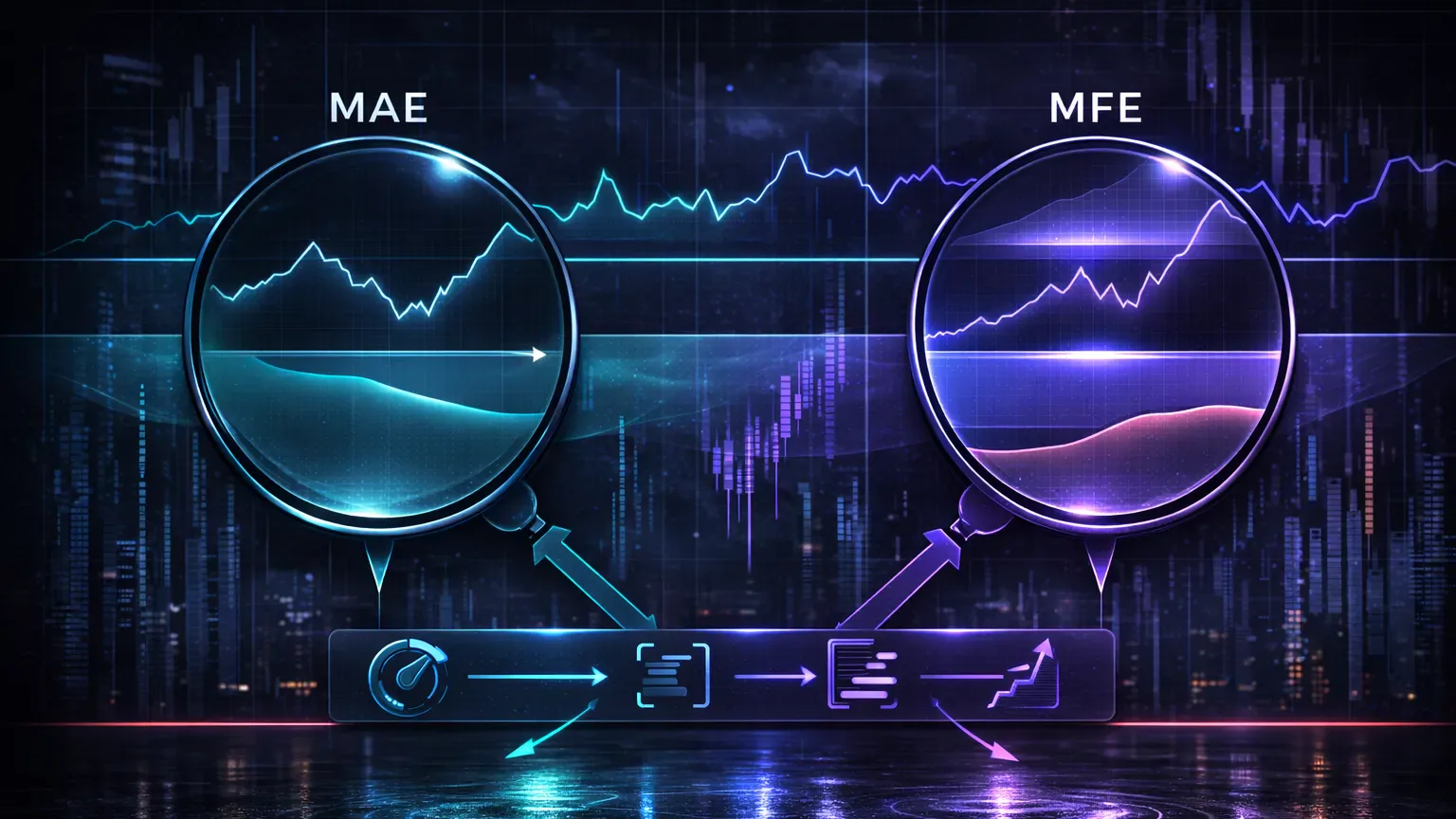
Contextual data turns raw numbers into usable insight. Session tags help separate Asia grind from New York volatility. Volatility regime tags prevent slow-market trades from polluting reviews of breakout conditions. Funding direction adds another layer, especially for trades held through multiple funding intervals.
Tags are where futures journaling really becomes powerful. Setups, mistakes, execution errors, emotional states, and even external factors like news or open interest spikes can all be tagged. The goal isn’t to tag everything. It’s to tag consistently so patterns emerge.
Notes still matter, but they should support the data, not replace it. A short note explaining why you sized down, exited early, or ignored a signal is far more valuable than a paragraph of self-criticism. Over time, these notes help explain anomalies in the data instead of muddying it.
Crypto-specific journaling tools start to matter here. Platforms like TradeChainly are designed to pull in trades automatically from exchanges and layer tagging, metrics, and review workflows on top. The value isn’t convenience alone. It’s consistency. When the data is complete, review becomes honest, and honesty is what drives improvement.
Turn Journal Data Into Decisions Before the Next Trade
Collecting data is useless if it doesn’t change how you trade. The real value of a crypto futures trading journal shows up when review insights start influencing decisions before you enter the next position.
One of the first improvements most traders see comes from leverage constraints. When you filter performance by leverage level, patterns tend to be blunt. There is usually a clear zone where expectancy holds and a zone where it collapses. Once you know that boundary, leverage stops being an emotional choice and becomes a rule. You no longer ask, “How confident do I feel?” You ask, “Does this setup qualify for higher leverage based on my data?”
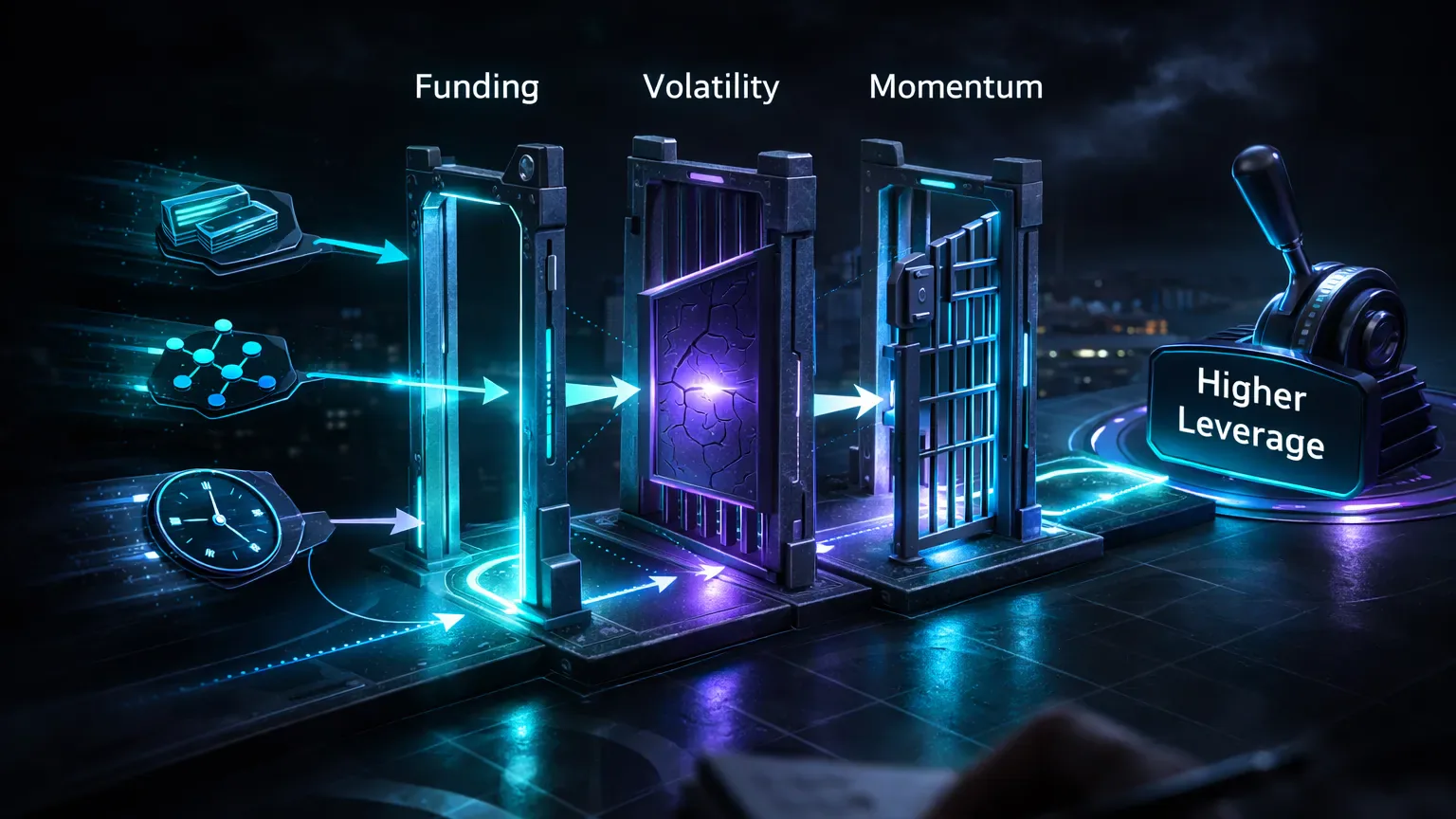
Funding analysis often leads to similar clarity. Journals that track funding direction alongside holding time reveal when trades are being structurally taxed. Many traders discover that their edge works best either quickly, before funding accumulates, or during periods when funding aligns with the position. This changes how long trades are held and when it makes sense to be patient versus aggressive.
MAE and MFE are where execution refinement really happens. When MAE clusters tightly around stops, it suggests that stops are being placed correctly relative to structure. When MAE routinely exceeds what the trade can tolerate emotionally, leverage or position size is the issue, not stop placement. MFE highlights the opposite problem. If large favorable moves are common but realized profits stay small, the journal is telling you that exits are too conservative for certain conditions.
Volatility context turns these insights into filters. A trader might find that wider stops with lower leverage perform better during expansion phases, while tighter stops work during compression. Without tagging volatility regime, these trades get mixed together and cancel each other out in review.
Session-based analysis becomes actionable at this point. If New York open trades consistently outperform Asia session trades, the solution is not psychological. It’s structural. You reduce size, tighten criteria, or avoid certain setups during weaker sessions. Journaling makes these decisions evidence-based instead of emotional.
Over time, this process builds trust in your own data. Decisions stop feeling arbitrary. You’re no longer guessing what to adjust after a drawdown. You’re responding to patterns you’ve already seen play out dozens of times. That’s how a journal turns from a record of the past into a guide for the future.
Build a Workflow You Can Actually Maintain
All of this theory only matters if it fits into a workflow you can actually maintain. Futures traders don’t fail because they lack insight. They fail because their review process is too heavy, too inconsistent, or too disconnected from how they trade day to day.
A practical workflow usually starts with automatic trade capture. Every futures trade, partial, and close needs to be logged without friction. Manual entry introduces gaps, and gaps distort review. When trades are imported automatically, the journal becomes a source of truth instead of a selective memory.
Daily journaling is lightweight. After the trading session, you tag trades with the essentials. Setup type, leverage band, volatility context, session, and any obvious execution errors. Notes are short and specific. Why you exited early. Why you sized down. What you ignored. The goal is not reflection for its own sake. It’s leaving breadcrumbs for future review.
Weekly review is where futures-specific insights emerge. This is when you stop looking at individual trades and start filtering. You look at leverage bands. You look at funding-aligned versus funding-opposed trades. You compare MAE and MFE across different volatility regimes. Patterns that are invisible on a single day become impossible to ignore over a week or two.

Dashboards and reports support this process by removing guesswork. Instead of scrolling through trades one by one, you can see performance grouped by tags and conditions. This is where a crypto-native journaling platform like TradeChainly fits naturally. The platform isn’t there to tell you what to trade. It’s there to surface the relationships between leverage, execution, and outcomes so your reviews stay objective.
The key is consistency. Futures markets evolve quickly. Funding shifts. Volatility compresses and expands. A workflow that updates continuously keeps your feedback loop tight. You’re adjusting based on recent data, not lessons from a market that no longer exists.
When journaling is integrated this way, it stops feeling like homework. It becomes part of the trading process itself. You trade, you tag, you review, and you adjust. That loop is what separates traders who stagnate from traders who steadily clean up their execution.
Keep the Journal Clean by Avoiding the Usual Traps
Even traders who take journaling seriously can sabotage their progress with a few predictable mistakes. These don’t look dramatic, but over time they flatten the learning curve.
One of the most common errors is tracking too much without structure. Recording every possible metric feels productive, but it often leads to analysis paralysis. When everything is tracked, nothing stands out. A futures journal should prioritize variables that actually change decision-making, like leverage, liquidation buffer, volatility context, and funding. Extra data that never gets reviewed is just noise.
Another mistake is ignoring liquidation context entirely. Many traders log stop-loss levels but never revisit how close price came to liquidation. This creates a false sense of control. In leveraged crypto markets, the emotional and practical risk often shows up before a stop is hit. If your journal doesn’t reflect that, you end up adjusting stops instead of addressing position sizing.
Reviewing trades without session or volatility filters is another trap. Mixing Asia-session range trades with New York breakout trades produces misleading averages. The same setup can behave very differently depending on liquidity and momentum. Journals that don’t separate these conditions encourage traders to abandon otherwise profitable ideas.
There’s also a tendency to treat journaling as a punishment after bad days. Traders journal intensely during drawdowns, then stop when things improve. This creates a biased dataset where losses are overrepresented. Consistent journaling during flat and winning periods is what reveals why performance holds up, not just why it breaks down.
Finally, many traders expect journaling to provide answers immediately. Futures journaling works through accumulation. The real insights usually appear after 30, 50, or even 100 trades. Impatience leads traders to abandon the process just before it starts paying off.
Avoiding these mistakes keeps the journal focused, honest, and actionable. The goal is not perfection. It’s clarity.
Build an Edge That Survives Leverage and Market Noise
Crypto futures trading doesn’t reward vague discipline or good intentions. It rewards traders who understand how leverage, volatility, and structure interact, and who adjust based on evidence instead of emotion. A proper trading journal is the tool that makes this possible.
When you journal futures trades correctly, patterns stop hiding behind single outcomes. You see where leverage quietly breaks expectancy. You see when funding erodes otherwise solid ideas. You see which sessions and volatility regimes support your edge and which ones demand caution. These insights don’t come from trading more. They come from reviewing better.
The biggest shift happens when journaling becomes part of the trading process, not something you do after things go wrong. Trades get logged automatically. Tags and notes get added while context is fresh. Reviews happen on a schedule, not on impulse. Over time, decisions feel less reactive because they’re grounded in data you trust.
This is where crypto-native tools matter. Platforms like TradeChainly are built around the realities of leveraged crypto markets. Automatic futures trade imports, tagging, and performance breakdowns make it easier to maintain a clean feedback loop without turning journaling into a second job. The result isn’t perfection. It’s steady improvement.
If you trade crypto futures seriously, journaling is not optional. The question is whether your journal reflects how these markets actually behave. When it does, it stops being a record of past trades and starts becoming a source of edge.