
Your Worst Trading Days Leave Patterns
Your worst psychological days rarely look mysterious in hindsight. After a large loss, the gaps between your trades often collapse to minutes. Position size drifts. Hold times change. You can see the shift on the timeline if you’re willing to look.
That’s the point of treating psychology as data. Emotional trading leaves fingerprints.
Making those fingerprints obvious is what this guide is about. Not “be more disciplined.” Not motivational quotes. A process that keeps you grounded when crypto does what crypto always does.
Why Psychology Hits Harder in Crypto
Crypto exposes a trader’s psychology faster and more brutally than almost any other market. If you scalp futures on Binance, Bybit, OKX, or Coinbase, you already know how quickly a calm trading session can turn into emotional chaos. One minute you are following your plan. The next minute you are chasing a breakout with double size because price moved faster than expected.
That shift usually has nothing to do with strategy. It is psychological.
Crypto makes emotional mistakes easier for three reasons.
First, the market never closes. There is no built-in reset. Stocks shut down at the bell. Forex traders often slow down into the weekend. Crypto never gives you that clean break. If you tilt into revenge trading at 1am, there is always another setup forming, another candle printing, another exchange alert buzzing. That constant availability increases the temptation to solve emotional discomfort through more trading.
Second, leverage and liquidation change how your brain reacts to risk. Trading BTC or ETH with 5–20x leverage creates a real threat of being forced out of a position. Liquidation risk activates the same stress response your brain uses in physical danger. That often leads to irrational behavior: early exits, panic market orders, or doubling down just to “get back to even.” Even small position sizing errors get magnified when funding, spreads, and volatility stack up.
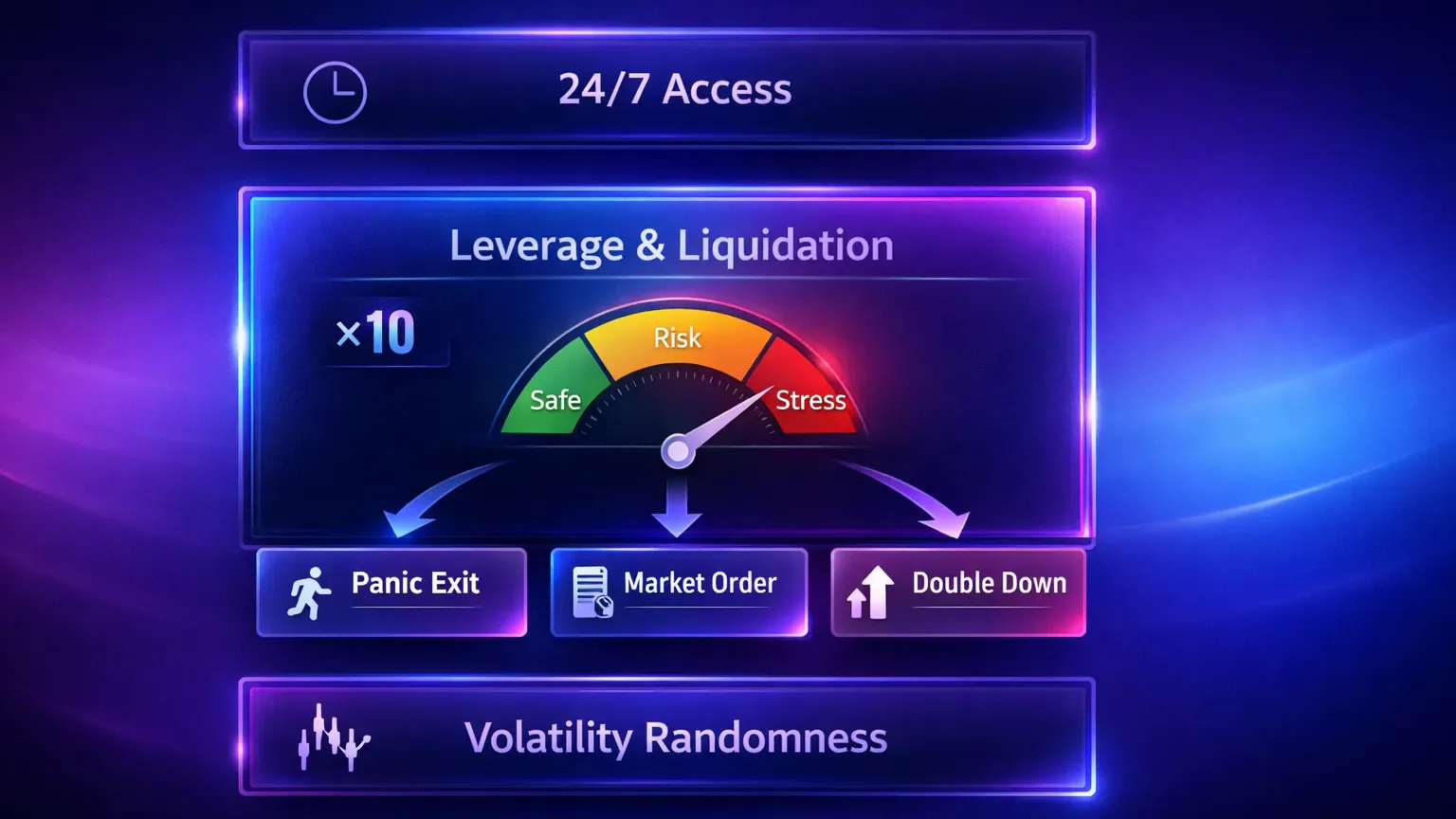
Third, volatility creates randomness that feels like personal failure. You can get stopped out on a long because of a sharp wick, only to watch price instantly rip in your original direction. That kind of movement is normal in crypto. But to a stressed trader, it can feel like a personal attack. The brain translates randomness into blame. Blame usually leads to revenge trading or hesitation.
The real problem is not the volatility itself. The real problem is how our minds try to protect us from discomfort. Fear of missing out. Fear of being wrong. Fear of losing money already “mentally owned.” In crypto, these reactions get triggered constantly.
This is why psychology sets the ceiling on your performance. You might already have a working strategy. Your entries and exits might be fine. But if you over-size when excited, cut winners short out of fear, or spiral after a losing streak, your results will never reflect your true edge.
It is not about being weak or undisciplined. It is about human wiring meeting an environment that is designed to trigger emotion. The traders who last do not eliminate emotion. They build structure around it. They review behavior the same way they review setups. They learn to recognize when they are trading the market and when they are trading their own feelings.
Making those patterns visible is step one. Seeing them in your data is step two. Building a process that keeps you grounded is the goal.
Your Trading Data Tells You the Truth
Traders often think psychology is invisible. Something you “feel,” not something you can measure. In reality, emotional trading leaves fingerprints all over your data. If you review your trades honestly, you will start to recognize patterns that repeat whenever you are stressed, tilted, or overconfident.
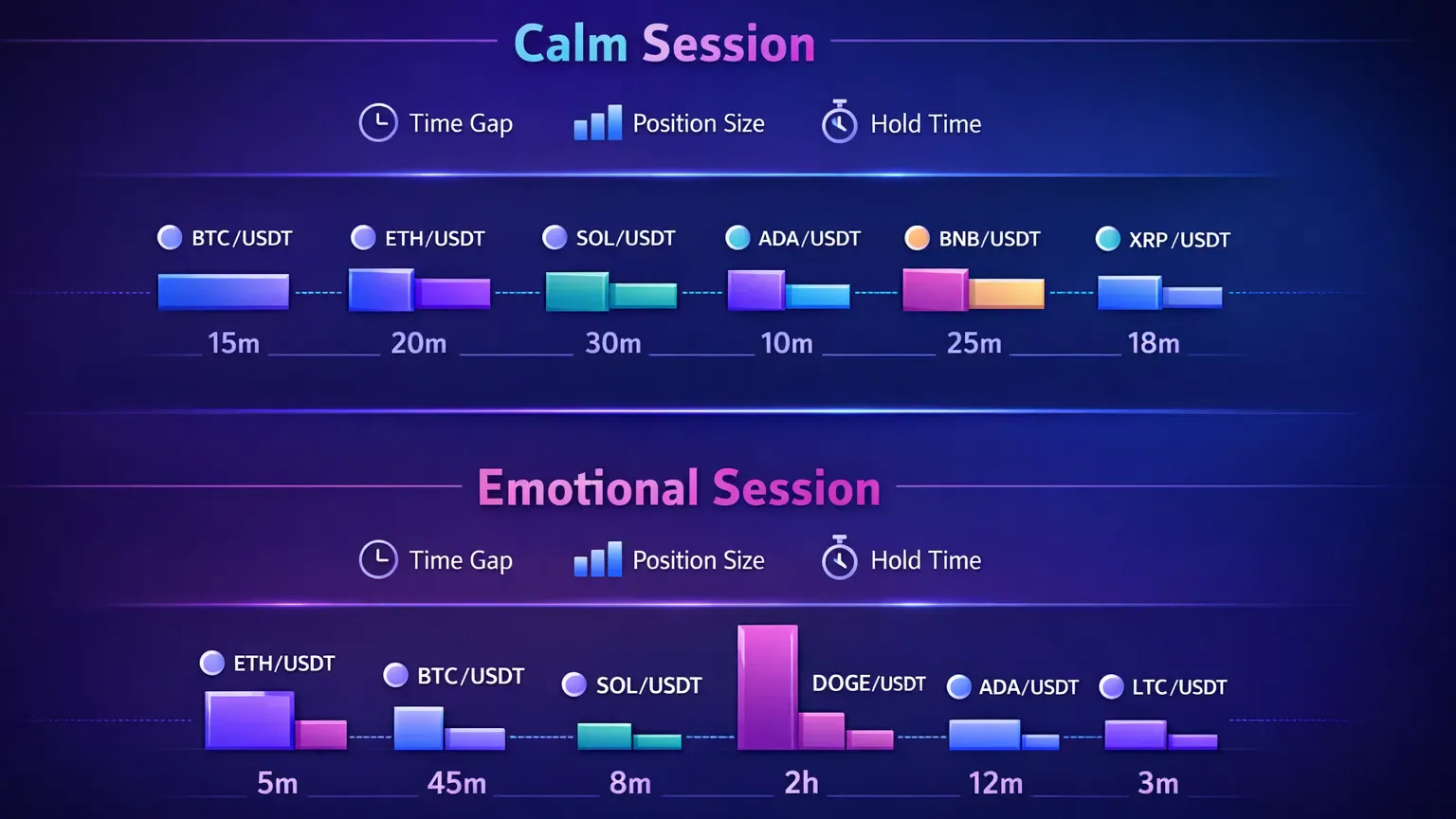
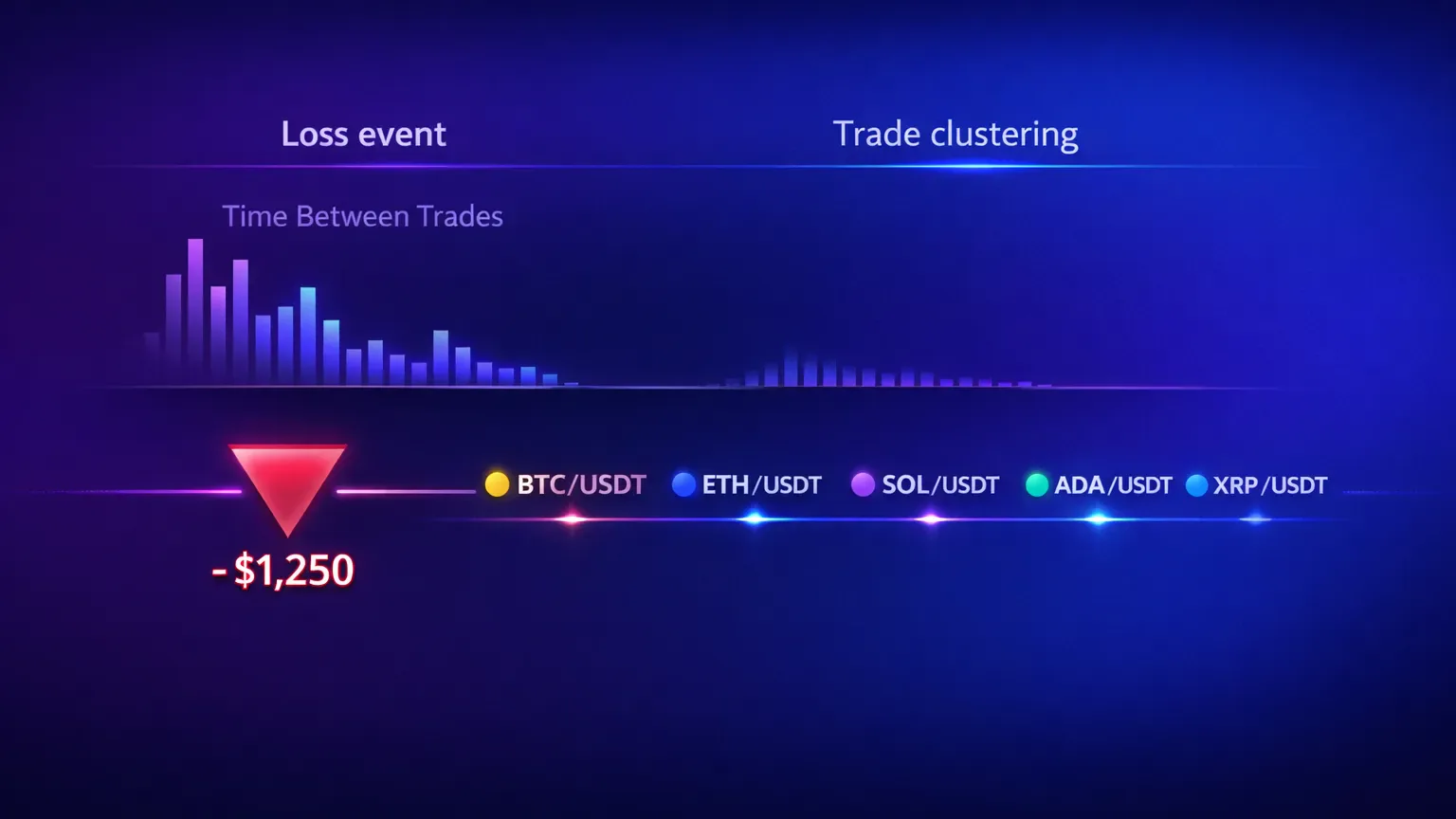
One of the clearest signals is trade clustering. Look at the time gaps between your trades. During calm, rational periods, your entries usually line up with planned setups. There is space between decisions. But after a large loss or liquidation, those gaps often collapse. You start firing trades back-to-back within minutes. That is revenge trading in numeric form. It is not subtle once you see it.
Another sign is position size drift. Pull up your position sizing over a series of trades. If your size jumps right after a loss or spikes during momentum moves, that is emotional sizing. The decision is no longer driven by risk planning. It is being driven by fear or excitement. This behavior shows up even in traders who think they are disciplined.
Holding time is another giveaway. Fear shortens winners and extends losers. When traders hesitate or feel uncertain, they exit profitable trades faster than normal. When they are stubborn or defensive, they hold losing trades longer than normal. If you chart your average hold time during winning streaks, losing streaks, or stressful periods, you will often see a clear shift.
Win rate by context is also revealing. Many traders perform well during clean directional moves, but struggle in chop or high volatility spikes. If your results collapse during consolidation or during weekend liquidity pockets, that often points to boredom trading or forcing entries when there is no edge. The numbers will expose where you over-trade.
Tagging makes this even clearer. If you tag mistakes or emotions like “chased,” “revenge,” “over-size,” or “late entry,” you can see how often these behaviors cluster. Over time, the tags form a story about who you become under pressure. That story is often uncomfortable to read, but it is incredibly valuable.
MAE and MFE metrics can also reveal psychological bias. Maximum Adverse Excursion shows how much a trade moves against you before going your way. Maximum Favorable Excursion shows how much profit potential you leave unrealized. If your winners frequently show high MFE but small realized gains, fear is cutting trades early. If your losers show large MAE before exit, stubbornness is often in control.
Session data tells another side of the story. Many crypto traders perform worse during late night sessions, when they are tired or seeking stimulation. Others trade poorly right after funding payments or high-impact news. A consistent performance drop during certain windows usually reflects a psychological state, not a strategy issue.
None of this needs to be theoretical. With a structured trading journal, you can make psychology visible through data. You are not guessing what went wrong. You are looking at patterns that show up again and again. At that point, psychology becomes something you can train instead of something you just “try to control.”
The Psychological Traps Crypto Traders Repeat
Most traders think psychology means “don’t be emotional.” That’s not realistic. You are going to feel fear, greed, frustration, and doubt. The real issue is how those emotions change your behavior in the middle of a fast market.
Crypto day trading brings out five consistent psychological patterns. If you scalp BTC, ETH, SOL, or meme perps on Binance, Bybit, or OKX, you’ve probably experienced at least three of them in the last month.
The first one is FOMO during fast moves. Crypto has violent momentum. A five-minute candle can do what forex pairs would take hours to do. When price starts ripping and open interest spikes, fear of missing out kicks in. You stop thinking in terms of setups and start thinking in terms of “I have to be in this.” Traders chase breakouts with late entries, widen stops, or size up beyond plan. Most of the time this happens after the move already extended. Pullbacks become pain. What felt like opportunity turns into regret.
The second pattern is revenge trading after a painful loss. This is especially brutal with leverage. A liquidation or large loss does not just hurt financially. It feels like a personal attack on competence. The brain reacts by trying to win the money back as fast as possible. That usually means rushing into the next trade with worse logic and higher size. Logic disappears. The objective shifts from “trade the setup” to “erase the pain.” Drawdowns often accelerate from here.
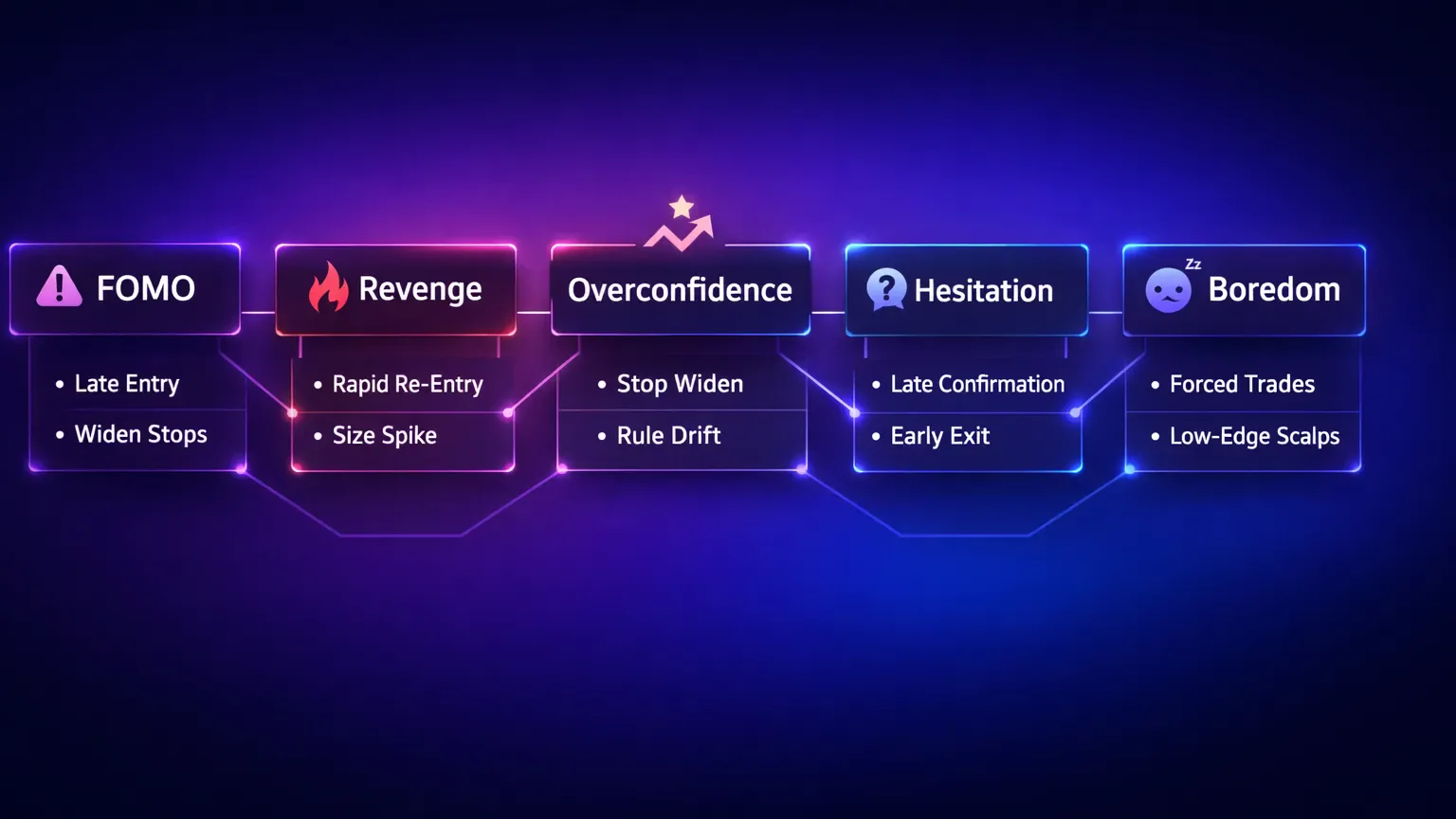
The third pattern is overconfidence after a winning streak. In crypto, streaks can come fast. You catch a strong trend day on BTC and ETH. Everything you touch works. The danger is subtle. You begin to feel immune to randomness. Risk limits loosen. Size creeps up. Stops widen. You hold losers longer because “it will come back.” The setup didn’t change. Your perception of risk did. Small mistakes become larger ones because confidence disabled discipline.
The fourth pattern is hesitation after drawdowns. Once a trader gets hurt, they often swing to the other extreme. Perfect valid setups appear, but you freeze. You wait for extra confirmation. You enter late. Stops tighten unnaturally. Winners get cut early because you want to “lock something in.” The fear of more pain overrides the plan. Over time this behavior completely distorts performance stats.
The fifth pattern is boredom trading during quiet sessions. Sideways chop on BTC or ETH perps is dangerous. Nothing is happening, but you still want progress. So you start forcing trades. Micro-scalps with no edge. Counter-trend entries out of impatience. This often happens on weekends or during low-liquidity hours when ranges compress. Traders underestimate how expensive boredom can be.
These behaviors are not random. They are predictable emotional responses to the structure of crypto markets: 24/7 access, leverage, constant price motion, and social noise. None of this means you are broken or “weak-minded.” It means your brain is reacting normally to an abnormal environment.
The key insight is this: every one of these emotional states translates into specific execution patterns. Late entries. Over-sizing. Early exits. Trade frequency spikes. Rule drift. Once you know what to look for, you can see them clearly in your trading data.
Build Structure That Protects Your Execution
You cannot remove emotion from crypto trading. The goal is not to become a robot. The goal is to design a process that prevents emotional states from hijacking your execution. That requires structure. Not motivational quotes. Not “try harder to stay disciplined.” Actual structure.
A simple way to think about this is a four-stage loop. Awareness. Measurement. Intervention. Habit building.
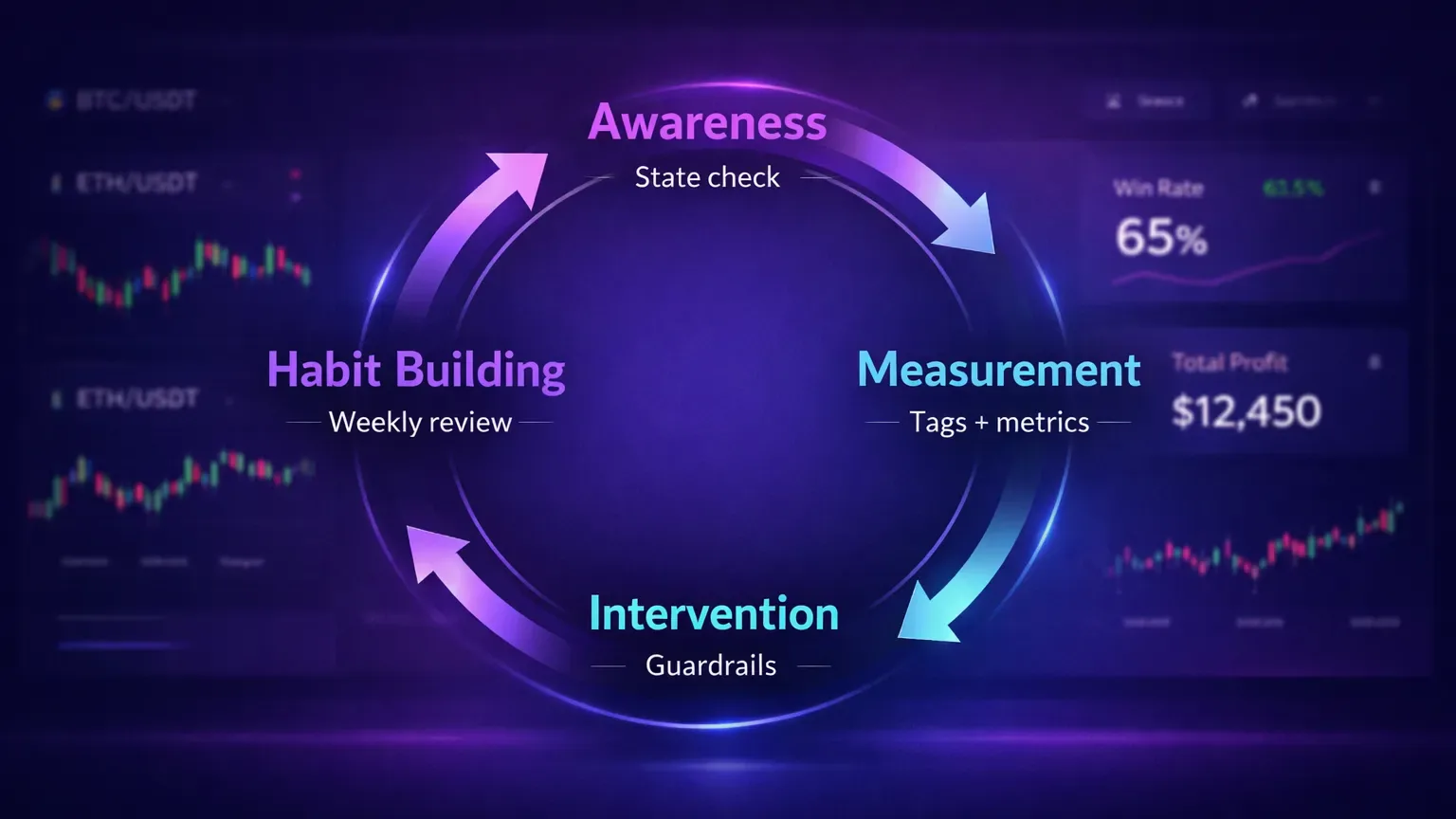
Most traders try to skip straight to “be more disciplined.” That never lasts. You have to work through the loop.
Awareness means noticing when your mental state shifts. You become impatient. You feel pressure to make back losses. You start telling yourself stories like “this move cannot continue forever.” Experienced traders learn to recognize these shifts early. You can speed this up by writing a short note before your session. Something as simple as rating your emotional state, stress level, and clarity. It gives you a reference point. When you drift, you can see it.
Measurement is about connecting those emotional states to trading behavior. This is where journaling matters. Track the conditions around your worst trades. Were you up late? Trading size outside plan? Trading after a loss? Trading during extreme volatility? When you tag trades with context, patterns become obvious. Once behavior is measurable, it becomes coachable.
Intervention is where most of the improvement happens. This is not about willpower. It is about pre-defined rules that take control away from impulses. For example:
- Stop trading for 30 minutes after a large loss.
- Limit maximum daily size regardless of confidence.
- Cap the number of trades per session.
- Stop trading after two consecutive emotional trades.
- Avoid trading during known trigger conditions.
These rules reduce the damage your emotions can cause. They do not eliminate feelings. They simply make it harder for those feelings to express themselves through impulsive trades.
Habit building is the final stage. This is where behavior change sticks. You review your performance weekly. You check whether you followed your rules, not just whether you made money. You refine your plan. Over time, your default behavior becomes calmer, slower, and more deliberate. The edge is no longer just in your setup. It is in how you execute it.
To support this framework, many traders add three daily anchors.
First: a pre-session ritual. Review key levels, volatility expectations, funding, and your emotional state. Define what “good trading” means for that session. Sometimes that means focusing on A-setups only. Sometimes it means reducing size after a rough day.
Second: a mid-session check-in. Stop for two minutes and ask simple questions. Am I trading my plan? Has my behavior drifted? Am I chasing? Do I still deserve to be in the market? Those questions often prevent tilt before it spirals.
Third: a post-session review. This is where you learn. You tag mistakes. You note emotional triggers. You compare your trades to your plan, not just to PnL. Over time, this review builds a level of self-awareness that you cannot get from charts alone.
The key mindset shift is this: decision quality matters more than outcome. A good trade is one that followed your rules and process, even if it lost. A bad trade is one that broke your rules, even if it won. When traders truly internalize this, their results usually stabilize. Consistency comes from executing the same behaviors repeatedly, not from predicting the next breakout.
Crypto will always be volatile. Liquidations will always happen. Funding will always shift sentiment. You cannot control that. What you can control is how you prepare, how you review, and how quickly you recognize when emotion is trying to take the wheel.
A Realistic Example from a Futures Trader
Let’s walk through a realistic example. Nothing extreme. Just a normal crypto day trader running into the same psychological traps most of us face at some point.
Imagine a futures trader on OKX. Average size is 5–10x leverage. The trader has a basic system: trade breakouts and pullbacks during the London and New York overlap, avoid low-liquidity overnight hours, and risk a small, fixed percentage per trade.
One day, things start well. BTC trends cleanly. The trader catches two solid longs early in the session and feels in rhythm with the market. Confidence rises. Not overconfidence yet. Just a sense that today is going to be a good day.
Then the market shifts. BTC pulls back sharply. The trader buys the dip, expecting continuation. Instead, price spikes down again and almost tags liquidation before recovering slightly. Panic sets in. The trader closes the trade for a loss near the bottom. A few candles later, BTC rips back to new highs without them.
That single event flips the emotional state.
The trader feels angry. Not at the market. At themselves. The thought appears: “I knew the trend was up. I just exited too early. I should have held.” That frustration quickly turns into action. The trader re-enters long with larger size, trying to catch the move. This entry is late. The risk is larger than planned. The logic is weaker. Now the trader is trading the pain, not the setup.
You can guess what happens next. BTC chops. Stops get hit. Another re-entry. Another stopout. Position size creeps higher. The session ends red, not because the system failed, but because the trader abandoned it under stress.
At this point, many traders either blame the market or promise themselves they will “be more disciplined” next time. This trader did something different. They journaled the session honestly.
They tagged the trades with labels like:
- chased
- late entry
- size too large
- revenge
- emotional state: frustrated
They added short notes explaining what they felt during the decision. Nothing long. Just enough to capture the mindset.
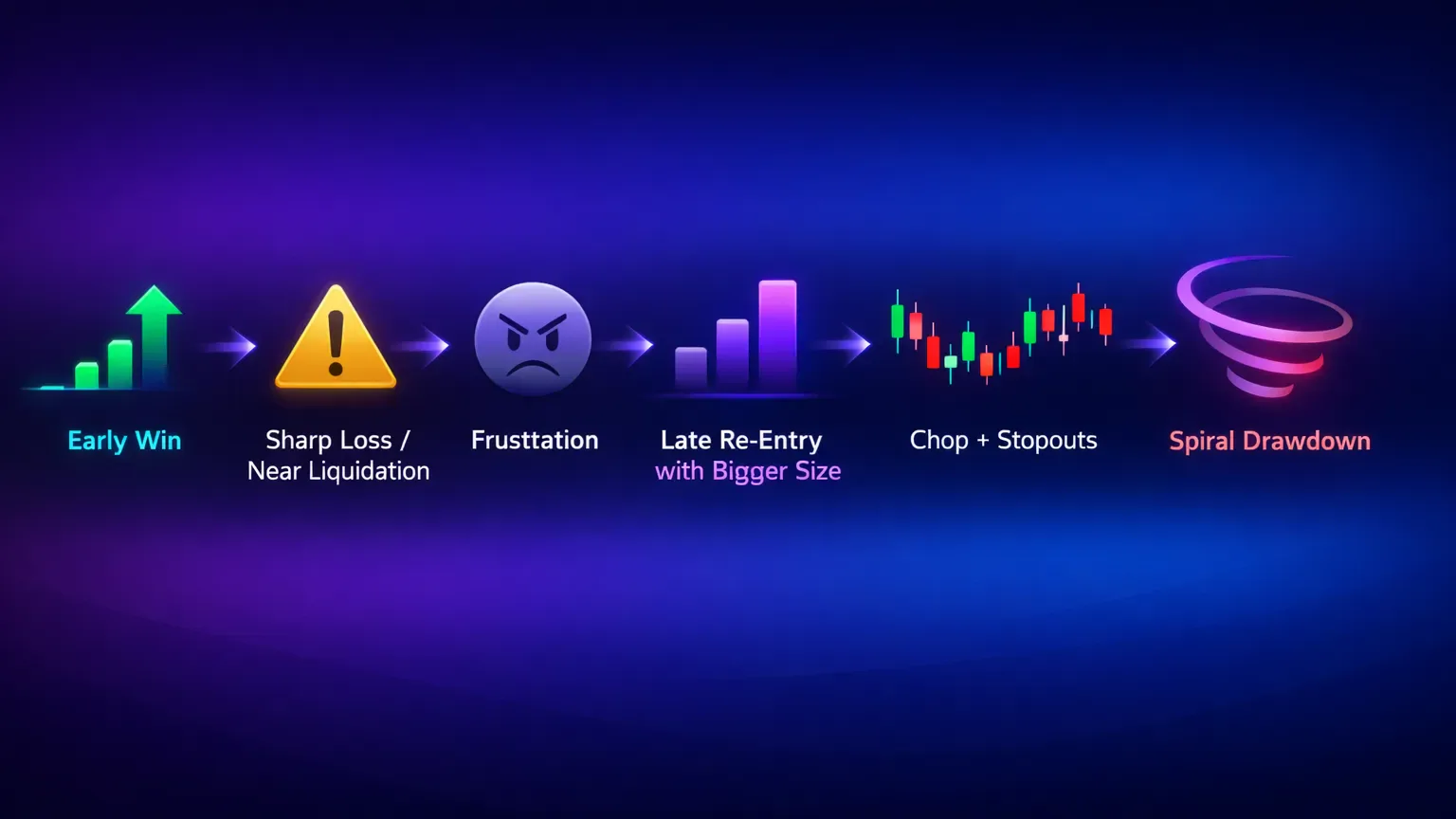
Over the next two weeks, they continued journaling with the same honesty. When they reviewed the data, a pattern was obvious. Their biggest drawdowns always followed the same sequence:
early win
sharp loss
frustration
late re-entry with bigger size
spiral
The win rate wasn’t the problem. The edge wasn’t the problem. The emotional response to sudden losses was the problem.
With that clarity, the trader added two rules.
First, no increasing size after a loss. Position size resets to base risk until the day resets. Second, mandatory 30-minute break after any emotionally charged trade. Even if another setup appears.
The next time the market tested them, the pattern began again. Early win. Sharp loss. That familiar emotional surge appeared. But the rule forced a break. By the time the trader returned, the urge to chase had faded. They followed the plan. The session ended slightly red, but controlled.
Over the next month, the trader’s equity curve stabilized. Not because they suddenly became “mentally strong,” but because their process removed the opportunity for emotion to take control. Journaling did not magically remove fear and frustration. It revealed how those feelings translated into behavior. Once visible, the trader could design guardrails.
This is what psychological improvement looks like in real trading. Not perfection. Not eliminating emotion. Just fewer destructive decisions and more time trading in a calm, measured state.
Turn Psychological Awareness Into a Daily Routine
Psychology becomes much easier to manage when it is part of your daily workflow rather than something you only think about after a blow-up day. The goal is simple: make your behavior visible. When you can see it, you can shape it. When it stays invisible, emotion runs the show.
A good trading journal isn’t just a record of entries and exits. It is a record of your mindset and the conditions surrounding each trade. Most traders underestimate how powerful that is. Numbers tell you what happened. Notes and tags tell you why it happened.
Start with tagging. Tags allow you to label trades by setup, context, mistakes, and emotional state. Examples include:
- trend continuation
- range breakout
- mean reversion
- late entry
- over-sized
- revenge trade
- tilted
- hesitant
Over time, these tags form a behavioral profile. You begin to see that most of your worst losses happen when certain tags appear together. Maybe it’s “late entry + size increase after loss.” Maybe it’s “range breakout + chop environment.” That combination is usually more important than the individual trade result.
Session notes add another layer. Before you start trading, write a sentence or two about how you feel. Tired? Calm? Restless? Confident? Then, after the session, review whether your behavior matched your plan. It doesn’t need to be long. Two or three honest sentences beat a page of generic reflection.
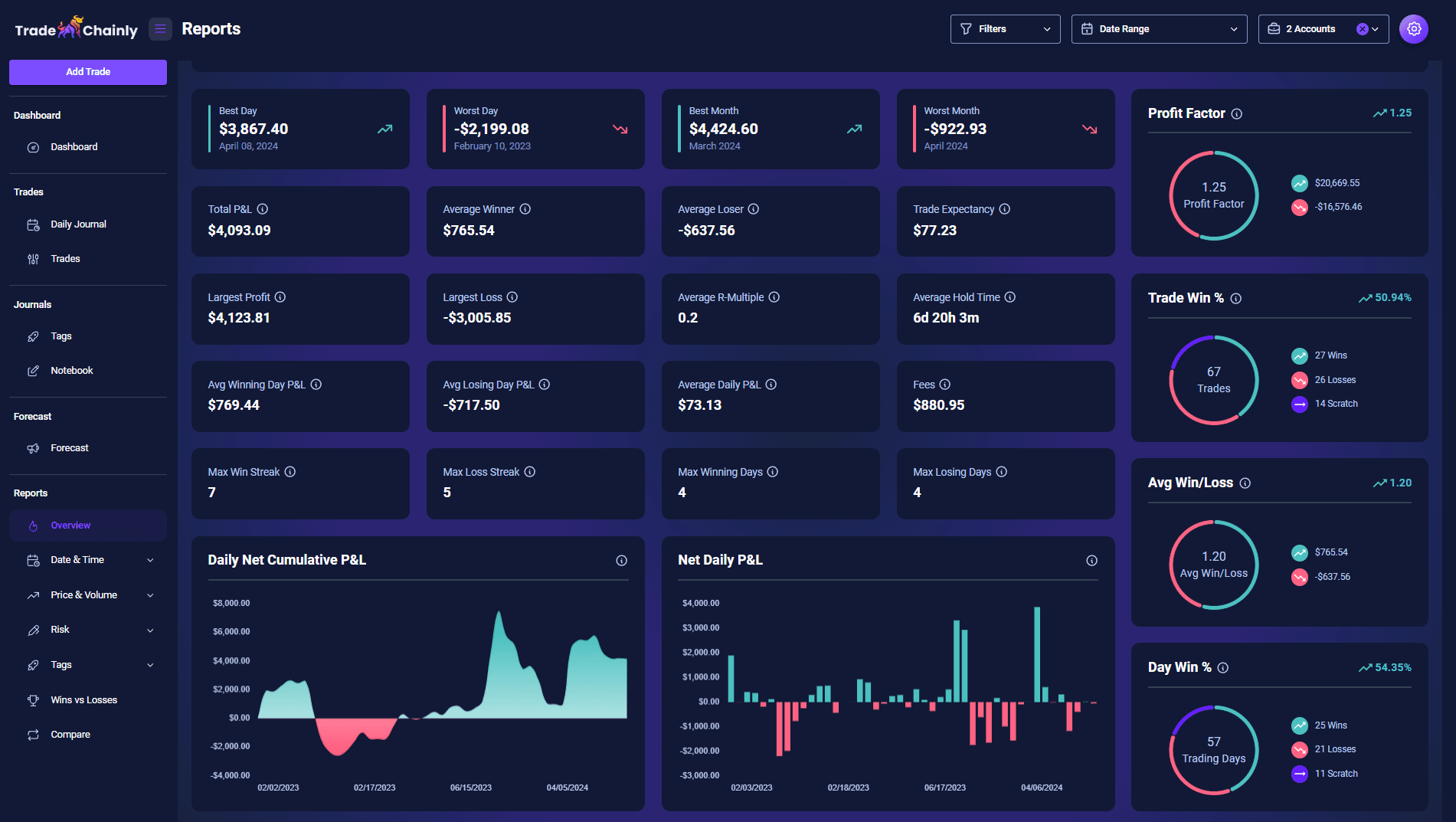
Reports then turn all of this into something you can actually use. When you review performance by tag, time of day, instrument, or mistake type, you get a clear picture of where your execution breaks down. Many crypto traders learn, for example, that weekend trading quietly destroys their equity curve. Or that most of their losing days come from over-trading chop when they should have reduced size or waited.
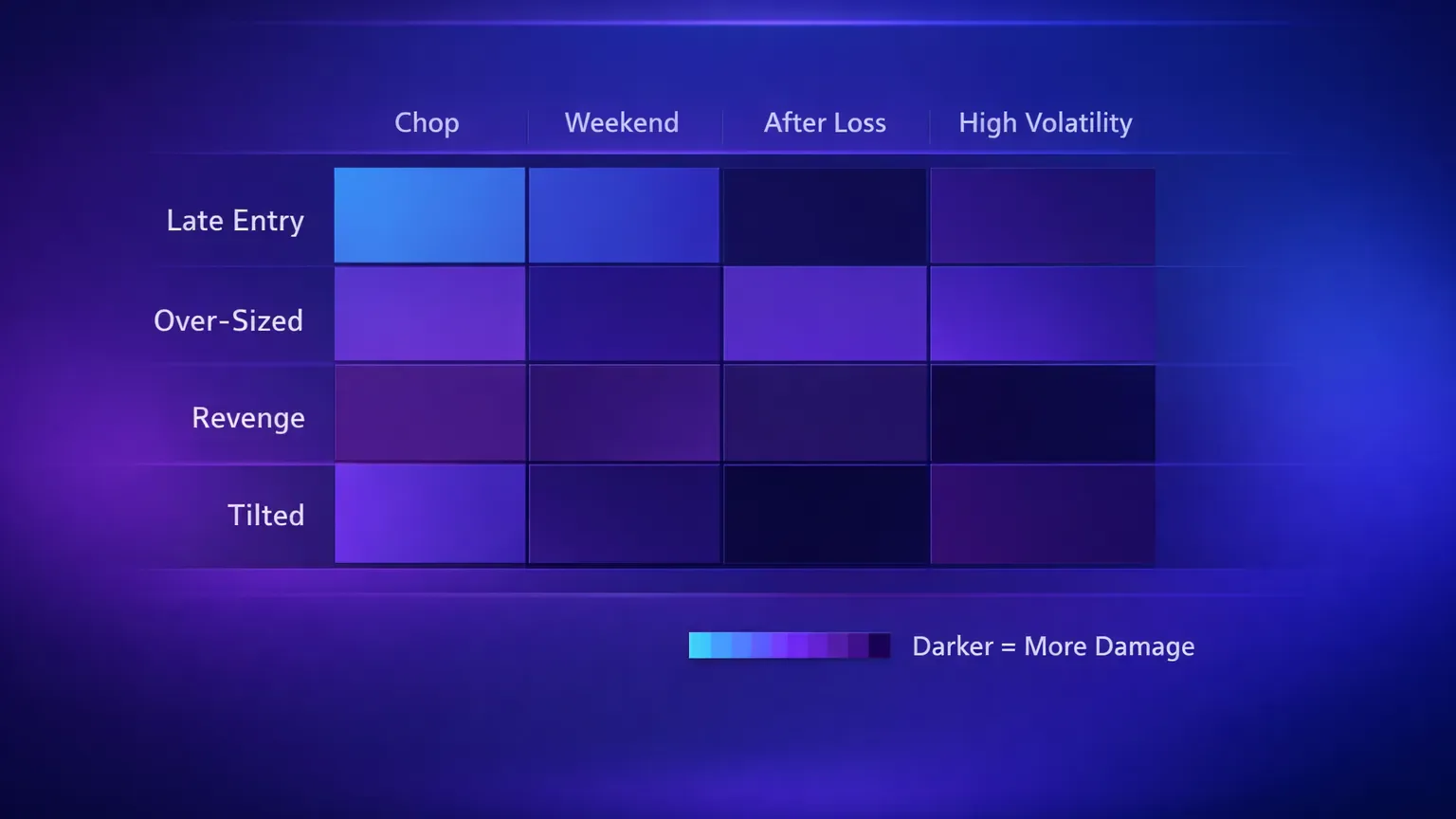
Funding cycles, volatility spikes, and exchange-specific behavior also matter. You might discover that you perform worse during periods of aggressive funding flips or after sudden liquidation cascades. That often means you are reacting emotionally to noise rather than executing your plan.
A structured tool like TradeChainly helps with this because tagging, notes, and analytics live in one place, and trades can sync automatically from exchanges. That means your psychological review becomes part of your normal process instead of something you only do when you have energy left at the end of the day.
The most important part is consistency. Journaling once a week helps. Journaling daily changes you. When you review your psychology every session, your awareness increases. You start catching emotional shifts earlier. You recognize when you are chasing. You know when you are trading from boredom. And slowly, your default behavior becomes steadier.
This is not about perfection. You will still make emotional trades sometimes. The goal is to reduce the frequency and limit the damage. Journaling creates accountability. It forces honesty. And in a market as fast and unforgiving as crypto, that honesty is one of the strongest edges you can build.
Discipline That Lasts Past the Good Weeks
Short-term discipline is easy. Long-term discipline is the real challenge. Anyone can trade well for a week when they feel motivated and focused. The real test is what happens during the stretches where you feel tired, distracted, bored, or frustrated. Crypto will give you plenty of those stretches. The market never stops. There is always something moving somewhere. That constant opportunity can slowly pull you away from your structure if you aren’t careful.
The traders who last treat discipline as a skill they train, not a mood they wait for. They build routines that run even when they don’t feel great. They keep risk small enough that a bad day doesn’t destroy their confidence. They accept that some days are simply not meant to be traded aggressively. When conditions are slow, they either reduce size or stand aside instead of forcing trades.
Another key part of long-term psychological stability is separating identity from results. If a losing day feels like a personal failure, you will almost always trade worse the next day. But if losses are simply the cost of participating in a volatile market, the emotional sting fades much faster. This mindset shift takes time. Journaling helps, because it shows you that losses often come from predictable environments or behaviors rather than from some deep personal flaw.
Burnout is another real risk in crypto. The 24/7 nature of the market makes it easy to believe you should always be watching charts. But constant monitoring slowly erodes decision quality. Your patience gets thinner. Your tolerance for randomness drops. That usually leads to impulsive trades. Building non-trading time into your schedule is not laziness. It is strategic protection of your mental edge.
The final piece is accepting that psychological work never ends. You do not “solve” emotions. You build a relationship with them. You learn your triggers. You put guardrails in place. You review your behavior. You improve slowly. Over months and years, that slow improvement compounds just like an equity curve. Your trading becomes less about fighting yourself and more about executing your plan with clarity.
Crypto rewards the traders who can stay calm when others panic, wait when others chase, and remain consistent when others oscillate between extremes. That level of steadiness doesn’t come from raw talent. It comes from structure, review, and a willingness to be honest with yourself.
What Changes When You Actually Apply This
Most traders try to solve psychological issues through willpower. They tell themselves they will be more disciplined tomorrow. They promise they won’t chase, won’t revenge trade, won’t over-size. Then the market moves quickly, emotions spike, and the same patterns repeat. Not because they are weak, but because willpower collapses under pressure.
The traders who develop real consistency take a different path. They accept that emotion is part of the game. Instead of fighting it directly, they build systems that limit its influence. They review their behavior. They tag emotional trades. They identify when they are most vulnerable to mistakes. Then they create rules that protect them from their own impulses.
Crypto makes this work even more important. Leverage, liquidation risk, and 24/7 price action mean emotional mistakes get punished quickly. A moment of frustration or FOMO can wipe out a week of steady gains. Structure is what keeps you grounded when the market speeds up.
You don’t need to become a different person to trade well. You just need a clear process that helps you recognize when your emotions are taking over. Journaling, tagging, and reviewing your data turn psychology from something vague into something visible and manageable. Over time, that structure becomes a stabilizing force. Your trading stops feeling chaotic. Your decisions become calmer. Your results become more consistent.
If you want a platform built around that kind of structured review, TradeChainly gives crypto day traders an automated way to sync trades, tag behavior, and study performance without spreadsheets. But whether you use TradeChainly or another system, the principle remains the same. Make your behavior visible. Build rules around your weaknesses. Let structure do the heavy lifting.
You will still feel fear, greed, doubt, and frustration. Every trader does. The difference is that those emotions no longer dictate your decisions. And once that happens, your edge finally has room to show up.