
The Data Shows the Damage
Revenge trading leaves fingerprints in your data. It is not abstract. It shows up in expectancy, MAE, position size, session PnL curves, and drawdown depth. Once you start tracking those patterns, the story becomes impossible to ignore.
Revenge trading feels emotional in the moment, but the damage it does is very real and very measurable. If you look at your trade history over a few months, you will almost always see the same pattern. Normal losses are controlled. Revenge trades create outsized drawdowns.
The first place this shows up is in expectancy. Your planned trades might have a positive or at least stable expectancy over time. But the trades you take immediately after a loss often do not follow the same rules. They come earlier. They come later. They come at levels you would normally ignore. When you isolate them, the edge disappears. The win rate drops and the average loss increases.
MAE, or maximum adverse excursion, usually increases as well. That means your trades are going further against you before they resolve. It is a sign that entry quality is getting worse. You are reacting instead of stalking the setup. You are forcing timing instead of letting price come to you.
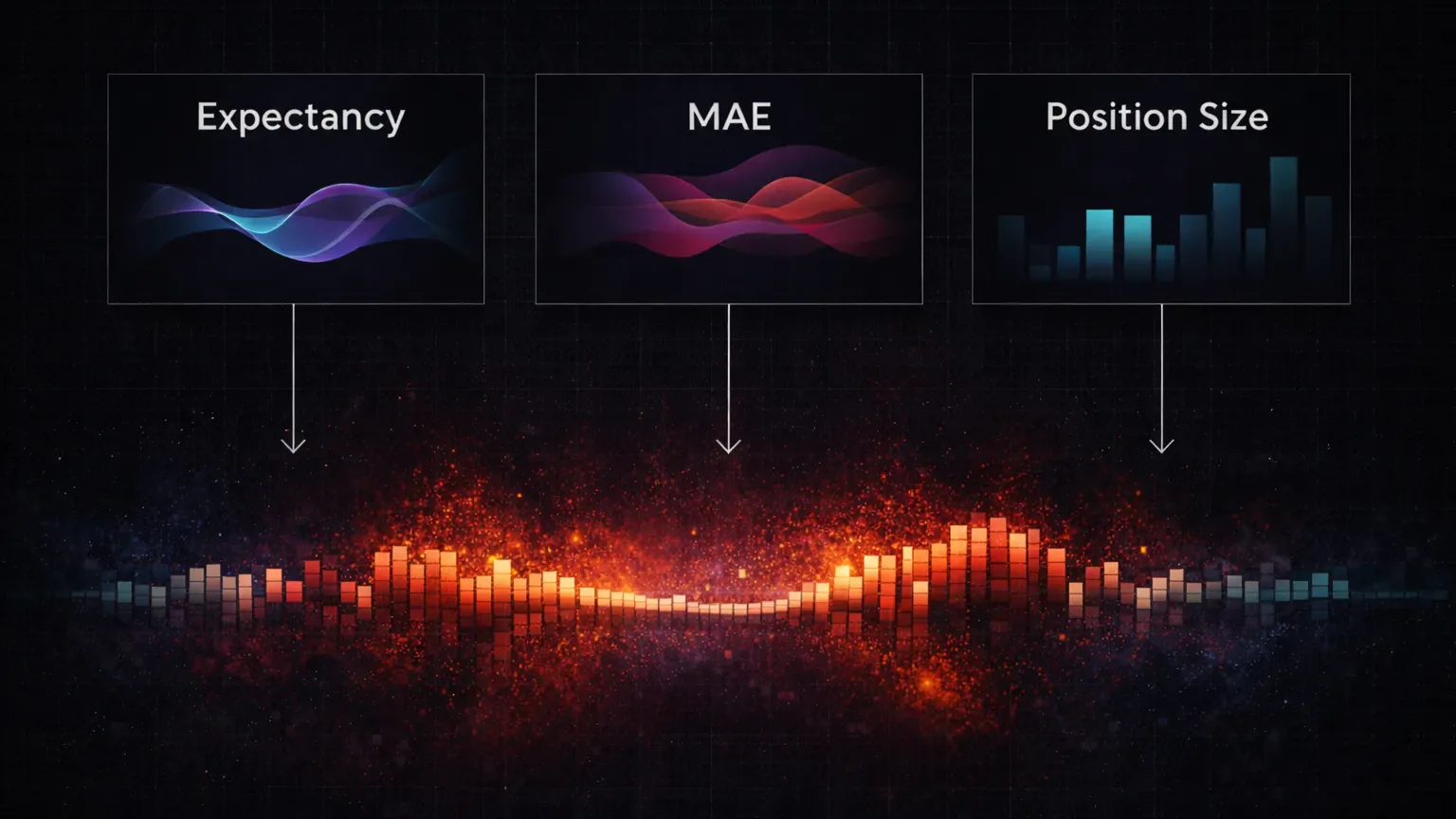
Revenge trading also clusters losses. A normal losing day might be -1R or -2R. A revenge trading day can easily become -6R or -10R. Not because the market changed. Because your behavior changed. Those clusters are what stretch drawdowns from something manageable into something emotionally and financially heavy.
You will often see risk per trade increase during these clusters. Sometimes consciously. Sometimes unconsciously. Size creeps up. Stops widen. Leverage increases. The volatility of your equity curve rises, even if your strategy itself has not changed. That extra volatility is a silent account killer.
There is also a time-based pattern. Many traders make their worst decisions late into a session, when fatigue kicks in, or immediately after a losing streak. If you review your data, you may notice that the worst trades happen after your daily PnL hits a specific negative threshold. That threshold is your emotional breaking point.
In crypto, the damage compounds faster because the market never forces you to stop. You can tilt all night through Asia, Europe, and US sessions if you let yourself. A bad mindset can run for 18 hours straight. That is how accounts go from stable to distressed in a single day.
The Revenge Trading Spiral
Revenge trading is one of the most destructive habits in crypto. You take a loss. Maybe two. Maybe you get wicked out by a liquidation cascade. Instead of stepping back, you hit the button again. Bigger size. Less patience. More emotion. You are not trying to trade well anymore. You are trying to get your money back.
Every crypto trader has been there.
Crypto makes revenge trading even easier to fall into. The market never closes. There is always another setup forming on Binance or Bybit. Leverage gives you the illusion that one good trade can fix everything. Social feeds convince you that others are printing while you are bleeding. Funding rates shift. Open interest spikes. Price moves fast and liquidity thins out at the worst possible moments. It feels personal. Your brain wants payback.
And that is where accounts get wrecked. Not from one planned loss. From the spiral that comes after it.
Revenge trading is not just trading badly. It is trading emotionally after a trigger. The plan disappears. Risk rules bend. Stops get dragged. Entries become impulsive instead of intentional. You are no longer following your system. You are reacting to pain.
The problem is not that you took a loss. Losses are part of the game. The problem is what happens next.
Journaling matters here. Not as a motivational exercise. As a way to slow down the loop. A structured journal forces you to see the pattern clearly: when revenge trading happens, what triggered it, and how much damage it creates in your stats. Once you see the pattern in data instead of memory, it becomes much easier to break.
This article focuses on why revenge trading happens in crypto, how it shows up in your behavior and results, and how journaling helps you stop it before it turns a small red day into a serious drawdown.

How It Shows Up on Your Screen
Revenge trading is not theoretical. You can see it in the way you behave after a loss. The setups change. The urgency increases. The decisions get faster and sloppier. If you trade crypto intraday, you will recognize at least a few of these patterns.
You get stopped out, and instead of reviewing the trade, you jump straight back in on the same pair. Same direction. Same idea. Sometimes within the same candle. The logic is simple: “It shouldn’t have stopped me out. I’ll catch the real move.” Except now you are trading frustration instead of structure.
Or you increase size. The market took 1R from you, so you bump position size to “win it back faster.” That might mean going from 3x leverage to 10x. Or taking the full-size entry instead of scaling. The setup quality is worse, but the risk is larger. The math tilts against you immediately.
Another version is chasing. BTC dumps, bounces, then you short the bottom candle because you “missed the move.” Or ETH squeezes, stalls, then you long the wick top because you are afraid to be left behind. It happens a lot on Bybit and Binance perpetual pairs because price can rip or nuke several percent in minutes. You stop looking for alignment. You just want back in.
Stops also start moving. You widen them mid-trade. Or you remove them entirely because you “know” price will come back. That is how small planned losses turn into liquidation events. Especially with leverage.
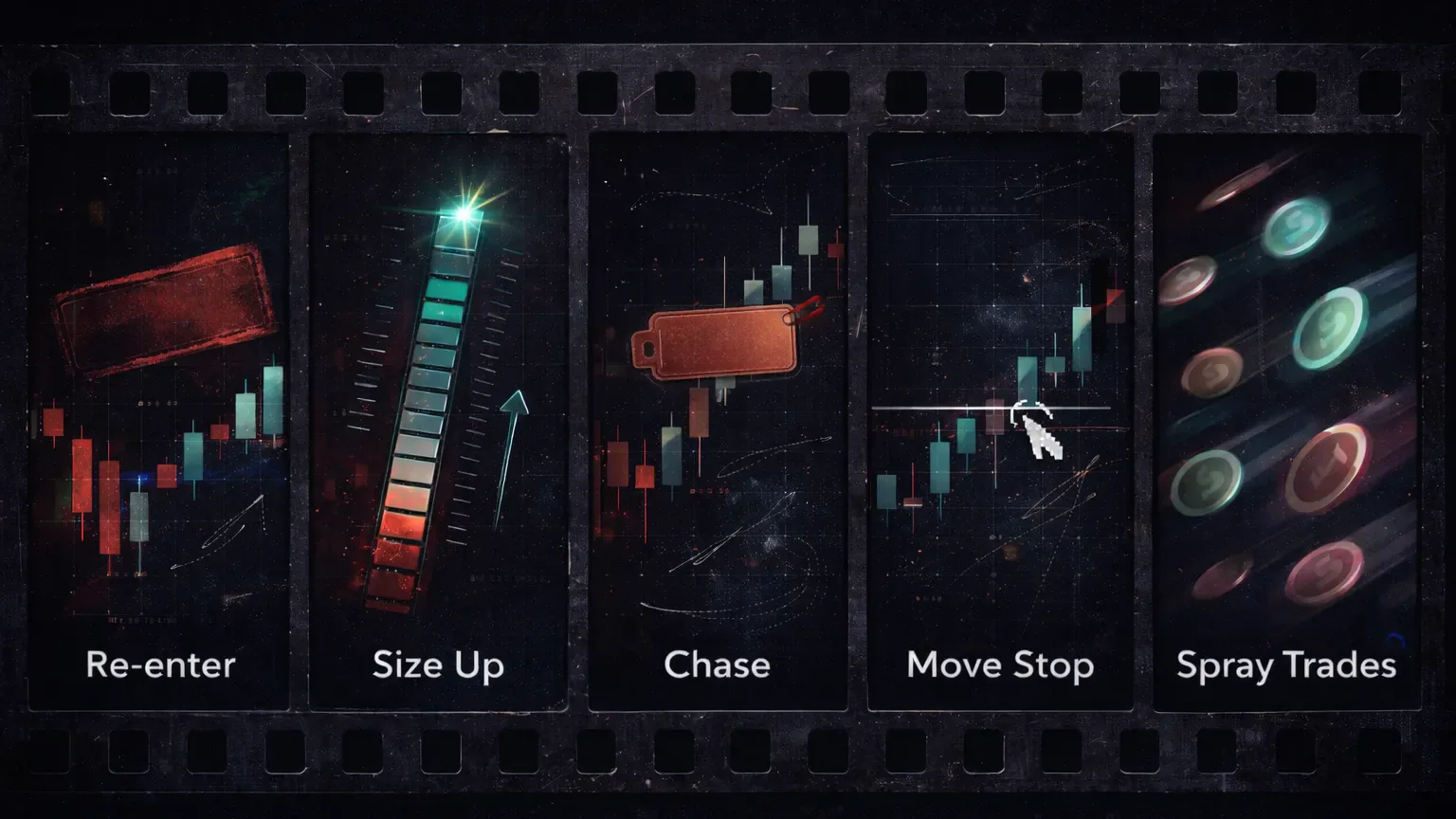
Some traders don’t even wait for setups anymore. They start clicking buttons across random alt pairs. Solana. Pepe. Doge. Anything with a pulse. Volume creates temptation. Volatility creates hope. And then the day ends with ten trades instead of three, none of them planned.
In crypto, there are also subtle forms of revenge trading:
- Trading during dead liquidity hours when you would normally avoid the market.
- Doubling down after funding turns negative or positive because you feel like you’re “owed” a move.
- Trying to “beat” a particular pair like BTCUSDT or ETHUSDT because you feel it has mistreated you.
If you look closely, revenge trading always has the same fingerprint: urgency increases while patience disappears.
It feels rational in the moment. It almost never is.
Why Crypto Makes It Worse
Revenge trading is not caused by the market. It is caused by how your brain reacts to loss inside a market that is fast, open, and emotional. If you understand the psychology behind it, the behavior stops feeling random. It becomes predictable.
The first trigger is the need to get back to breakeven. Humans hate losing money much more than they enjoy winning it. A -2R day does not just register as a normal trading outcome. It feels like something has been taken from you. Your brain frames the next trade as a chance to repair damage instead of just another probability event. That shift in mindset is enough to destroy discipline on its own.
Ego also plays a role. When you get stopped out, especially in crypto where moves can reverse violently, it can feel like the market “proved you wrong.” The more conviction you had, the more it hurts. Traders do not like being wrong. So they push harder. They keep trying to confirm their original idea instead of objectively reassessing the chart.
Then there is loss aversion. A small loss feels manageable. A series of losses feels threatening. Once you cross your personal pain threshold, your brain goes into protection mode. Ironically, that usually leads to more risk, not less. Bigger size. Lower quality trades. Faster decisions. All justified by the story that you are simply “making it back.”
Crypto adds fuel to every one of these psychological triggers.
The market never closes, so you never get forced distance from your emotions. If you blow up mentally at 3am, the chart is still there. Binance is still open. There is always another candle printing. That availability keeps you in the loop instead of letting it cool down.
Leverage makes everything louder. A normal day move in BTC or ETH can turn into a massive PnL swing at 10x or 20x. Those swings spike dopamine and fear. That chemical reaction is what drives impulsive behavior.
Liquidations make losses feel harsh and unfair. Getting stopped is one thing. Getting wiped out on Bybit or OKX because price wicked five dollars beyond your level is something else entirely. That kind of loss almost begs for revenge.
Funding rates, open interest, and narrative flow matter too. When funding shifts or OI spikes, you start thinking about positioning, traps, and squeeze potential. If you were on the wrong side of a squeeze, the temptation to flip direction immediately is strong. Not because it fits your system. Because you feel like you “see it now.”
And then there is social pressure. Crypto Twitter. Discord groups. Telegram chats. Screenshots of massive wins. Nobody posts their revenge trades. Everyone posts their perfect entries. That comparison effect pushes you to keep trading when you should really stop.
Add it up and revenge trading stops being mysterious. It is the natural outcome when real financial risk collides with leverage, volatility, and a market that never goes to sleep.
The problem is not that you feel these emotions. The problem is acting on them without structure.

A Real Session That Goes Sideways
Let’s look at a realistic example. Not theory. An actual pattern that many crypto day traders will recognize.
Imagine a trader who focuses on BTCUSDT and ETHUSDT perpetuals on OKX. He trades intraday momentum. Breakouts. Pullback continuations. Mostly 5 to 15 minute structure. He risks 1R per trade and usually takes three to five trades per day.
One Tuesday, he starts the session with two clean losses. Nothing dramatic. Both trades followed his plan. Both stopped out. Total PnL sits at -2R. Annoying, but manageable.
Then price rips without him.
BTC breaks resistance and runs straight for 2 percent. He hesitates at the entry trigger and misses it. Instead of waiting for a pullback, he market longs into the candle. That is the first emotional decision of the day. The trade pulls back, tags his stop, and the -3R day becomes reality.
Now he is frustrated.
So he re-enters immediately. No reset. No review. No plan. Same direction. Same pair. Bigger size this time. He tells himself he still “understands the move.” The second long also fails. Now he is down -5R.
At this point, the day is no longer about trading well. It is about escaping pain.
He switches to ETH. Tries again. Same idea. Another loss. -6R.
By the end of the session, he has taken nine trades. Only the first two followed his process. The rest were attempts to get back to breakeven. He finishes the day at -9R. Not because the strategy stopped working. Because his mindset did.
This goes on for weeks. Good days. Bad clusters. Equity swings. Stress.
Eventually he decides to start journaling properly instead of relying on memory. He tags every trade with setup type, market condition, and emotional state. He creates a simple tag called “revenge trade.” He also marks trades where he increased size or broke rules.
After a month, he looks at the data.
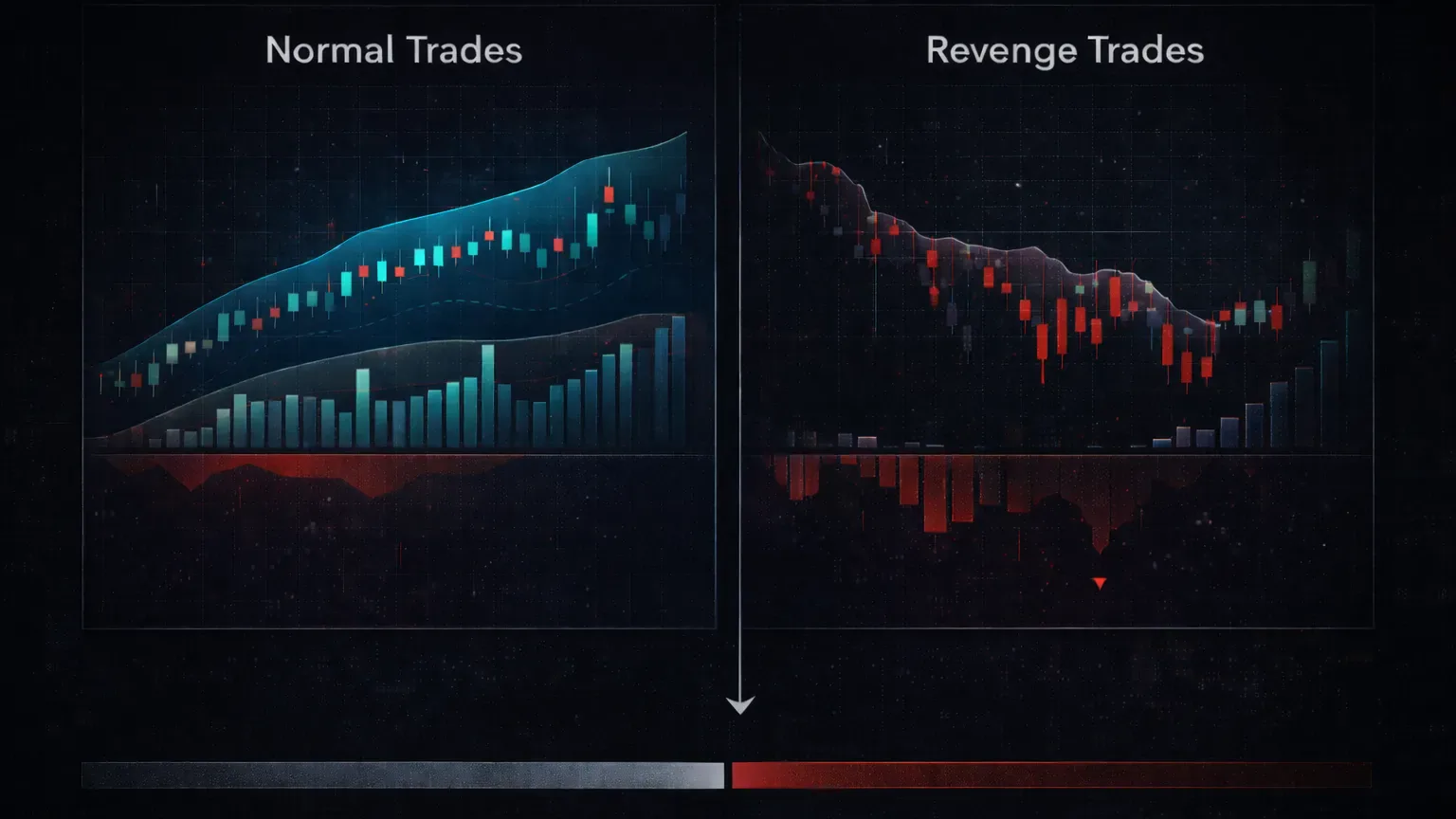
A clear pattern jumps out. His normal trades have a small positive expectancy. His revenge trades have a deeply negative expectancy. Almost all of his major drawdowns come from days where he went beyond -2R and kept trading. He also discovers something important. His risk-per-trade increases after he hits -3R on the day. Not always consciously. Sometimes he just widens the stop to “give it room.”
He sets one rule.
If he hits -3R in a session, he stops trading and journals immediately.
He also adds a second layer. If he feels emotional after a loss, he writes a short note in his journal before taking the next trade. Just a sentence or two about state of mind.
Over the next month, the equity curve changes. Not because his win rate skyrockets. But because the tail risk disappears. The -8R and -10R days vanish. His drawdowns flatten. His psychology stabilizes. The account becomes easier to trade because he has removed the chaos.
Nothing mystical happened. He did not become “stronger mentally.” He simply used journaling to expose the pattern clearly enough that it became impossible to ignore.
And once the pattern was visible, discipline became easier.
How Journaling Solves the Problem
Revenge trading does not stop because you “try harder.” It stops when you build a feedback loop that makes emotional trading obvious, uncomfortable, and less likely to repeat. Journaling is what creates that loop.
The first benefit is awareness. Most traders underestimate how often they revenge trade. They remember the big blow-ups but forget the dozens of smaller moments where they bent rules slightly. A structured journal forces every trade to pass through the same review filter. You write notes. You apply tags. You describe what you were thinking. That repeated reflection makes it much harder to lie to yourself.
The second benefit is pattern recognition. Once trades are tagged and stored, you can group them. You can isolate all trades taken after a losing streak. Or all trades where size increased after a loss. Or all trades taken immediately after liquidation wicks. Suddenly the story is not emotional anymore. It is data.
Crypto-Specific Tags Make Patterns Obvious
This is also where crypto-specific journaling matters. A crypto trader might tag by:
- Revenge trade
- Chasing
- Increased leverage
- Ignored stop
- Overtrading
- Entered early
- Emotional state tilted
Over time, those tags form clusters. When you look at performance grouped by tag, you start to see which behaviors are destroying edge. In most cases, revenge trades have significantly worse expectancy than normal system-based trades. Once you see that gap clearly, the urge to “win it back” starts to look like a tax on your account, not a solution.
The third benefit is accountability. Writing a short note like “I increased size because I was angry after the last loss” hits differently than just taking the trade and pretending it was fine. The act of documenting your state forces your brain to step back for a second. That pause alone can prevent a lot of bad decisions.
Automation also helps. When trades are imported automatically from exchanges like Binance, Bybit, Coinbase, or OKX, the friction to journal disappears. You are not fighting CSV files or spreadsheets. You are simply reviewing what already exists in one place. Platforms like TradeChainly are built around that idea. Continuous sync means your job is not data entry. Your job is reflection.
But reflection is not enough on its own. The final step is structured review.
A serious trader will sit down weekly and ask simple questions:
- How did I behave after losses this week?
- Did I change size?
- Did I force trades late in the session?
- Are revenge trades still present in my stats?
If the answer is yes, the trader updates rules, writes notes, and keeps iterating.
That is how journaling stops revenge trading. Not by magically removing emotion. But by shining such a bright light on the behavior that it becomes impossible to ignore, and eventually incompatible with how you operate.
The Framework That Prevents a Spiral
You do not beat revenge trading with willpower. You beat it with structure. Use this simple framework if you trade crypto intraday. Adjust the numbers to match your risk tolerance, but keep the logic intact.
Step 1: Define a maximum daily loss.
Pick a number where you can still think clearly the next day. For many traders that sits between -2R and -3R. Once you hit that number, the session ends. No exceptions. Crypto is open 24 hours a day, which means you will always feel like there is another opportunity. That is exactly why you need a fixed stop condition.
Step 2: Lock your position size after a loss.
Revenge trading often begins with a size increase. So remove that option completely. Decide that your position size does not change based on PnL. If you want to size up, do it as part of a planned strategy update, not as an emotional reaction.
Step 3: Journal immediately after losing trades.
Write what you felt, not just what you saw on the chart. Were you annoyed? Rushed? Pressured by social feeds? Losing streaks hurt more in crypto because volatility makes losses feel heavier. If you document the emotion honestly, your future self will thank you.
Step 4: Review sequences, not individual trades.
Most revenge trading happens in clusters. Look at what happens after your first loss. Then after your second. Do your stats fall apart at a certain point? If yes, tighten your rules around that threshold. Do not rely on instinct. Let the data shape the rule.

Step 5: Build if-then rules.
For example:
If I hit -2R, I switch to simulation mode for the rest of the session.
If my heart rate spikes or I feel rushed, I must write a quick note before trading again.
If volatility is extreme, I reduce size, not increase it.
These rules turn emotion into process.
Step 6: Protect sleep and reset time.
This is unique to crypto. Because the market runs 24/7, it is tempting to chase losses through Asia, Europe, and US sessions without a break. That usually leads to mental fatigue and worse decisions. Protect downtime on purpose. Flat exposure is a position too.
If you follow this framework consistently, something interesting happens. The bad days shrink. The good days remain. Your equity curve becomes smoother because the tail risk is gone. You still feel frustration. You still take losses. But the spiral never takes control.
That is what sustainable trading looks like.
Where This Lands In Your Journal
It is one thing to understand revenge trading conceptually. It is another to build a workflow that keeps you out of it during real-time trading. A proper crypto trading journal becomes more than a diary. It becomes a system.
In practice, your trades are automatically imported from exchanges like Binance, Bybit, Coinbase, or OKX. You do not waste energy on spreadsheets or manual entry. The data is always there, session by session. That alone lowers friction, because review becomes a normal part of the trading day instead of a chore you avoid.
After each trade, you open the trade detail view and add context. You tag the setup. You add notes about your state of mind. If the trade was emotional, you say so. If you increased leverage after a loss, you mark it. If you took the trade outside your plan, that becomes visible. Nothing gets hidden inside memory.
Then you zoom out.
In the reports section, you filter trades by tag. You look specifically at trades taken:
After losing streaks
With increased leverage
Late in the session
With emotional notes
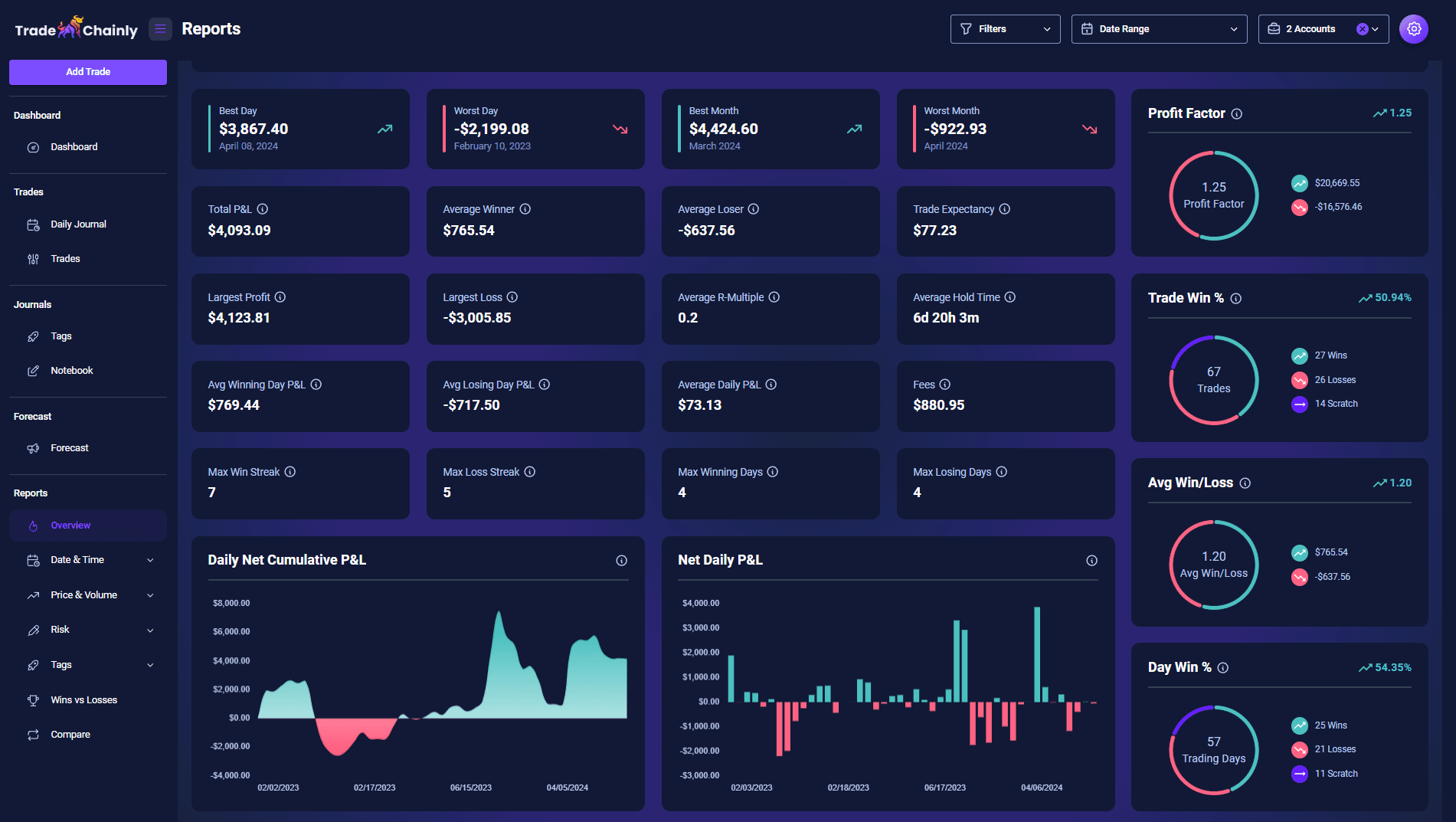
This is usually the moment where the truth becomes uncomfortable. You see the difference in expectancy between normal trades and emotional trades. You see how drawdowns line up with revenge trading behavior. You see that the strategy is not the problem. Execution is.
A crypto-only platform like TradeChainly is built around this type of workflow. Automated syncing, tagging, dashboards, and notes make it natural to connect behavior to performance. Instead of reviewing once a month, you create a consistent end-of-day or end-of-week routine that keeps you honest.
Over time, the journal becomes a mirror.
You start noticing warning signs earlier. You see when your trading drifts away from plan. You recognize the emotional triggers that usually lead to bad decisions. And because you have already seen the cost of those decisions in your data, it becomes easier to step back before the spiral begins.
Revenge trading thrives in noise and denial. A structured journal removes both.
The Closing Reality
Revenge trading is not a sign that you are weak or incapable. It is simply what happens when real risk, fast markets, and human emotion come together without structure. Crypto just amplifies the problem. Leverage increases the emotional intensity. The 24/7 session keeps you in the spiral longer than you should be there. Social pressure convinces you that stopping means falling behind.
But when you zoom out, the story becomes simple.
Your worst days rarely come from your system. They come from what happens after the system gets challenged. A normal -2R day becomes -8R. A controlled drawdown becomes a full reset. The edge disappears not because you forgot how to trade, but because emotion temporarily took control.
Journaling gives you a way back to logic.
It slows you down. It forces honesty. It turns vague frustration into visible data. It helps you see that revenge trading has a cost that shows up again and again in your stats. And once you see that clearly, you can design rules that protect you from yourself. Maximum daily loss. Fixed size. Honest notes. Weekly reflection. Simple habits that compound.
If you are serious about crypto day trading, this is not optional. The game is too emotional. The swings are too big. You need a review process that keeps you grounded when your brain wants to push harder and faster.
A platform like TradeChainly exists to support exactly that kind of trader. Crypto-only. Automated imports. Tags. Notes. Reports. Not as a gimmick, but as a way to help you build consistent review habits without friction.
Revenge trading will always try to creep back in. The difference is whether you notice it early or only after the damage is done.
The next time you take a loss, watch what happens in the five minutes after. If you can interrupt that moment, you keep the edge you already worked for.