
The Hidden Cost of Overtrading
Overtrading rarely feels dangerous while you are doing it. It often feels productive. You are active, engaged, and reacting to what the market gives you. In crypto, where price moves fast and opportunities seem endless, it is easy to confuse activity with progress. Many traders blow accounts not because their strategy is bad, but because they trade too often, too emotionally, and without structure.
Overtrading is one of the most common reasons profitable traders turn unprofitable. It quietly eats away at edge through higher fees, worse entries, emotional decision making, and mental fatigue. You start taking setups that you would normally skip. You hold losers longer. You chase price after missing a move. None of these mistakes happen because you lack knowledge. They happen because your process breaks down.
Crypto makes this problem worse. The market never closes. Volatility is constant. News, funding shifts, and sudden momentum changes create a feeling that you must always be involved. If you are not careful, trading becomes a reflex instead of a decision.
Telling yourself to “just trade less” does not work. Willpower is unreliable when money, stress, and adrenaline are involved. What actually works is building a system that makes overtrading visible. Journaling does that. Not as a diary, but as a mirror. It shows you when, how, and why you lose control of your execution. Once you can see those patterns clearly, you stop fighting yourself and start fixing the process.

What Overtrading Actually Looks Like in Crypto
Overtrading is not simply about taking “too many trades.” It is about trading outside of your plan. A trader who takes twenty well-planned, high-quality trades in a day is not necessarily overtrading. A trader who takes five impulsive trades driven by emotion probably is. The problem is not volume by itself. The problem is loss of selectivity.
In crypto, overtrading usually shows up in patterns that feel logical in the moment. After a losing trade, you want to get back to breakeven quickly. After missing a big move, you feel pressure to catch the next one. After a slow session, you start forcing entries just to feel involved. Each decision seems justified, but together they create a cycle where your strategy becomes secondary to your emotions.
One common form is revenge trading. This happens after a stop-out or liquidation. Instead of stepping back, you immediately look for another entry. The goal shifts from executing your setup to recovering the loss. In futures markets like Binance or Bybit, where leverage magnifies results, this behavior is especially dangerous. A small emotional decision can quickly turn into a large drawdown.
Another form is FOMO trading. Crypto moves fast, and when price accelerates, it feels like opportunity is slipping away. You enter late, often without a clear invalidation point, because you are reacting instead of planning. These trades rarely match your normal criteria. They are driven by urgency, not edge.
There is also boredom trading. This is common in both spot and futures markets. When nothing is happening, you start lowering your standards. You convince yourself that a marginal setup is “good enough.” Over time, this slowly degrades your performance because your best trades are mixed with low-quality noise.

Overtrading looks different between spot and futures. Spot traders tend to overtrade through excessive rotation between assets and timeframes, constantly chasing short-term momentum. Futures traders overtrade through position stacking, repeated re-entries, and increasing leverage to compensate for frustration. The mechanics change, but the root cause stays the same: trading becomes emotional instead of procedural.
Crypto’s volatility amplifies all of this. Rapid price movement, constant market access, and high leverage create a perfect environment for impulsive behavior. Without structure, the market controls you. Overtrading is simply what happens when your execution has no external boundaries.
Why Willpower Fails and Data Works
Most traders try to solve overtrading with discipline alone. They promise themselves they will be more patient, more selective, and more controlled. It usually works for a few sessions. Then emotions take over and the same patterns return. This is not because you are weak. It is because your brain is not designed to make calm, rational decisions when money and uncertainty are involved.
When you are in a live trade, your nervous system is active. Stress, excitement, fear, and urgency all compete for attention. Your ability to self-regulate drops. That is why rules that feel obvious during review become easy to break during execution. You are asking willpower to override biology, and that is a losing battle long term.
Data changes this dynamic because it creates external accountability. Instead of relying on how you feel, you rely on what is measured. When your journal shows that most of your losing days come from sessions where you took too many trades, stayed too long, or traded after a loss, the problem becomes concrete. It stops being emotional and starts being mechanical.
Metrics also remove excuses. You can no longer tell yourself that “today was different” when your data shows the same pattern repeating. Overtrading is rarely random. It clusters around specific conditions such as after drawdowns, during high volatility, or late in sessions. Journaling makes those clusters visible.
Instead of trying to suppress impulses, you build rules around measurable behavior. You do not need to control every emotional reaction. You only need to control the actions that follow them. That is where data becomes powerful. It shifts the focus from motivation to structure.

| Metric | What It Shows | Overtrading Signal |
|---|---|---|
| Trades per session | How frequently you act | Spikes on losing days or emotional sessions |
| Session duration | How long you stay active | Long sessions with declining performance |
| Consecutive losses | Emotional pressure points | Overtrading after 2–3 losses |
| Average R per trade | Trade quality consistency | Lower R when overtrading begins |
| Fees as % of PnL | Cost of excessive activity | Fees rising relative to profits |
| Re-entry frequency | Impulsive behavior | Re-entering without new setup confirmation |
Once you track these, patterns appear quickly. You might discover that your first three trades are solid, but everything after that is noise. Or that your worst trades happen in the last hour of your session. Or that you overtrade only after a loss, not after a win. These insights cannot be generated by memory. They only come from records.
This is why journaling works when willpower fails. It removes ambiguity. You stop guessing why you are struggling and start seeing exactly where your execution breaks down. From there, reducing overtrading becomes a design problem. You design limits around the behaviors that cost you money, instead of hoping emotions will behave differently tomorrow.
Turning Your Journal Into an Overtrading Detection System
Most traders journal, but very few journal in a way that actually stops overtrading. They record entries, exits, and PnL, then move on. That kind of journaling helps with strategy evaluation, but it does little to control behavior. To reduce overtrading, your journal needs to function as a detection system. It should make impulsive activity impossible to hide.
The first step is tracking context, not just outcomes. A losing trade is not automatically a bad trade. But a losing trade taken after three previous losses, late in a session, or outside your normal setup criteria often is. Without context, everything looks random. With context, patterns become obvious.
Tagging is one of the most powerful tools here. You are not tagging for organization. You are tagging for behavior recognition. Tags like “revenge,” “FOMO,” “boredom,” or “outside plan” are uncomfortable to use, which is exactly why they work. Every time you apply one, you reinforce awareness. Over time, you start recognizing those situations before you even enter the trade.

For example, if you review your journal and see that most of your drawdowns come from trades tagged “revenge,” you know the problem is not your strategy. It is your reaction to losses. That is a completely different issue to solve. Instead of changing indicators or setups, you change your rules around post-loss behavior.
Session grouping is another critical piece. Crypto traders often think in individual trades, but overtrading is a session-level problem. You need to see how your behavior evolves across time. Journaling by session lets you notice when your edge disappears. Many traders find that their first few trades are disciplined, then quality drops. Without session tracking, this remains invisible.
Trade frequency thresholds help formalize this. If your data shows that performance drops after five trades in a session, that becomes a rule. The sixth trade is no longer a decision. It is a violation. You remove discretion and replace it with structure.
Automation matters more than most traders realize. If you have to manually log every trade, journaling becomes inconsistent. Inconsistency kills pattern detection. When trades are imported automatically from exchanges like Binance, Bybit, Coinbase, or OKX, your journal becomes complete by default. You stop selectively recording only the trades you feel good about.
Once data collection is frictionless, behavior analysis becomes reliable. You can trust what you see because nothing is missing. That is when journaling shifts from record-keeping to behavior control.
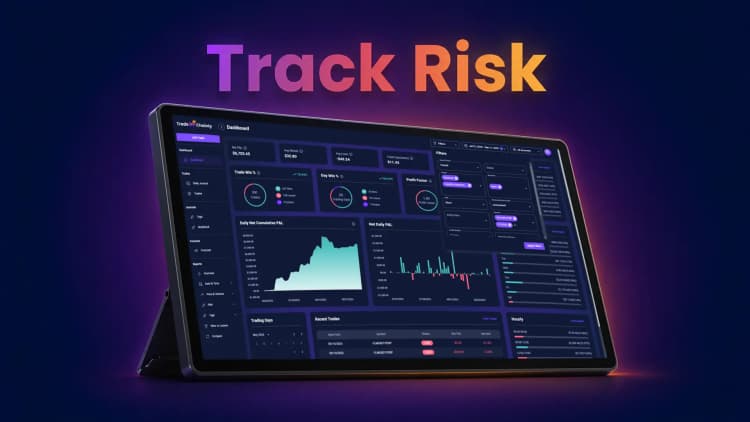
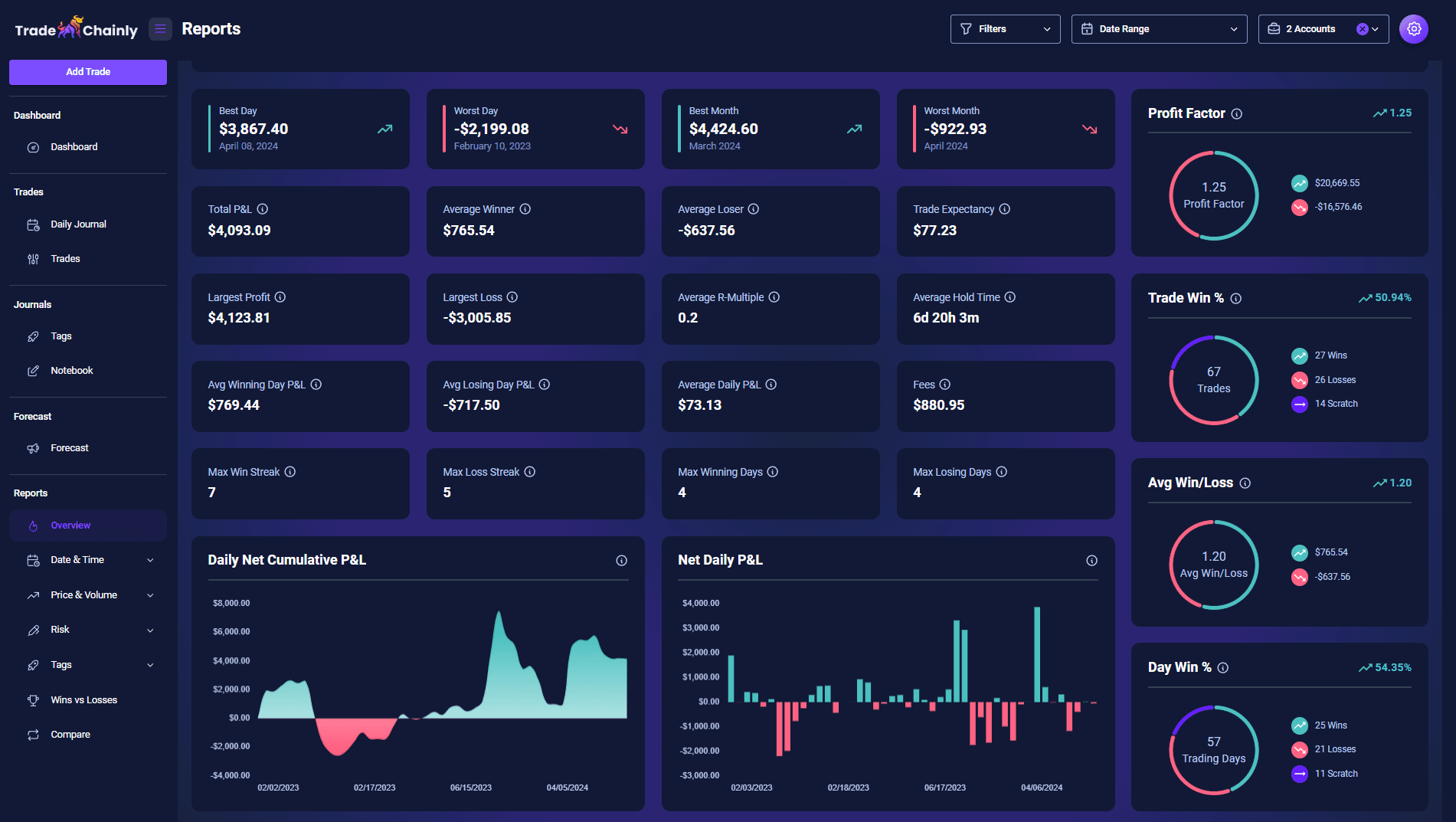
This is also where a platform like TradeChainly fits naturally into the process. When your trades sync continuously and your tags, notes, and session views are always current, your journal becomes a live feedback system instead of a historical archive. The goal is not to journal more. The goal is to make overtrading visible early enough that it loses its power.
How Journaling Changes Your Behavior in Real Time
The biggest shift happens when journaling stops being something you do after trading and starts influencing what you do during trading. At first, your journal only explains mistakes in hindsight. Over time, it begins to interrupt them before they happen. That is when overtrading starts to lose its grip.
When you know your behavior will be recorded, reviewed, and analyzed, your decision making slows down naturally. You hesitate before entering marginal trades. You question urgency. You recognize emotional states faster. This is not because you suddenly gained discipline. It is because your process now has consequences that are visible and measurable.
Many traders notice that after a few weeks of structured journaling, they start thinking in terms of sessions instead of individual trades. Instead of asking, “Is this trade good?” they start asking, “Is this trade worth extending my session?” That shift alone eliminates a large percentage of overtrading. It reframes execution as resource management. Your focus moves from opportunity chasing to capital and energy protection.
Journaling also reduces emotional spirals. If you have a rule that after two losing trades you pause and write a short session note, you interrupt revenge behavior automatically. The act of writing forces reflection. It creates a buffer between emotion and action. Overtrading thrives on momentum. Journaling breaks momentum.
Another powerful effect is selectivity restoration. When you review your data and see that most profits come from a small number of high-quality setups, you become less interested in everything else. The journal trains your attention. You stop seeing the market as endless opportunity and start seeing it as a filter. Only certain conditions deserve your capital.
Over time, this creates confidence. Not the aggressive confidence that pushes you into more trades, but quiet confidence that allows you to wait. You trust your process because you have evidence that it works when followed. Overtrading fades when patience becomes supported by data instead of hope.

Building a Simple Anti-Overtrading Routine
Overtrading stops when trading becomes a routine instead of a reaction. You do not need a complex system. You need a few clear boundaries that turn impulsive behavior into rule violations. Journaling is what enforces those boundaries because it makes every action accountable.
Your routine should have three parts: before the session, during the session, and after the session. Each part exists to reduce decision fatigue and remove emotional discretion.
Before the session, your goal is to define what a valid trading day looks like. That includes your maximum number of trades, the setups you are allowed to trade, and the conditions under which you stop. This is not about prediction. It is about permission. If the market does not give you what you defined, you do not participate.
During the session, your goal is to protect quality. This is where most overtrading happens, because emotions build while the session unfolds. Limits turn those emotions into stop signals. When you hit your maximum number of trades, you are done. When you take two losses in a row, you pause. When your focus drops, you exit the session. These rules remove negotiation with yourself.
After the session, your goal is to close the loop. Overtrading thrives when sessions end emotionally and start again without reflection. A short review anchors behavior. You are not analyzing strategy. You are analyzing discipline. Did you respect your limits? Did you break your rules? Why?
| Phase | Action | Purpose |
|---|---|---|
| Pre-session | Define max trades and session duration | Set clear boundaries before emotions appear |
| Pre-session | List allowed setups only | Prevent impulsive or experimental entries |
| In-session | Track trades taken vs limit | Create awareness of frequency creep |
| In-session | Pause after 2 consecutive losses | Break revenge trading loops |
| In-session | End session when limit is hit | Remove discretion from overtrading |
| Post-session | Write short session note | Force reflection and accountability |
| Post-session | Tag emotional trades | Build behavior data for review |

This routine works because it turns trading into a controlled process. You are no longer asking, “Should I trade?” every time price moves. You are following a predefined structure that protects your edge.
When your journal consistently captures these behaviors, overtrading becomes measurable. You can see how often you respect your rules and how often you violate them. Improvement becomes tangible. You are not trying to become more disciplined in theory. You are training a system that makes discipline the default.
Trade Less, But Trade Better
Overtrading is not a character flaw. It is a signal that your trading process has no friction. When there are no boundaries, no feedback loops, and no structure, the market dictates your behavior. You react, you chase, and you slowly drift away from the discipline that your strategy requires. Journaling changes that by turning trading into a system that can be observed, measured, and refined.
The goal is not to eliminate activity. The goal is to make every trade intentional. When your journal shows you where performance drops, when emotions take over, and when quality disappears, restraint becomes easier. You stop needing to convince yourself to trade less. The data makes the case for you.
Most traders discover that their edge comes from fewer trades than they thought. A small number of well-selected setups produce the majority of their profits. Everything else is noise. Journaling helps you separate those two categories clearly. Over time, you become comfortable letting opportunities pass because you trust the evidence behind your selectivity.
This is where a platform like TradeChainly fits naturally. When your trades sync automatically, your tags stay consistent, and your session reviews are always current, journaling stops being a task and becomes part of how you trade. It supports awareness without adding friction. That is what allows discipline to scale.
Avoiding overtrading is not about being more aggressive or more conservative. It is about being more precise. When your process is visible, your behavior improves. When your behavior improves, your performance follows.