
Why Manual Crypto Journals Break at Scale
Most crypto traders start journaling with spreadsheets, screenshots, or notes. It works when trade volume is low and execution is slow. It breaks as soon as trading becomes more active. Missed trades, wrong prices, forgotten fees, and incomplete context turn the journal into an approximation instead of a record.
Crypto makes this problem worse. Trades happen 24/7. Many traders use more than one exchange. Futures add funding fees, leverage, and liquidation risk. Spot and futures behave differently but often get mixed into the same log. After a few weeks, manual journals become inconsistent and unreliable. At that point, analysis stops being objective. You are no longer studying performance. You are guessing.
An automated crypto trading journal solves a data problem first, not a discipline problem. It ensures that every trade is captured, normalized, and calculated the same way. Profit and loss becomes precise. Fees stop being invisible. Funding stops being ignored. Execution statistics stop being distorted by missing data.
Once the data is complete and accurate, journaling becomes usable again. Reviews become faster. Patterns become visible. Decisions stop being emotional and start being statistical. Automation does not make you a better trader by itself. It removes the infrastructure failures that prevent you from becoming one.
What “Automation” Really Means in a Crypto Trading Journal
Automation in a trading journal is often misunderstood as a simple trade import feature. In reality, it is a system that continuously captures, processes, and standardizes your trading data so that analysis becomes reliable without manual intervention. Importing a CSV once a week is not automation. Copying trades from an exchange into a spreadsheet is not automation. Automation means the journal stays synchronized with your real trading activity at all times.
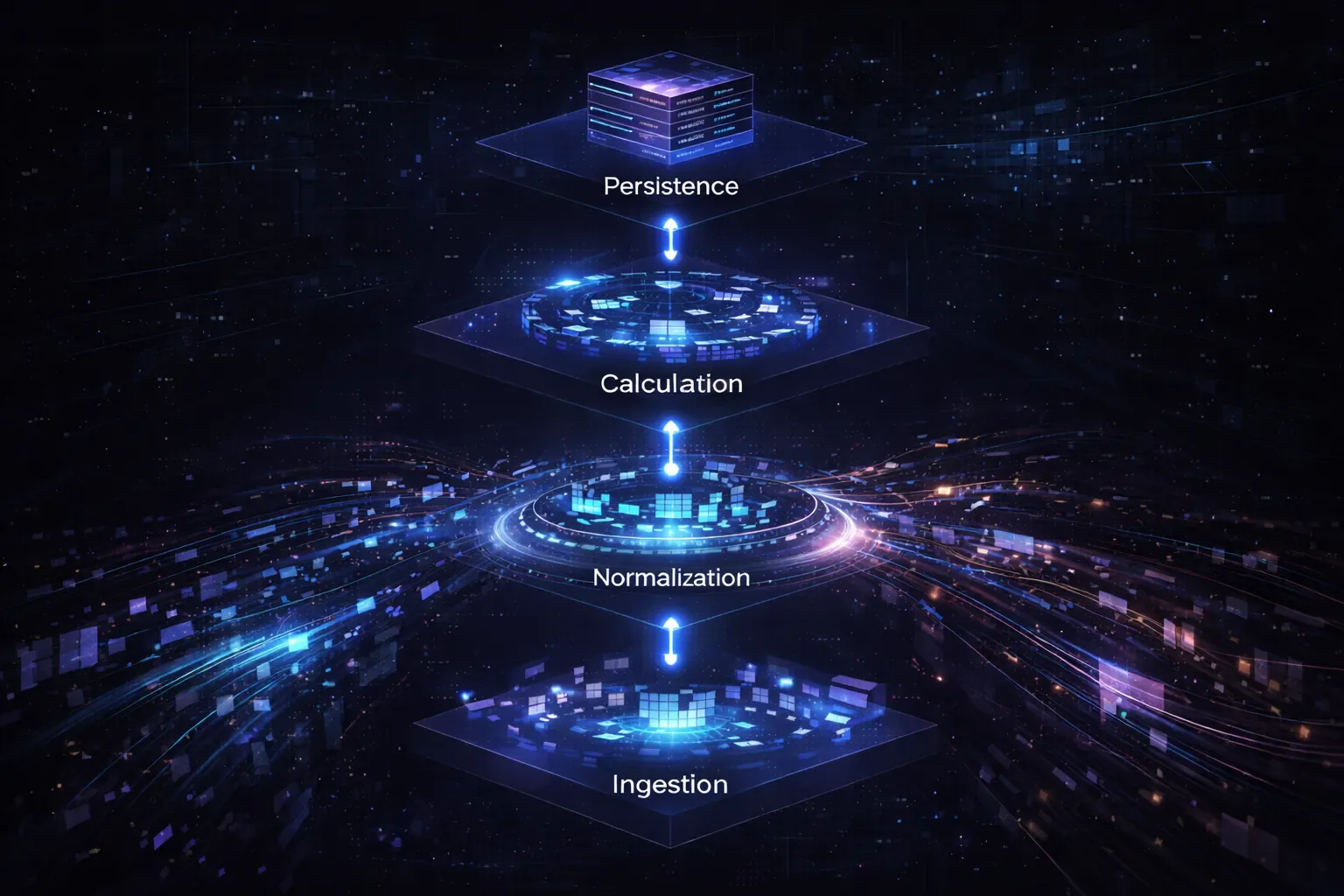
The first layer is continuous trade ingestion. Every executed order is pulled directly from the exchange through APIs. This includes partial fills, scale-ins, scale-outs, and position closures. Without this layer, your journal is always at risk of missing or misrepresenting trades. In crypto, where volume is high and execution is fast, even one missing order can distort performance metrics.
The second layer is normalization. Different exchanges structure data differently. Some report fees in base currency, others in quote currency. Some separate funding payments, others mix them into PnL. Automation standardizes all of this into one consistent format. Only then do statistics like win rate, expectancy, average R multiple, and drawdown start to mean something.
The third layer is calculation. An automated journal calculates profit, loss, fees, funding, position size, and risk metrics in real time. You are no longer dependent on manual formulas or spreadsheet logic that silently breaks when data changes. Every metric is derived from the same source of truth.
The final layer is persistence. Automation is not a one-time event. It is continuous. Your journal grows automatically as you trade. You do not decide when to update it. It updates because trading happened.
This is the difference between a log and a system. A manual journal is a record you maintain. An automated journal is infrastructure that maintains itself.
| Aspect | Manual Journal | Automated Journal |
|---|---|---|
| Trade capture | Entered by hand or CSV upload | Pulled automatically via exchange APIs |
| Data completeness | Often missing partial fills or small trades | Every order and execution is captured |
| Fee handling | Frequently ignored or approximated | Calculated precisely for every trade |
| Funding payments | Rarely tracked | Automatically included in PnL |
| Data consistency | Depends on user discipline | Enforced by system logic |
| Time spent | High and repetitive | Near zero after setup |
| Trust in metrics | Low to medium | High |
Why Crypto Trading Needs Automation More Than Traditional Markets
Crypto trading produces more data, faster, and with more complexity than most traditional markets. Manual journaling struggles here because the environment itself is not built around limited sessions, single brokers, or low execution frequency. Everything is continuous, fragmented, and high velocity.
The market never closes. Trades happen at any hour, across all time zones. You do not have a clean daily session boundary like equities. If you rely on manual entry, trades will be forgotten, logged late, or skipped entirely. Over time this creates gaps that make performance analysis unreliable. Automation removes timing from the equation. The trade is recorded because it happened, not because you remembered.
Most crypto traders use more than one exchange. Binance for liquidity, Bybit for futures, OKX for alt exposure, Coinbase for spot. Each platform reports data differently. Each has its own fee structure, funding logic, and position handling. A manual journal forces you to reconcile these differences yourself. Automation absorbs the fragmentation and converts everything into a single dataset.
Futures trading adds another layer of complexity. You are not only tracking entries and exits. You are tracking leverage, funding payments, liquidation thresholds, and margin behavior. Funding alone can materially change performance over time, especially for high-frequency or overnight positions. In manual journals, funding is often ignored because it is inconvenient to calculate. In an automated journal, it is just another data field.
Volume is also higher. Crypto traders scale in and out more frequently. Partial fills are common. One “trade” may consist of ten or more executions. Manual logs compress this into a single line and lose detail. Automation keeps the structure intact.

This is why automation in crypto is not optional. It is the difference between having approximate data and having usable data.
The Core Components of an Automated Crypto Trading Journal
An automated journal is not a single feature. It is a stack of systems that work together. If any layer is weak, the entire analysis becomes unreliable. The goal is not convenience. The goal is structural correctness.
The first component is trade ingestion. Every order, fill, scale-in, and scale-out must be captured directly from the exchange. This includes canceled orders that partially filled and positions that were closed in multiple executions. Without full ingestion, your dataset is incomplete before analysis even begins.
The second component is normalization. Exchanges do not speak the same language. Fees can be charged in different assets. PnL can be reported before or after fees. Funding can be shown separately or buried in account history. Normalization converts all of this into a single consistent structure. Position size, entry price, exit price, realized PnL, fees, and funding must follow the same rules for every trade regardless of where it was executed.
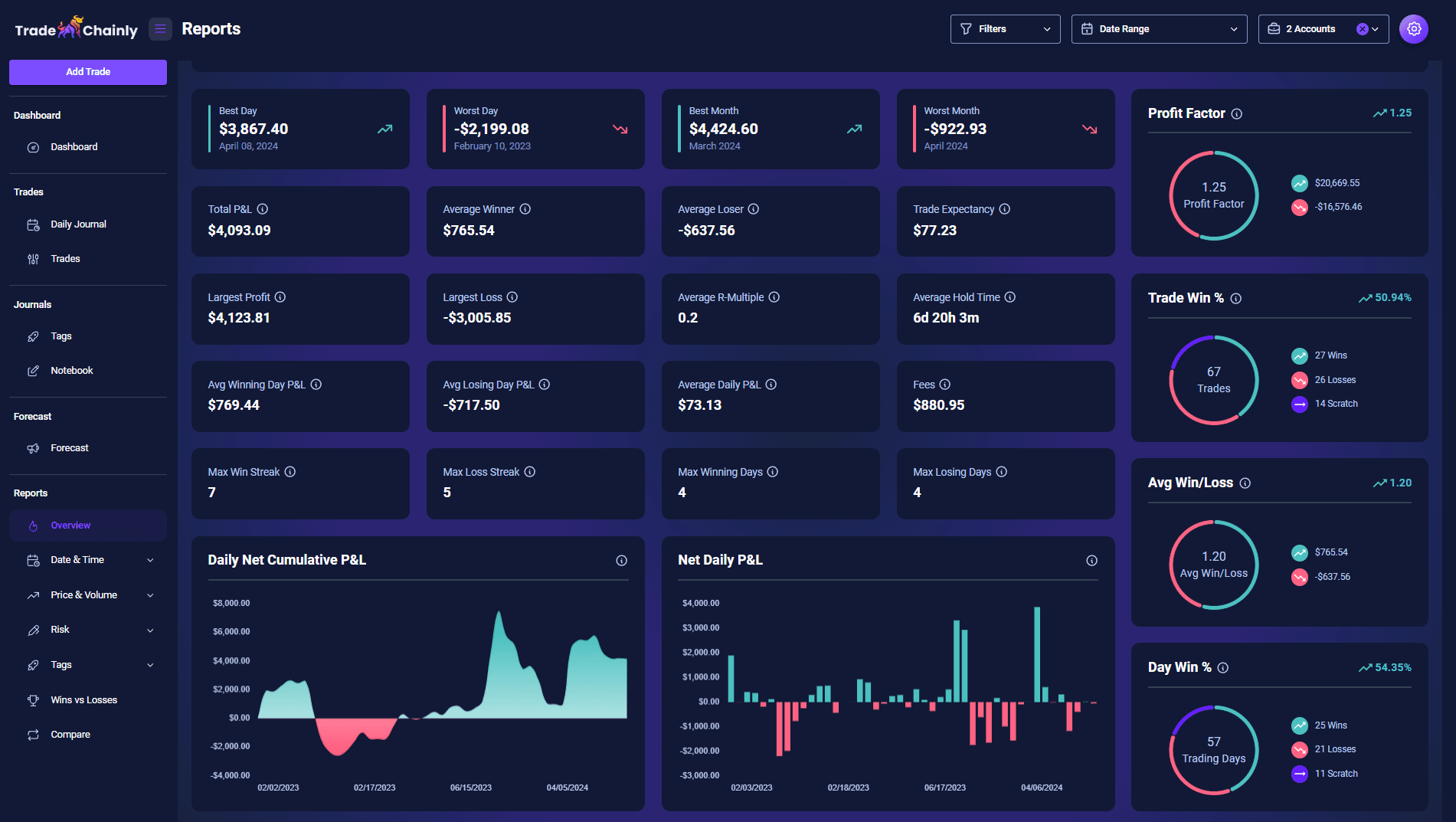
The third component is metric calculation. Once data is normalized, the system can calculate statistics that actually reflect performance. Win rate, average win, average loss, expectancy, drawdown, and risk exposure must all be derived from the same clean dataset. This removes spreadsheet logic errors and prevents silent calculation drift.
The fourth component is contextual enrichment. Raw numbers alone are not enough. You need to attach meaning to trades. Tags for setups, mistakes, emotions, market conditions, and execution quality transform a dataset into a behavioral record. Notes add context that cannot be captured numerically, such as hesitation, overconfidence, or external distractions.
The final component is reporting. This is where automation becomes actionable. Dashboards, tag-level performance breakdowns, time-based statistics, and symbol analysis convert stored data into decisions. Without reporting, automation only stores information. With reporting, it guides improvement.
| Component | What it Handles | Why It Matters |
|---|---|---|
| Trade ingestion | Captures all orders and fills | Prevents missing or distorted trades |
| Normalization | Standardizes data from all exchanges | Makes metrics comparable |
| Calculation | Derives PnL and performance metrics | Ensures accuracy and consistency |
| Tagging and notes | Adds behavioral and strategic context | Enables pattern discovery |
| Reporting | Visualizes and summarizes performance | Converts data into decisions |
How Automation Improves Accuracy, Not Just Convenience
Most traders assume automation is about saving time. The bigger benefit is accuracy. Manual journals introduce small errors that compound into large distortions. Missing a few trades, rounding prices, skipping fees, or ignoring funding changes how your performance actually looks. Over dozens or hundreds of trades, those distortions reshape your understanding of what works.
The most common failure is incomplete trade capture. When a journal misses even a single partial fill, it changes position size, average entry, and realized PnL. That one error propagates through every metric that depends on it. Automation prevents this by recording trades at the execution level, not the summary level.
Fees are another major source of distortion. Crypto fees are not trivial. Taker fees, maker rebates, and fee discounts materially affect expectancy, especially for scalpers and high-frequency traders. In manual journals, fees are often estimated or ignored. Automation calculates them per execution and includes them in every metric.
Funding payments in futures trading quietly change long-term performance. A strategy can look profitable before funding and barely break even after it. Most manual journals do not reflect this. Automated systems treat funding as part of realized PnL, which keeps strategy evaluation honest.
Automation also standardizes risk metrics. Position size, leverage, and exposure are derived from the same normalized dataset. This prevents the common problem where risk calculations look correct individually but contradict PnL data because they were built on different assumptions.
Accuracy is what turns a journal into a decision tool. Without it, you are not analyzing performance. You are analyzing a rough estimate of performance.

Turning Raw Data Into Actionable Trading Insights
Automation gives you complete and accurate data, but data alone does not improve performance. Insight comes from how you structure and query that data. The moment you add a tagging system on top of automated trades, your journal stops being a log and becomes a diagnostic tool.
Tags let you slice performance by behavior and decision-making instead of just by outcome. A profitable day can still be a bad trading day if it was driven by rule breaking or poor execution. A losing day can be a good trading day if it followed your process perfectly. Automation ensures all trades are captured. Tagging explains why they happened.
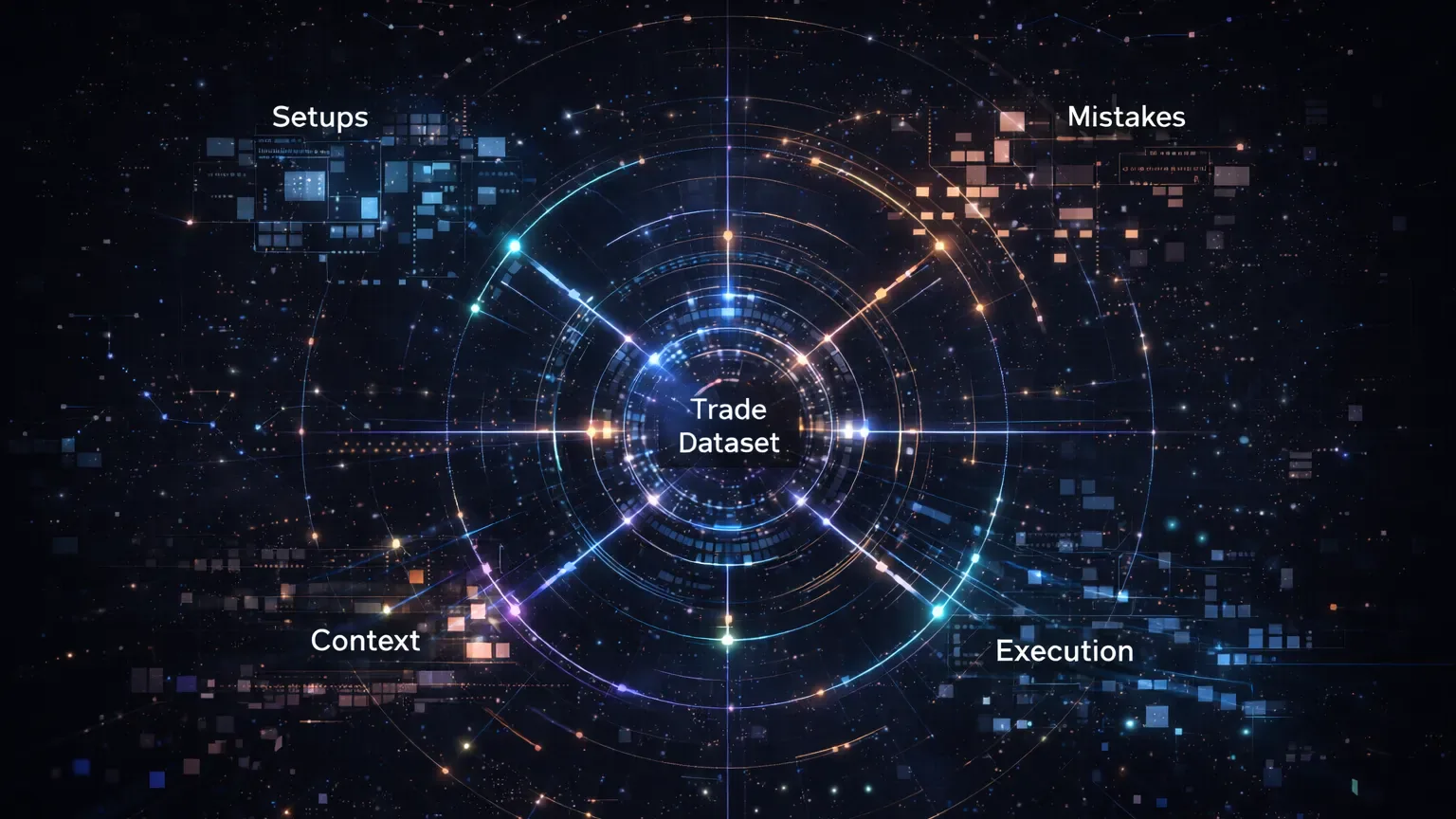
The most useful tags fall into four categories: setups, mistakes, execution quality, and market context. Setups describe the strategy you were trading. Mistakes describe deviations from your rules. Execution tags describe how well you implemented your plan. Market context explains conditions that influenced outcomes.
Once trades are tagged, patterns appear quickly. You can see which setups produce consistent returns, which mistakes destroy expectancy, and which market environments amplify or suppress your edge. This is not subjective review. It is statistical filtering of your own behavior.
Automation is critical here because tags only work when applied to a complete dataset. If half your trades are missing, the conclusions become misleading. When every execution is present, tags become mathematically meaningful.
Tagging also changes how you review trades. Instead of scrolling through individual charts, you can answer questions like:
- Which setup has the highest expectancy after fees and funding?
- Which mistake appears most often in losing streaks?
- Which symbols behave best with my execution style?
- Which time windows produce consistent volatility for my strategies?
This is how traders turn journaling into performance engineering.
| Tag Category | Example Tag | What It Reveals |
|---|---|---|
| Setup | Breakout retest | Performance of a specific strategy |
| Setup | Range scalp | Profitability in low-volatility markets |
| Mistake | FOMO entry | Impact of emotional chasing |
| Mistake | Early exit | Loss of expectancy through fear |
| Execution | Clean execution | Whether profits come from discipline |
| Execution | Late entry | Slippage caused by hesitation |
| Market context | High funding | Strategy sensitivity to carrying costs |
| Market context | News volatility | Behavior during unstable conditions |
Once you combine automation with tagging, your journal becomes self-explanatory. It stops telling you what happened and starts telling you what to change.
Building a Fully Automated Review Workflow
Automation only creates value if it changes how you review. The goal is not to collect more data. The goal is to reduce friction between trading and decision-making. A proper workflow makes review predictable and fast.
Daily review should be short and mechanical. You are not analyzing strategies yet. You are checking data integrity and tagging behavior. Confirm that trades synced correctly, apply your tags, and write brief notes where execution or emotion mattered. This keeps context fresh and prevents backlog. Ten minutes per day is enough if automation is doing the heavy lifting.
Weekly review is where patterns start to appear. This is when you look at tag performance, setup profitability, and mistake frequency. You are not looking for perfection. You are looking for signal. One or two clear findings per week is enough. If a setup is losing consistently, you reduce exposure. If a mistake keeps appearing, you isolate the condition that causes it.
Monthly review is strategic. You zoom out and validate whether your trading model is working. Expectancy, drawdown, and capital efficiency matter here. You assess whether your edge still exists after fees, funding, and execution costs. This is where automation protects you from self-deception because all calculations are based on complete data.
The workflow stays simple:
- Trade → sync automatically
- Tag and note daily
- Analyze weekly
- Adjust monthly
Human judgment stays at the interpretation layer. Automation handles collection and calculation. You decide what changes to make. This separation keeps emotions out of the data and keeps data out of emotional decisions.

Common Automation Mistakes Crypto Traders Make
Automation removes manual work, but it does not remove responsibility. Most mistakes happen when traders treat automation as a replacement for thinking instead of a foundation for thinking.
The first mistake is blind trust in the numbers. Automated data is only as good as the structure behind it. If trades are not syncing correctly, if funding is missing, or if fees are misclassified, the system will still produce clean-looking statistics that are wrong. You should periodically sanity-check totals against your exchange account history. Automation reduces errors, but verification keeps them from compounding.
The second mistake is skipping review. Some traders automate their journal and then stop looking at it. Data that is not reviewed is just storage. The entire point of automation is to make review easier and more frequent, not optional.
The third mistake is over-tagging. Too many tags dilute clarity. If every trade has ten labels, patterns disappear. Tags should be few, stable, and tied directly to decisions you can change. If a tag does not influence behavior, it does not belong in your system.
The fourth mistake is treating automation as “set and forget.” Your trading evolves. Your strategies change. Your tagging structure must evolve with it. Automation should support adaptation, not lock you into an outdated process.
Choosing the Right Automated Crypto Trading Journal
Not all automated journals are built for crypto. Many tools were designed for stocks and later adapted. The difference shows in how well they handle exchange diversity, futures mechanics, and continuous data flow. Choosing the right journal is about data integrity first, features second.
Exchange coverage is the starting point. The journal must support the platforms you actually trade on, not just the major names. Binance, Bybit, OKX, Coinbase, and Kraken should be baseline support. If you use more than one exchange, unified aggregation is mandatory. Manually merging datasets defeats the purpose of automation.
Futures handling is the second filter. Spot-only automation is simpler. Futures require correct treatment of leverage, funding, liquidation price, margin usage, and fee structures. If funding payments are not included in realized PnL, strategy evaluation becomes inaccurate by default.
Tagging flexibility is where most tools diverge. You need full control over tag creation, grouping, and filtering. Hardcoded categories limit analysis. A good journal lets you define setups, mistakes, execution quality, and market context in a way that reflects how you actually trade.
Reporting depth matters more than visual design. You should be able to break performance down by tag, symbol, time window, and trade direction. If a tool only shows top-level profit and win rate, it is a dashboard, not an analysis system.
Finally, consider data ownership and export. Your journal is a performance database. You should be able to export your data cleanly at any time. Lock-in without access is a risk.
The evaluation criteria are simple:
- Does it sync all your exchanges automatically?
- Does it handle futures correctly?
- Does it let you control your tagging logic?
- Does it give you performance breakdowns that change decisions?
- Can you access your raw data?
If the answer to any of these is no, the automation is superficial.

Conclusion: Automation as Trading Infrastructure
An automated crypto trading journal is not a productivity upgrade. It is trading infrastructure. It defines whether your decisions are based on complete data or on memory, approximation, and partial records. Without automation, performance analysis is fragile. With automation, it becomes stable and repeatable.
Once trade collection, normalization, and calculation are handled by a system, your role changes. You stop maintaining data and start interpreting it. Reviews become shorter because the numbers are already correct. Adjustments become clearer because patterns are already visible. You are no longer fighting your journal. You are using it.
This is where automation compounds. Better data leads to better reviews. Better reviews lead to cleaner execution. Cleaner execution improves expectancy. Over time, the gap between traders who automate and traders who do not becomes structural, not tactical.
Tools like TradeChainly exist to make this infrastructure practical for crypto traders. Automatic trade syncing across exchanges, accurate futures handling, tagging systems, and performance reporting remove the friction that usually kills journaling consistency. The value is not in features. The value is in turning journaling into a process that runs alongside your trading instead of competing with it.
If you want journaling to influence your results, it has to be automatic. Manual systems collapse under real trading volume. Automated systems scale with it. Choose the one that treats your data like the performance asset it is.