Turn Your Journal Into Insight
Most crypto traders who start a journal do it with the right intention. They want to become more disciplined, find patterns, and stop repeating the same mistakes. After a few weeks or months, many realize something feels off. The journal exists and the trades are recorded. Yet performance stays the same. Frustration builds when effort does not produce clarity.
Journaling is not the issue. How most traders use it is. They treat their journal like a diary instead of a decision-making system. They write thoughts, emotions, and trade summaries, but nothing is structured in a way that allows comparison, filtering, or pattern discovery. The journal becomes a storage place, not a tool for improvement.
Crypto makes this worse because of its speed and complexity. You are dealing with multiple exchanges, spot and futures, leverage, funding, and a market that runs twenty-four hours a day. A journal that is not structured around data collapses under this complexity. You end up with hundreds of trades and no way to extract meaning from them.
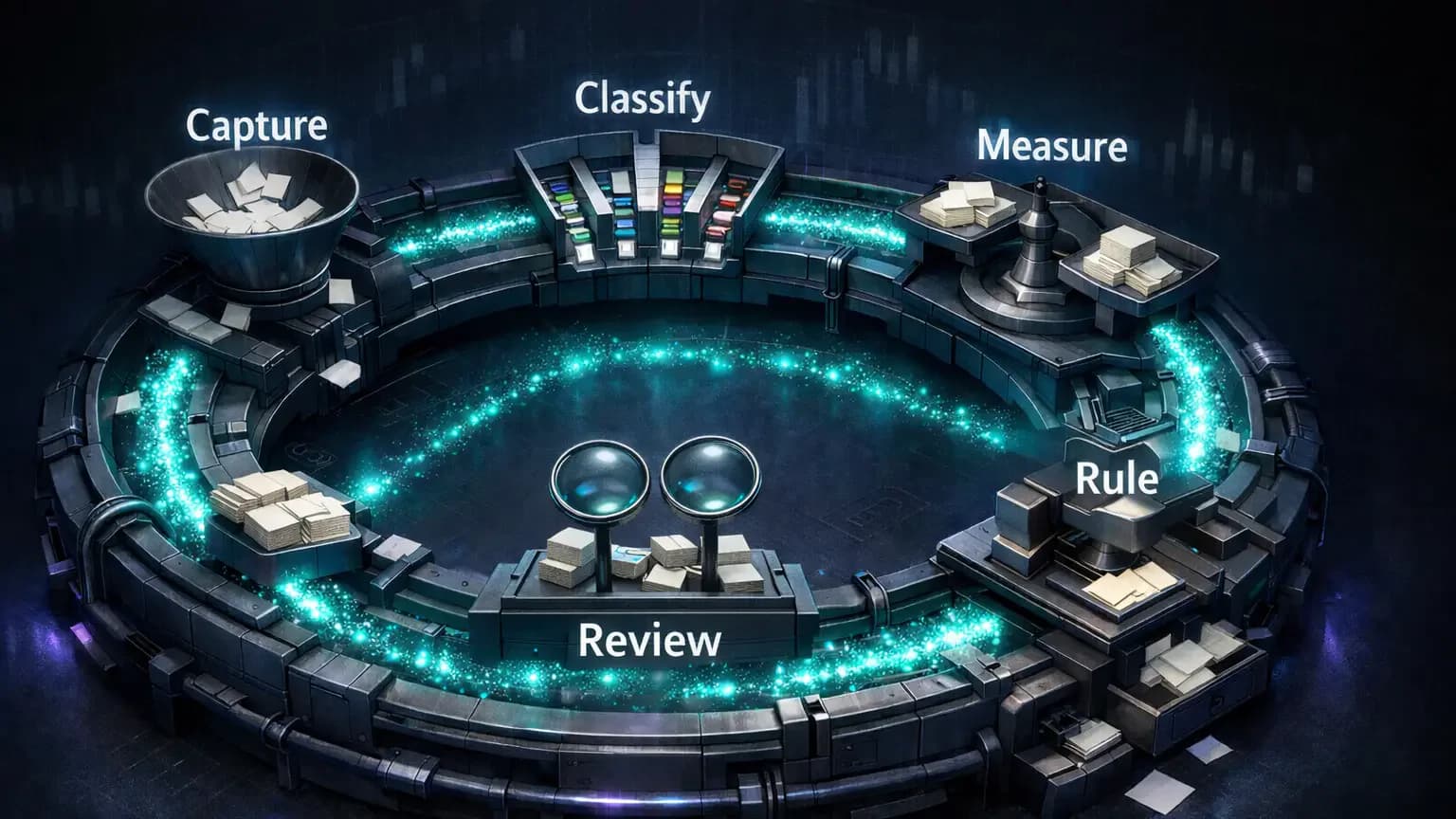
Journaling only works when it creates feedback loops. You make a decision. You record the outcome. You aggregate similar decisions. You measure performance. You adjust rules. Most traders skip aggregation and measurement and jump straight from recording to trading again, hoping awareness alone will create improvement.
If your journal does not help you answer questions like “Which setup makes me money?”, “Where do I consistently lose?”, or “Under what conditions should I reduce risk?”, then it is not doing its job.
The mistakes below are not about motivation or discipline. They are structural mistakes. They are flaws in how data is captured, organized, and reviewed. Fixing them turns journaling from passive into edge-building.
Log Trades As Data
A diary records experiences. A database creates insight.
You see entries like “Bad trade, entered too early,” “Felt scared because price was moving fast,” and “Should have waited for confirmation.” Those thoughts are fine, but they are not actionable unless they become structured data. If your journal is made entirely of free text, you cannot filter it, compare it, or measure it. You are left relying on memory and intuition, which are both unreliable in trading.
A database-style journal has fields that turn subjective observations into analyzable information. Instead of only writing “entered too early,” you define what early means. Was it before a level was reclaimed? Before a volume spike? Before a candle close? Once you define it, you can tag it. Once it is tagged, you can measure how often it happens and how much it costs you.
A simple example shows the difference. Instead of “Bad trade, rushed entry,” you log Setup: Range breakout, Mistake: Early entry, Market condition: High volatility, Result: -0.8R. Now that trade belongs to a group. You can later see how often early entries occur, under which setups they appear, and how expensive they are.

The same applies to emotions. Writing “felt fear” is not enough. Fear during what condition? After how many losses? During which session? On which setups? Without context, emotion tracking is noise.
You keep narrative, but anchor it to structure. Notes explain, tags classify, and metrics measure. Together, they create insight.
When traders say journaling “does not work,” it is often because their journal has no grouping mechanism. No grouping means no statistics, and no statistics means no edge development.
Keep Actionable Metrics
Some traders go to the opposite extreme. Instead of writing too little structure, they write too much. They track dozens of fields that look professional but offer no decision-making value. The journal becomes bloated, slow to maintain, and hard to review.
Common examples include candle size, RSI value, EMA distance, entry candle color, and random indicator states. These metrics are not wrong by default, but most traders never use them to change behavior.
If a metric does not influence position sizing, setup selection, trade timing, or risk exposure, it is useless for you.
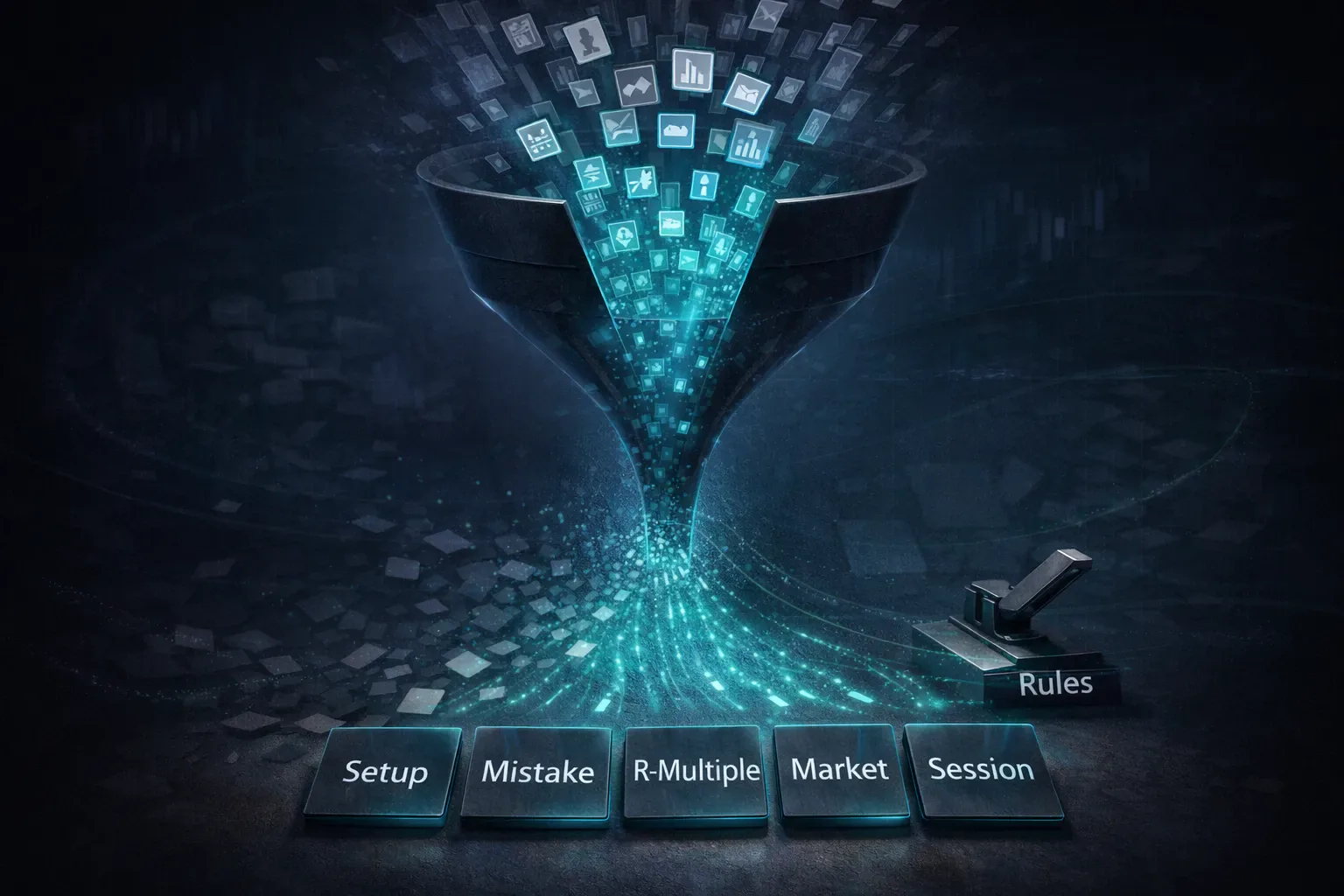
A good trading journal focuses on leverage points, the small number of variables that explain most of your performance variance.
| Actionable Metrics | Why They Matter | Non-Actionable Metrics | Why They Rarely Help |
|---|---|---|---|
| Setup type | Identifies what actually makes money | Indicator values at entry | Rarely change execution decisions |
| Mistake category | Shows behavioral leaks | Candle color | Cosmetic information |
| Risk-to-reward planned | Anchors expectancy | RSI number | Context dependent and inconsistent |
| R-multiple outcome | Normalizes performance across position sizes | Moving average distance | Hard to act on directly |
| Market condition | Reveals regime dependency | Entry wick size | Adds noise without structure |
| Time of day/session | Highlights session edge | Random volatility metrics | Often redundant |
Crypto traders benefit from metrics that explain behavior under volatility and leverage: setup classification, mistake identification, risk execution, market condition context, and outcome normalization.
If your journal feels heavy to maintain, you are probably tracking too much. Simplification improves consistency and review quality.
Separate Spot and Futures
Mixing spot and futures trades inside the same performance dataset is one of the fastest ways to destroy statistical clarity.
These are different instruments with different risk structures. Futures use leverage, incur funding, and introduce liquidation risk. Spot trades rarely face forced exits, and spot positions behave differently in drawdowns.
If you combine them, your expectancy calculations become meaningless. A 2R winner in futures with 10x leverage is not comparable to a 2R winner in spot. The psychological pressure is different. The risk of ruin is different. The capital efficiency is different.
Many traders do this accidentally because they want “one journal.” But one journal does not mean one dataset. It means one system with segmentation.
You need separate filters for spot and futures, separate performance views, and separate expectancy calculations. Otherwise you may think your strategy is stable when in reality spot trades are profitable and futures trades are dragging your account down. Or the opposite.
The fix is simple: every trade must be classified by product type. Everything else flows from that.
Build Useful Tags
Tags are the backbone of a useful trading journal. Without them, your journal is just a long list of trades. With bad tags, your journal becomes misleading.
Most traders make one of three mistakes. They use random tags, they use too many tags, or they use tags that describe feelings but not behavior.
Examples of weak tags include “Bad trade,” “Choppy,” “Emotional,” and “Unlucky.” These do not explain anything. They feel descriptive, but they are not analytical.
Good tags describe what you traded, how you executed, what went wrong or right, and under what conditions.
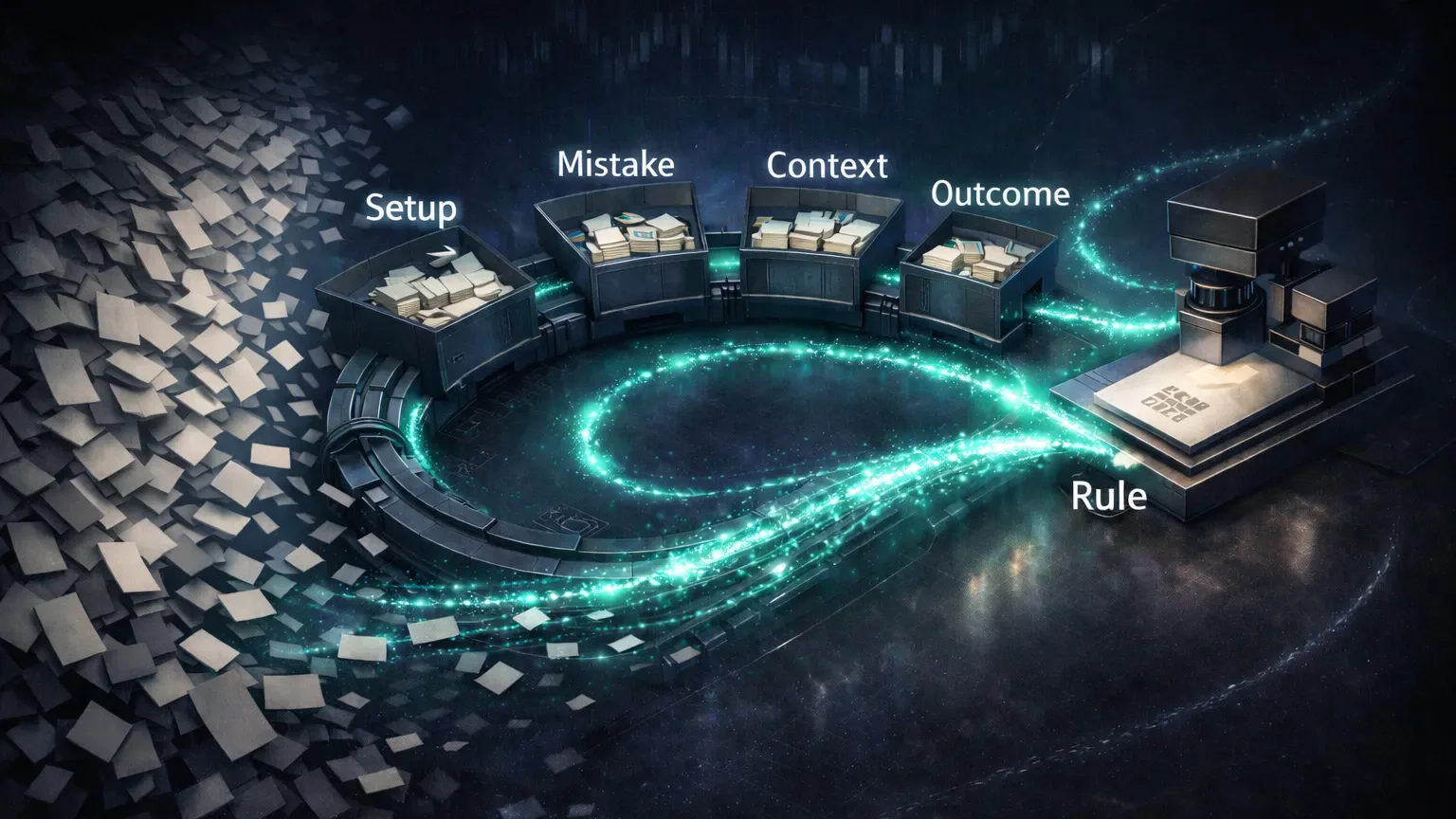
A strong tag system usually has three layers. Setup tags define what you traded, for example Range breakout, VWAP reclaim, Support bounce, Funding fade. Mistake tags define execution flaws, for example Early entry, Late exit, Stop too tight, Oversized risk. Context tags define environment, for example High volatility, Asia session, News day, Trend exhaustion.

This structure allows you to answer questions. Which setups make money? Which mistakes cost me most? Under what conditions do my setups fail?
Tag consistency matters more than tag creativity. A small set of reusable tags beats a large messy system. If you change tag names constantly or invent new ones every week, your data fragments. Fragmented data cannot be analyzed.
Your tag system should feel boring. Stable means analyzable.
Write Notes for Signals
Most traders write notes that feel reflective but lead nowhere. They describe emotions or outcomes without identifying causes. Over time, those notes pile up and become unreadable. You stop reviewing them because they never change how you trade.
Examples include “Bad entry,” “Chased price,” “Got scared,” and “Didn’t trust the setup.” These sentences describe frustration, not behavior. They do not tell you what specifically needs to change.
Useful notes describe decisions and conditions. They explain what you did differently from your plan, and why.
Compare “Chased price” versus “Entered after two large green candles instead of waiting for pullback to VWAP.” Now the mistake is measurable. You can tag it as “Chase entry.” You can track how often it happens. You can measure its cost in R. You can build rules to prevent it.
Your notes should answer three questions. What was my plan? What did I actually do? Why did I deviate, if I did?
Two or three precise sentences beat a paragraph of emotion. Precision makes notes actionable.
Review Trades in Groups
Single-trade reviews feel productive because they are concrete. You look at a chart. You see what went wrong. You promise to improve. Then you move on. The problem is that this rarely creates structural change.
One trade means nothing statistically. Ten trades show a hint. Fifty trades show a pattern. A hundred trades show a truth.
When you review trades individually, you tend to rationalize. You see each loss as “unique.” When you review trades in groups, you cannot escape patterns.
Grouping trades by setup, mistake, market condition, and session changes everything.
You stop asking “Why did this trade fail?” You start asking “Why do trades of this type fail?”
For example, you filter all trades tagged “Range breakout” and see Win rate: 38%, Average R: -0.4, and most losses happen during high volatility. Now you have actionable insight. This setup does not work in fast markets. You either avoid it or adapt it.

Group review removes emotion. It forces you to accept what your data says, not what you hope is true.
Segment by Time
Crypto trades twenty-four hours a day, but that does not mean every hour behaves the same. Liquidity, volatility, and structure change across sessions.
Many traders never tag time. They later wonder why performance feels random.
Time-based segmentation reveals session edge, fatigue effects, and news-driven volatility impact. Common divisions include Asia session, London session, New York session, and weekend versus weekday.
You might discover that your best trades happen during New York open, your worst trades happen late at night when tired, and certain setups fail during low liquidity hours.
This requires simple tagging and filtering.
Time is one of the highest leverage filters in crypto journaling because the market structure truly changes across sessions. Ignoring it is like trading blindfolded to half your edge.
Automate Trade Imports
Manual journaling creates invisible damage. You forget trades. You skip losers. You delay entries. Over time, your dataset becomes biased.
Automation is data integrity.
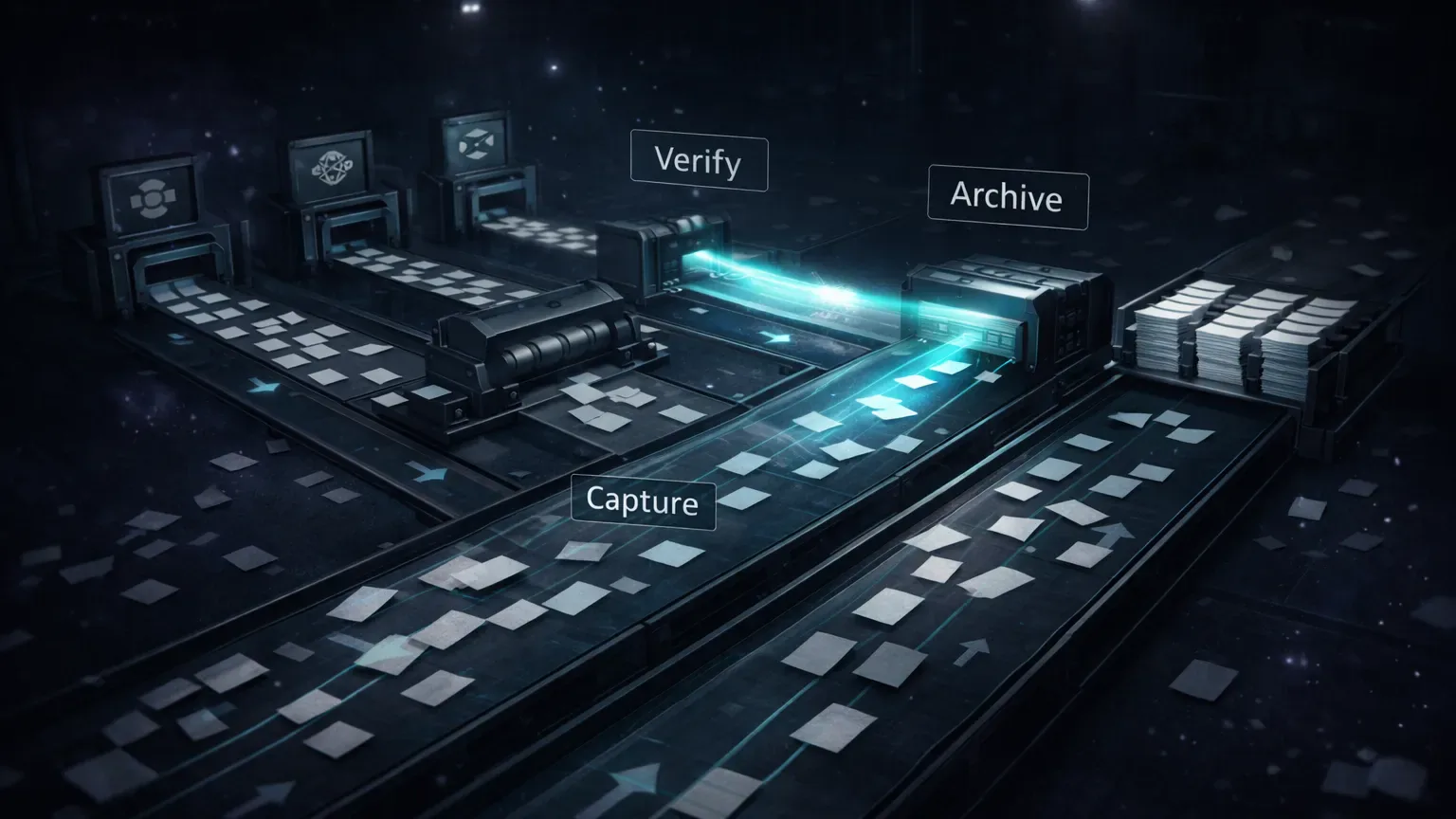
When trades sync automatically, every trade is captured, execution is objective, statistics are complete, and review becomes trustworthy.
Manual entry creates selective memory. Your journal starts reflecting what you want to remember, not what actually happened.
Crypto traders who scale in and out, hedge positions, or trade multiple exchanges simply cannot journal accurately by hand. The complexity is too high.
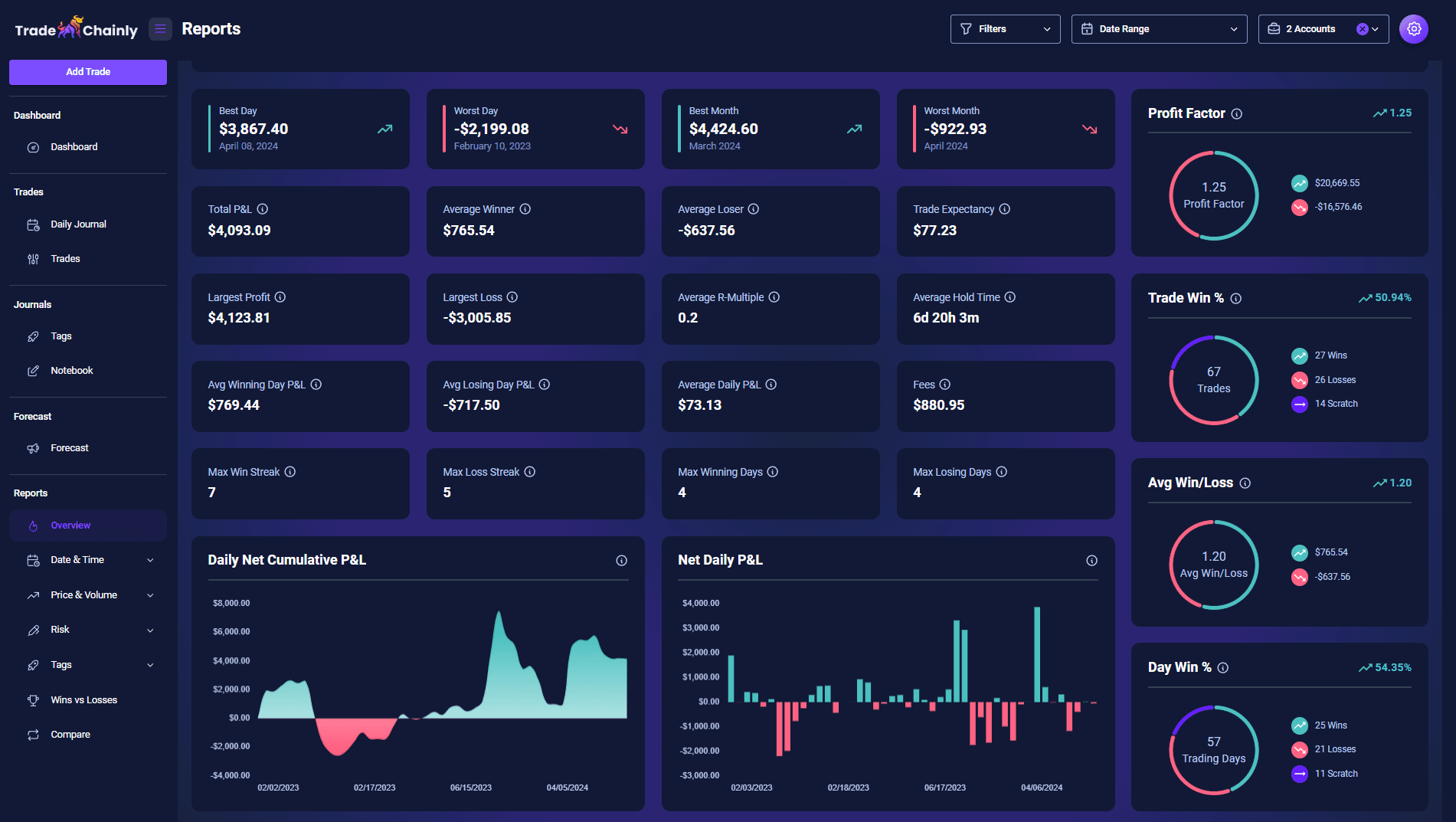
This is where tools designed for crypto matter. Platforms like TradeChainly allow continuous syncing from exchanges such as Binance, Bybit, Coinbase, and OKX so your journal remains complete even during active trading periods. The value is not speed. The value is accuracy.
Without automation, every other improvement in journaling loses reliability.
Turn Insights Into Rules
Many traders journal correctly but stop too early. They find patterns, then do nothing with them. The journal becomes observational instead of corrective.
Insight only matters if it changes behavior.
If your data shows “Early entries lose me money,” the fix is not “be more patient.” The fix is a rule: “I only enter after a candle closes above the level.”
If your data shows “I lose most during high volatility,” the fix is: “I reduce size by 50% during news sessions.”
Rules convert awareness into execution change. Without them, journaling becomes intellectual entertainment.
Your journal should constantly generate rules to add, rules to remove, and rules to refine. This is how a trading system evolves organically.
Run Weekly and Monthly Reviews
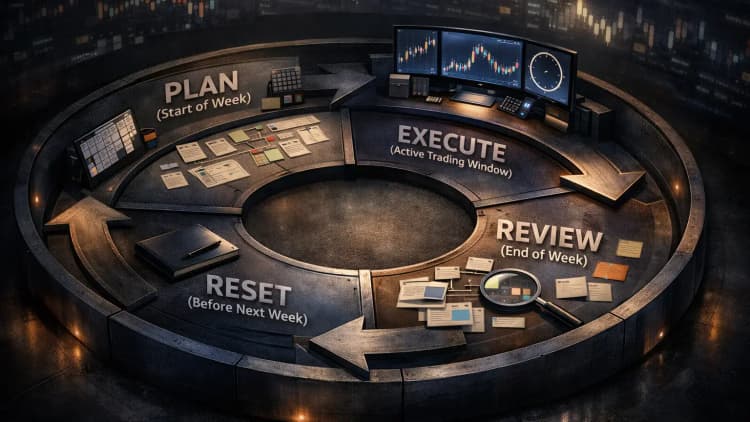
A journal without scheduled review becomes a storage bin. Data ages. Patterns fade. Mistakes repeat.
You need fixed review cycles. Weekly reviews are for execution quality. Monthly reviews are for strategic direction.
Weekly reviews focus on behavior: Did I follow my rules? Which mistake appeared most? Did I size correctly?
Monthly reviews focus on structure: Which setups perform best? Which tags dominate losses? Should I retire or modify strategies?
| Review Type | Focus Area | Typical Questions |
|---|---|---|
| Weekly | Execution discipline | Did I follow rules? Where did I break plan? |
| Weekly | Mistake frequency | Which error appeared most often? |
| Weekly | Risk control | Was sizing consistent? |
| Monthly | Strategy profitability | Which setups have positive expectancy? |
| Monthly | Market condition alignment | Where do my setups fail? |
| Monthly | Rule effectiveness | Did new rules improve performance? |

Review cadence is what transforms journaling from documentation into a performance engine.
Build the Feedback Loop
A trading journal is not about writing more. It is about structuring better. When journaling fails, it is almost always because the system around it is weak, not because the trader lacks discipline.
A journal that improves your trading has five pillars.
First, it captures complete data. Every trade must exist in the system, not just the ones you remember or the ones that feel important. This is why automation matters. Missing data destroys trust in your statistics. When your journal becomes incomplete, your conclusions become unreliable.
Second, it uses clean classification. Each trade needs clear identifiers. What setup was traded. What mistakes were made, if any. Under what market conditions it happened. What product type it was, spot or futures. This classification turns raw trades into structured information.
Third, it tracks only what you can act on. You do not need dozens of metrics. You need the small set that explains why trades succeed or fail. If a data point cannot lead to a rule change, it is probably unnecessary.
Fourth, it forces grouped review. You are not trying to understand individual trades. You are trying to understand categories of behavior. Grouped analysis is where journaling becomes powerful. It reveals edges and leaks that cannot be seen in isolation.
Fifth, it creates behavioral feedback loops. Every review should end with decisions. Add a rule. Remove a rule. Refine a rule. Adjust risk. Stop trading a setup. This is how your trading system evolves. The journal becomes the engine that shapes it.
When these five elements exist, journaling stops being an administrative task and becomes a performance tool. You stop writing for the sake of writing. You start journaling to sharpen decisions.
This is also where tools built specifically for crypto traders make a difference. A platform like TradeChainly is designed around these exact principles: automated trade syncing, structured tagging, segmentation between spot and futures, and analytics that support grouped review. The goal is turning trading data into insight that can actually shape your behavior.
Make the Journal Trustworthy
Most crypto traders do not fail at journaling because they are lazy. They fail because their journal was never designed to solve trading problems. It records activity, but it does not guide decisions.
The mistakes covered in this article are structural. They have nothing to do with motivation and everything to do with system design. Treating your journal like a database, simplifying your metrics, separating spot and futures data, building a clean tag system, reviewing trades in groups, automating imports, and converting insight into rules all move journaling from reflection to execution.
When your journal works, it changes how you trade. It changes what you focus on. It changes what you risk. It changes what you stop doing. That is the real purpose of journaling.
If you are serious about improving as a crypto trader, your journal should be the most important analytical tool you own. Build it like one.