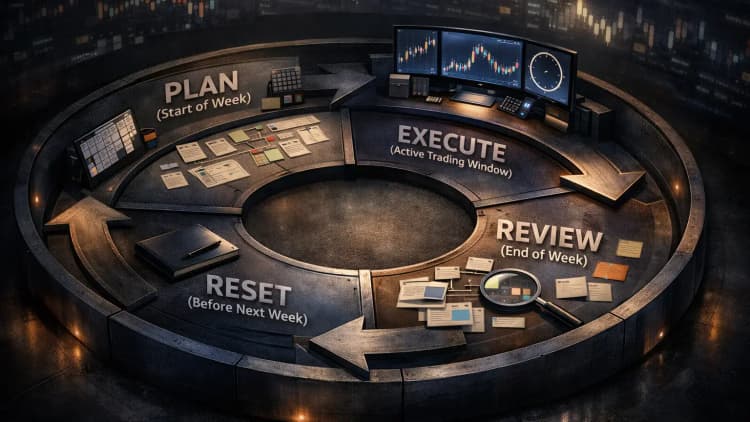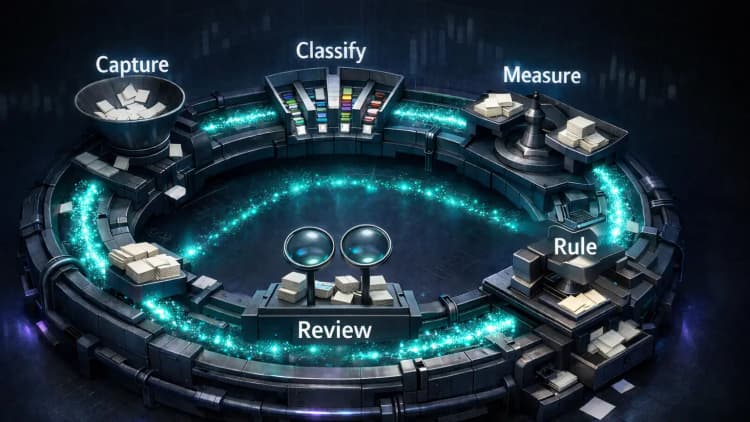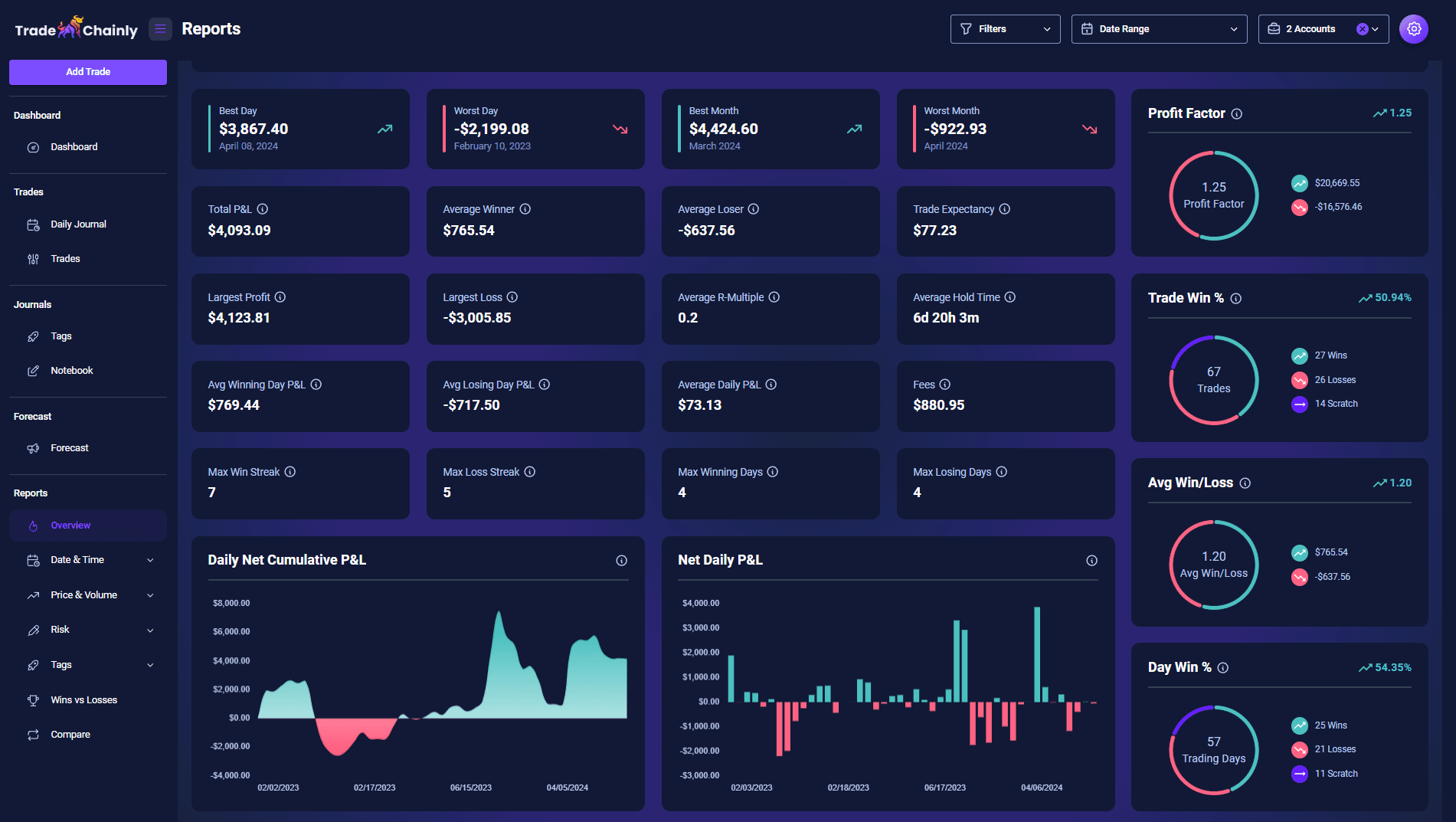

Why Motivation Fails and Structure Wins
Why does your crypto routine keep breaking after a week?
Most crypto traders believe they need more discipline. They think their problem is motivation, willpower, or focus. So they try to “be more serious,” trade less emotionally, or promise themselves they will finally start journaling tomorrow. It works for a few days, sometimes a few weeks, and then everything slips back to the way it was. The routine fades. The notes stop. The mistakes repeat.
The issue is not discipline. The issue is that most traders never build a system that makes consistency inevitable.
A real trading routine is not a checklist you follow when you feel inspired. It is a structure that removes decision fatigue and turns your trading into something measurable. When your process is clear, you do not rely on motivation. You rely on design. You know what happens before you trade, what happens during execution, and what happens after the trade is closed. Nothing is left to memory or mood.
Crypto makes this harder and more important at the same time. The market runs 24/7. Volatility is high. Leverage is accessible. Trades settle fast and mistakes compound quickly. Without structure, you drift into reactive trading. You jump between strategies, skip reviews, and slowly lose trust in your own decision-making. You may still have winning days, but you cannot explain why. You cannot repeat success on demand.
A trading routine is how you create stability inside a chaotic environment. It acts as your operating system. It defines how you prepare, how you execute, how you record data, and how you review performance. When done correctly, your routine becomes the real source of improvement, not the strategy you are currently trading.
This article is not about waking up earlier or forcing yourself to work harder. It is about building a routine that produces information, feedback, and clarity. Once you have that, discipline follows naturally because your process makes sense and your progress becomes visible.

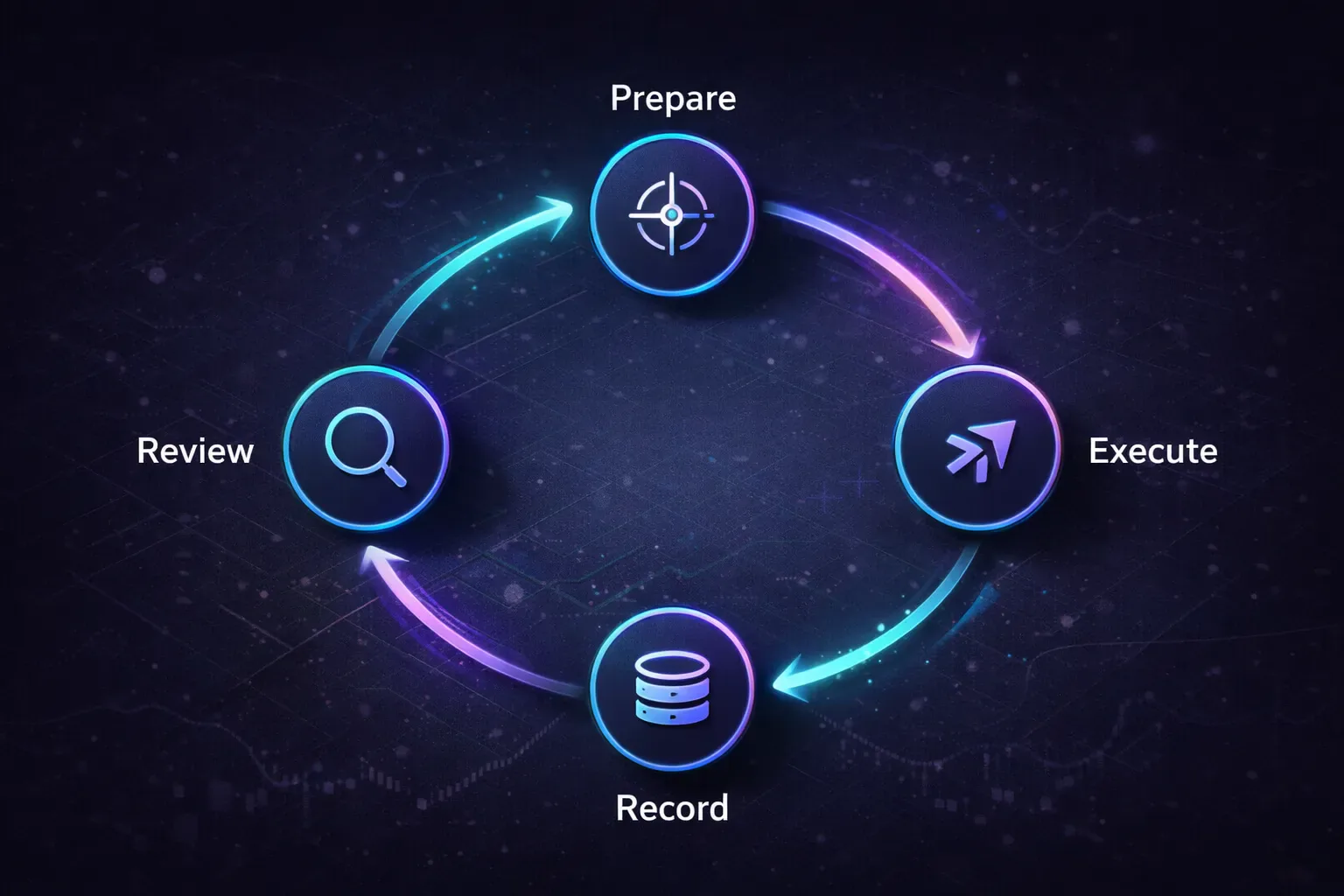
Think of your routine as a closed loop. You prepare, you trade, you record, and you review. Each cycle gives you better data. Better data sharpens your decisions. Sharper decisions reduce emotional noise. Over time, your routine stops being something you try to follow and becomes something that runs your trading automatically.
That is when consistency stops being a personality trait and becomes a design choice.
What Is a Crypto Trading Routine, and What Is It Not?
A trading routine is often confused with a schedule. Traders think it means waking up at a certain time, checking charts for an hour, placing a few trades, and calling it a day. That is not a routine. That is just a sequence of actions. A real routine defines how decisions are made, how data is collected, and how feedback is used to improve the next session.
Your routine is not about activity. It is about control.
When you have a proper routine, every part of your trading has a purpose. You are not just opening charts because you feel like trading. You are checking specific conditions. You are not entering trades because price looks interesting. You are following rules that came from previous data. You are not journaling because someone told you to. You are recording information that you will later use to make better decisions.
Most traders operate without this structure. They trade first and think later. They rely on memory to judge performance. They decide whether a day was “good” or “bad” based on PnL alone. That is not a routine. That is improvisation.
A crypto trading routine is a system that answers four questions clearly. What conditions must be present before you trade? How do you execute without second-guessing yourself? What information do you record from every trade? How do you use that information to adjust your behavior? If any of these are missing, your routine is incomplete.
It is also worth understanding what a routine is not.
It is not a rigid schedule that ignores your lifestyle. Crypto markets run all day and all night. Some traders trade London and New York sessions. Some trade Asia. Some only trade two or three times per week. A routine must adapt to your availability, not fight it. Structure matters more than timing.
It is not a motivational tool. You should not need to “feel motivated” to follow your routine. If your routine only works when you are in a good mood, it is too fragile. A good routine works when you are tired, distracted, or slightly frustrated because it removes unnecessary decisions.
It is not a strategy. Your trading strategy defines what you trade and how you enter. Your routine defines how you behave around that strategy. Two traders can trade the same setup and have completely different results because their routines are different. One records data, reviews performance, and corrects mistakes. The other just trades and hopes experience will fix things.
A routine also cannot be built all at once. Trying to design a perfect routine in one day usually leads to complexity that never gets followed. The goal is clarity, not sophistication. Your first routine should feel almost boring. Simple steps. Clear rules. Easy to repeat.
Crypto traders especially benefit from this simplicity because the environment itself is intense. Fast moves, constant price updates, leverage, and social media noise already demand mental energy. Your routine should reduce cognitive load, not add to it.
When your routine is correct, it creates a stable foundation. Your strategy can evolve. Your market focus can change. Your position sizing can improve. But your routine remains the framework that keeps everything consistent. It is the difference between random experience and structured growth.
Without a routine, you are just collecting trades. With a routine, you are building a trading system around yourself.
That distinction is what separates traders who improve steadily from traders who feel stuck despite years of screen time.
What Are the Core Building Blocks That Make a Routine Work?
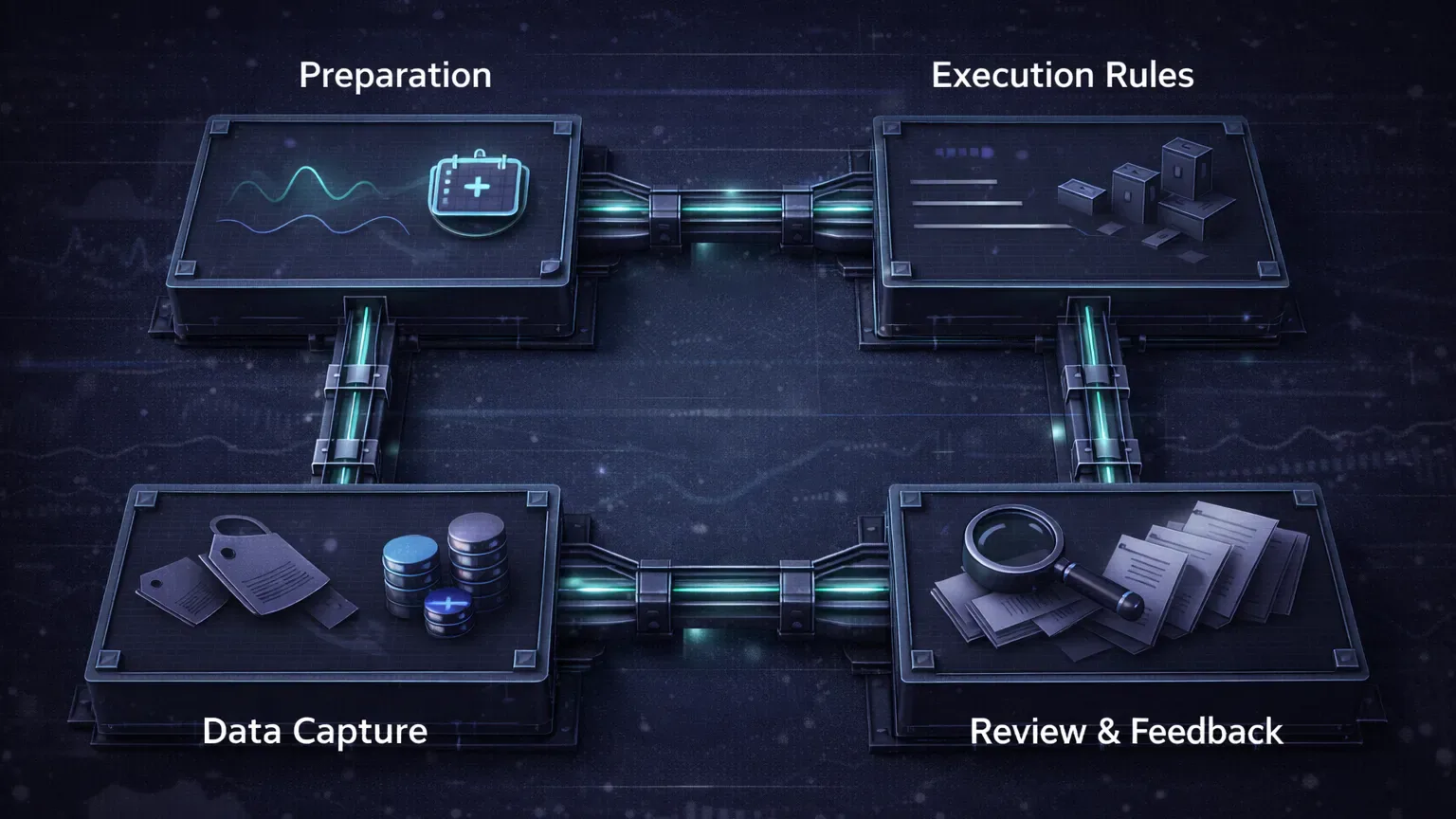
Every trading routine, no matter how simple or advanced, is built from the same few components. The difference between a weak routine and a strong one is not how many steps it has, but whether those steps actually control your behavior and generate useful data. If any block is missing, the routine collapses into either random execution or empty journaling.
The first block is preparation. This is where you decide whether you should even be trading. It includes checking market conditions, understanding volatility, reviewing your open risk, and making sure your mental state is stable enough to execute properly. Preparation is not about prediction. It is about filtering. It answers the question, “Is this a session where I should be active, or should I step aside?”
Without preparation, you react to price instead of choosing when to participate.
The second block is execution rules. These define how trades are placed, managed, and closed. They cover entries, stop placement, position sizing, and exit logic. Execution rules exist to remove negotiation with yourself. When you are in a position, emotion increases. Your routine must already have decided what actions are allowed and which ones are not. If execution is flexible in the moment, discipline disappears.
The third block is data capture. This is where most routines fail. Traders either log too little or log random information that never gets reviewed. Data capture should be intentional. You are not trying to write a diary. You are collecting structured information that allows you to identify patterns. That includes entry type, setup category, mistake tags, market conditions, and basic trade statistics. If the data cannot be grouped, compared, or summarized later, it is not useful.
The fourth block is review and feedback. This is the part that turns activity into progress. Review is where you discover whether your rules are working and whether your behavior matches your intentions. Without review, your routine is just a repetitive loop with no learning. With review, each cycle sharpens the next one.
These four blocks form a closed system. Preparation sets the stage. Execution applies the rules. Data capture records reality. Review transforms reality into decisions.
| Routine Block | What It Controls | What Happens Without It |
|---|---|---|
| Preparation | Market selection, readiness, risk context | Trading randomly, forcing sessions, overtrading |
| Execution Rules | Entries, exits, risk management | Emotional decisions, inconsistent sizing |
| Data Capture | What gets measured and analyzed | No patterns, no learning, memory-based judgment |
| Review & Feedback | Strategy refinement and behavior correction | Repeating the same mistakes indefinitely |
When these blocks work together, your routine stops being a set of habits and becomes a system. Each part protects the others. Preparation limits bad trades. Execution rules limit emotional damage. Data capture creates visibility. Review enforces accountability.
This structure is especially important in crypto because of how fast conditions change. One week can be range-bound and quiet. The next can be violently trending. Funding rates, liquidity, and volatility shift quickly. A routine without data capture and review cannot adapt. You will feel that something is different, but you will not be able to quantify it.
A well-built routine adapts automatically because it is built on observation. If your win rate drops during high-volatility sessions, you see it. If certain setups stop performing after a market regime shift, it becomes visible. Your routine becomes a living system rather than a static checklist.
It also protects you from false confidence. A few winning days can make you believe your strategy is flawless. Your routine forces you to verify that belief with numbers. A few losing days can make you doubt everything. Your routine shows whether those losses are statistical noise or real structural issues.
Routines outperform motivation for a simple reason. Motivation is emotional. Routines are mechanical. Crypto markets reward mechanical behavior far more than emotional conviction.
When these four building blocks are in place, everything else becomes easier. Strategy selection becomes clearer. Position sizing becomes more consistent. Emotional swings become smaller. And improvement stops being something you hope for and becomes something you can observe.
What Should You Do Before You Enter Any Position?
Your pre-trade routine exists to decide whether you should trade and under what conditions. It is not about finding entries. It is about filtering sessions. Most traders skip this step and jump straight to charts, which means the market decides their activity instead of their process. A strong routine flips that relationship.
Before you look for a setup, you should already know what kind of session you are dealing with. That starts with context. Are you trading during high-volume hours or thin liquidity? Is volatility expanding or compressing? Are major news events scheduled that could distort price action? These questions shape how aggressive or selective you should be. A calm, range-bound environment supports different behavior than a fast trending market.
Pre-trade preparation also includes checking your own state. If you are tired, distracted, or emotionally charged from a previous loss, your probability of following rules drops sharply. A routine is not there to force trades. It is there to protect capital and decision quality. Some of your best sessions will be the ones where your routine tells you to stay flat.
This is where most traders underestimate discipline. They think discipline means trading no matter what. In reality, discipline often means not trading.
Risk comes next. Before any setup appears, you should already know how much you are willing to lose in the session and how much you are willing to risk per trade. This prevents escalation. Without predefined limits, one loss quickly becomes two, then three, each taken with slightly worse execution. Your routine should make that impossible by setting boundaries before emotions appear.
Pre-trade structure also clarifies what you are allowed to trade. You should not be open to every pattern or every timeframe. Selectivity is part of discipline. If your routine defines only two or three valid setups, your brain stops chasing randomness. You move from “What can I trade?” to “Does this match my plan?”
A simple pre-trade routine usually includes four checks: market condition, personal readiness, risk limits, and setup eligibility. These do not need to be complex. They need to be consistent. Five minutes of structured preparation is worth more than an hour of random chart watching.

In crypto, this step is even more important because price never stops moving. There is always a candle printing somewhere. Without preparation, you feel constant pressure to participate. Your routine gives you permission to ignore most of that noise. It creates a small, controlled window where trading is allowed and everything outside of it is irrelevant.
A strong pre-trade routine also reduces over-optimization. When traders skip preparation, they try to fix problems at the strategy level. They switch indicators, timeframes, or entry rules. Often the real issue is that they are trading in poor conditions or in a poor mental state. The routine catches that before the strategy is blamed.
This is also where routines begin to generate useful data. If you log your session context and your mental readiness, you can later see patterns. You may notice that your losses cluster during low-liquidity hours. Or that your win rate drops after long screen sessions. These are not strategy problems. They are routine problems.
Once your pre-trade routine is stable, execution becomes calmer. You are not searching for opportunity. You are waiting for permission from your own rules. That shift alone eliminates a large percentage of emotional trading.
Your edge starts before the first order is placed.
How Do In-Trade Rules Protect You From Emotion?
The moment you enter a trade, your routine is under attack. Risk becomes real. PnL starts moving. Your brain shifts from planning mode to survival mode. This is where most routines break, not because the rules are bad, but because they are not strong enough to survive emotional pressure.
In-trade rules exist to make your behavior predictable when your emotions are not.
Before the order is placed, your stop level, position size, and invalidation point should already be defined. Once you are in, nothing new should be decided unless your strategy explicitly allows it. If you find yourself negotiating with the trade, you have already left your routine. You are no longer executing. You are improvising.
One of the most damaging habits in crypto trading is stop manipulation. Traders widen stops to avoid being wrong, reduce size mid-trade out of fear, or exit early to lock small profits. Each of these actions feels reasonable in the moment. Over time, they destroy statistical edge. Your routine must treat stops and exits as fixed rules, not suggestions.

Another common failure is over-management. Crypto markets move fast. Watching every tick creates the illusion that you need to respond constantly. In reality, most strategies perform better with fewer interventions. Your routine should define when management is allowed and when you must do nothing. Doing nothing is often the hardest rule to follow.
Position sizing is part of this as well. A routine that allows variable risk based on emotion is not a routine. Risk should be stable across trades and sessions. When size changes, it should change because your data supports it, not because your last trade was a winner or a loser.
This is also where session-level limits protect you. If your routine defines a maximum daily loss or a maximum number of trades, execution becomes cleaner. You stop chasing recovery trades. You stop forcing setups that are not really there. The session ends when your rules say it ends, not when your emotions calm down.
In-trade discipline is easier when the routine is simple. Complex management rules increase hesitation. Simple rules increase compliance. A routine that you can execute under stress is better than a perfect routine you cannot follow.
Crypto traders often underestimate how much volatility amplifies emotional reactions. Fast candles, funding rate shifts, liquidation wicks, and sudden trend reversals make it harder to stay detached. Your routine is the barrier between that chaos and your capital. Without it, your decision-making quality will always fluctuate with market intensity.
This is also where execution data becomes powerful. If you track how often you move stops, exit early, or violate size rules, you can measure discipline itself. Discipline stops being a personality trait and becomes a metric. You can improve what you can measure.
Over time, in-trade rules turn trading into a process rather than an experience. Each trade becomes another execution of the same system. Emotional variance decreases. Confidence increases because your behavior is stable even when outcomes are not.
Your routine does not remove emotion. It makes emotion irrelevant.
What Should You Log After a Trade So It Becomes Real Data?
Most traders believe they journal, but what they actually do is write comments. They note how they felt, whether the trade was stressful, or if they were unlucky. That kind of reflection can be useful, but it does not create data. A routine needs structure, not storytelling. Post-trade logging is where your routine becomes measurable.
Every trade should leave behind the same footprint. If two trades are logged differently, they cannot be compared. Consistency matters more than detail. You want a format that you can repeat hundreds of times without friction.
Each trade should record three types of information: what you traded, how you executed, and what environment you traded in.
What you traded includes the market, direction, timeframe, and setup category. This allows you to group trades by strategy and see which ones actually perform. Without this, you never know if your edge comes from a specific pattern or from randomness.
How you executed includes entry type, stop placement, position size, and whether any rules were violated. This is where discipline becomes visible. A profitable trade taken with bad execution is still a routine failure. A losing trade taken perfectly is still a routine success. If you do not separate execution quality from outcome, your routine will train the wrong behavior.
What environment you traded in includes volatility, session, and market conditions. Crypto does not behave the same in every regime. A setup that works in high-volume trending conditions may fail in slow, range-bound periods. Logging context allows you to understand when your strategy is allowed to perform.
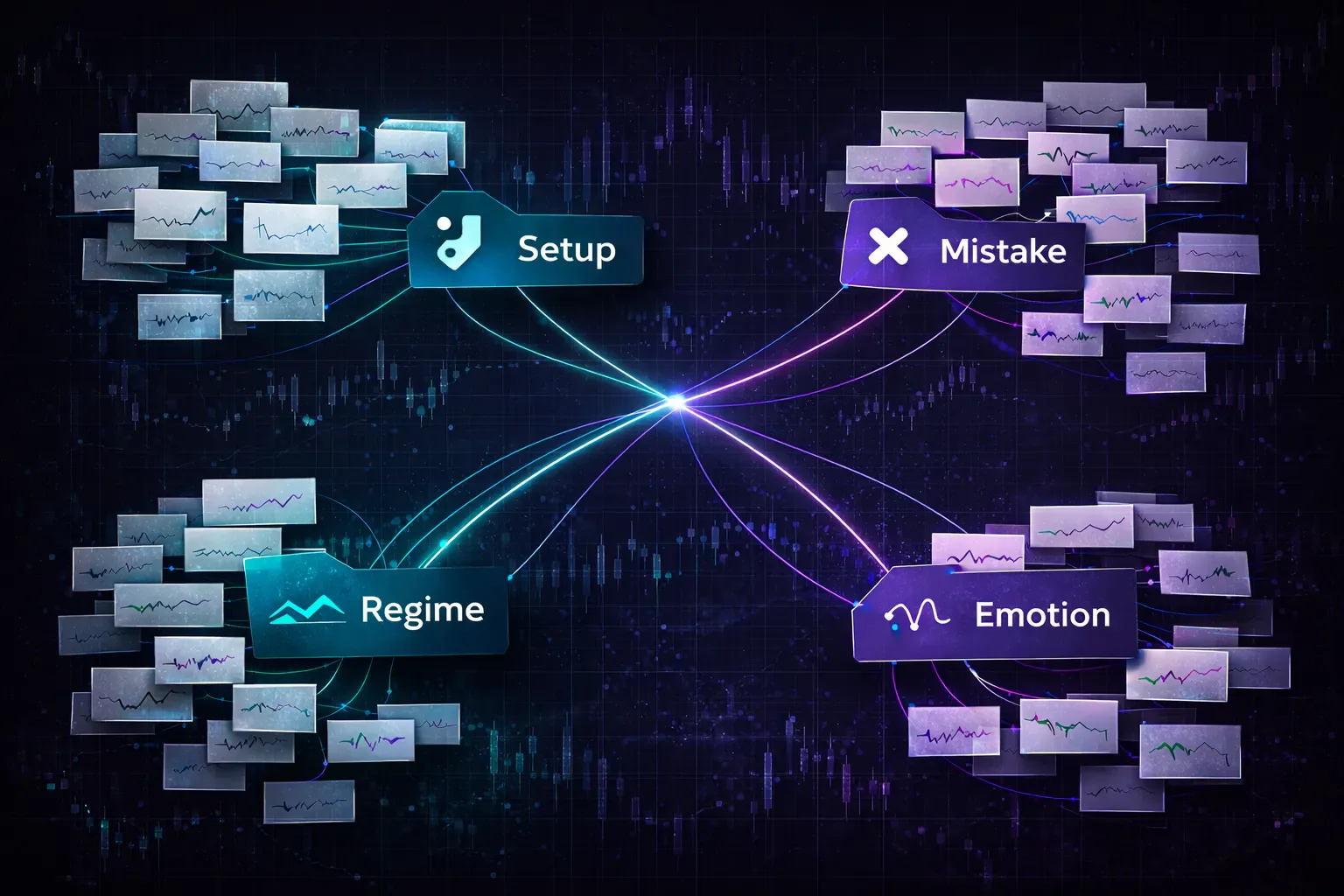
This is also where tagging becomes powerful. Tags transform raw trades into searchable categories. A tag can represent a setup type, a mistake, an emotional state, or a market condition. Over time, tags reveal patterns that charts alone never show. You may discover that most of your losses come from one mistake tag. Or that your best trades share the same two setup tags.
Without tags, your journal becomes an archive. With tags, it becomes a database.
Post-trade notes should be short and specific. One or two sentences about what mattered. Not what you felt, but what happened. Did you hesitate? Did you enter late? Did you ignore your stop rule? This keeps journaling fast and useful.
Crypto traders often avoid logging because it feels slow. The irony is that logging saves time long-term. Instead of guessing what is wrong, you can see it. Instead of changing everything, you adjust what the data points to.
Automation matters here. Manual logging creates friction. The more friction a routine has, the faster it breaks. When trades are imported automatically and basic metrics are calculated without effort, the routine survives busy weeks and emotional days. Logging stops being a task and becomes a byproduct of trading.
This is where a platform like TradeChainly fits naturally into a routine. When your trades are continuously synced from exchanges like Binance, Bybit, Coinbase, or OKX, you are free to focus on classification and review rather than data entry. Tagging, notes, and performance reports become part of a workflow instead of a separate chore.
Post-trade logging is not about perfection. It is about consistency. You are not trying to capture every detail. You are trying to capture the same details every time. That is what turns experience into information.
Once your trades become data, your routine gains leverage. Patterns stop being vague impressions. They become measurable facts.
Why Do Daily Review and Weekly Review Feel So Different?
Logging trades creates data. Review is where that data turns into decisions. Without review, your routine is just a recording system. With review, it becomes a feedback loop that actually changes your behavior.
The mistake most traders make is trying to review everything all the time. They open their journal, see dozens of metrics, and close it again because it feels overwhelming. A strong routine separates review into two different layers: daily review and weekly review. Each has a different purpose.
Daily review is about behavior. Weekly review is about performance.
Your daily review should be short. Five to ten minutes is enough. The goal is not to analyze strategy. The goal is to check whether you followed your rules. Did you respect your risk limits? Did you take only allowed setups? Did you move stops or exit early? Did you trade in conditions your routine says you should avoid? This keeps your routine honest. It stops bad habits from compounding quietly.
Daily review is where discipline becomes visible. You are not asking, “Did I make money?” You are asking, “Did I execute my process?” Those two questions are not the same, and confusing them is one of the fastest ways to sabotage a routine.
Weekly review is where strategy evolves. This is where you zoom out and look for patterns. You group trades by setup, by tag, by market condition, by time of day. You look at win rate, average R, drawdown behavior, and mistake frequency. The weekly review is where you decide what deserves more focus and what needs restriction.
| Review Type | Primary Focus | Typical Questions | Data Used |
|---|---|---|---|
| Daily Review | Execution discipline | Did I follow my rules? Did I break any limits? | Individual trades, mistake tags |
| Weekly Review | Performance patterns | Which setups perform best? Where do losses come from? | Aggregated stats, tag performance |
Separating these two reviews protects your mindset. If you mix them, you end up judging discipline based on PnL or judging strategy based on one bad session. Both lead to emotional conclusions instead of data-driven ones.

Crypto traders benefit even more from this structure because market conditions shift quickly. A strong week does not always mean your strategy improved. A weak week does not always mean your strategy failed. The weekly review helps you distinguish between market noise and structural change.
Review also keeps your routine evolving. Maybe your data shows that one setup performs well only during high volatility. Your routine can restrict that setup to those conditions. Maybe one mistake tag appears in half of your losing trades. Your routine can focus on eliminating that single behavior instead of trying to fix everything.
This is where journaling becomes powerful. It stops being a historical record and becomes a decision engine. You are no longer asking, “What happened?” You are asking, “What should I change next week?”
A good review process is calm and unemotional. It feels more like accounting than reflection. Numbers first, opinions second. Over time, this stabilizes your confidence because your decisions come from evidence, not from recent outcomes.
When daily review protects discipline and weekly review guides strategy, your routine becomes self-correcting. Mistakes shrink faster. Strengths become clearer. Progress becomes measurable instead of hopeful.
How Do You Stay Consistent Without Burning Out?
One of the biggest mistakes traders make when building a routine is trying to do too much too quickly. They add detailed journaling, complex reviews, multiple metrics, and strict schedules all at once. It works for a short time, then collapses under its own weight. Consistency does not come from intensity. It comes from sustainability.
Your routine should feel light enough that you can follow it even on your worst trading days. If it only works when you are motivated and energized, it is not a routine. It is a temporary burst of effort.
Start with the smallest version that still creates structure. That usually means a simple pre-trade check, basic execution rules, minimal trade logging, and a short daily review. Once that feels automatic, you can add depth. More tags. More review detail. More performance filters. Growth should be layered, not forced.
Crypto traders often underestimate how draining constant market access can be. The market never closes. There is always something happening. A routine should protect your energy as much as it protects your capital. That means defining when you are done for the day, when you stop looking at charts, and when review ends. Endless analysis does not improve results. Clear boundaries do.

Another burnout trigger is trying to fix everything at once. Your review process will show many imperfections. That does not mean you should attack all of them simultaneously. Pick one behavior to improve per week or per month. Let your routine absorb that change before adding another. Progress compounds faster when focus is narrow.
Flexibility also matters. A routine that cannot adapt to travel, work schedules, or life stress will eventually be abandoned. Structure must exist, but it must fit inside your reality. Some weeks you may trade five sessions. Other weeks you may trade one. The routine remains the same. Only its frequency changes.
Consistency is not about perfection. It is about repetition. A slightly flawed routine that you follow for a year will outperform a perfect routine you follow for two weeks.
This is where many traders misunderstand professionalism. Professionals do not operate at maximum effort every day. They operate at maximum repeatability. Your routine should feel boring, predictable, and almost mechanical. That is a sign it is working.
When burnout disappears, discipline becomes effortless. You stop fighting yourself. You simply follow the process because it is manageable, familiar, and proven.
Why Does Automation Make Routines Sustainable in Crypto?
The biggest threat to any trading routine is friction. The more manual steps it has, the faster it breaks. Traders start with good intentions, then miss a day of logging, then miss a week, and eventually the routine disappears. Automation turns a routine from fragile into durable.
Crypto trading produces a large volume of data. Multiple exchanges, multiple markets, spot and futures, partial fills, funding fees, and fast execution. Trying to manage all of that manually is exhausting. When your routine depends on copying trades into spreadsheets or calculating metrics by hand, consistency becomes optional. Busy weeks, emotional days, or strong market moves push the routine aside.
Automation removes that vulnerability. When trades are imported automatically, the foundation of your routine is always intact. Even if you skip tagging or review for a day, the data is still there waiting for you. That alone increases long-term consistency.
This is especially important in crypto because activity is not evenly distributed. Some weeks are quiet. Others are intense. A routine that only works when your schedule is perfect will fail during high-volume periods. Automation keeps your structure stable when trading becomes chaotic.

Automation also shifts your energy to higher-value tasks. Instead of recording price, size, and fees, you focus on classification and analysis. You tag mistakes. You label setups. You review performance. The routine becomes about interpretation, not data entry.
This is where tools like TradeChainly fit naturally. When trades are continuously synced from exchanges such as Binance, Bybit, Coinbase, or OKX, your routine gains resilience. You do not need to rebuild it after a busy week. You simply return to it.
Automation does not replace discipline. It protects it. It removes excuses. It ensures your routine survives real trading conditions, not just ideal ones.
When the foundation is automatic, the habit becomes sustainable.
Why Does a Routine Become a Long-Term Edge?
Most traders look for an edge in strategies. They search for better entries, tighter stops, or smarter indicators. The problem is that strategies are easy to copy. Routines are not. Your routine is where your real advantage lives because it compounds quietly over time.
When you follow the same structure every day, you build a growing dataset about yourself. You learn which setups you execute best, which market conditions suit your temperament, and which mistakes cost you the most. This information is personal. No indicator or signal service can provide it. It only comes from repetition and review.
A routine also stabilizes your confidence. Instead of judging yourself by short-term results, you judge yourself by process quality. A losing day with perfect execution becomes acceptable. A winning day with broken rules becomes a warning. That shift protects you from emotional swings that destroy long-term performance.
Over months, your routine creates clarity. You stop guessing what works. You know. You stop wondering why performance dipped. You can see it in the data. You stop chasing novelty because improvement comes from refinement, not reinvention.
This is especially powerful in crypto, where trends come and go fast. New narratives, new tokens, new volatility cycles. A trader without a routine gets pulled in every direction. A trader with a routine adapts without losing structure. The strategy changes, but the behavior remains stable.
Your routine also simplifies decision-making. You do not debate whether to trade. You check your conditions. You do not argue with your journal. You read it. Trading becomes quieter. Less dramatic. More professional.
The longer you follow a routine, the harder it becomes to abandon it because it holds your entire trading history. It becomes your memory, your teacher, and your accountability system at the same time.
That is how a routine turns into an edge. Not through intensity, but through accumulation.
What Should You Take From This?
Most traders spend their energy searching for better strategies. They change indicators, adjust timeframes, and chase new setups. Very few step back and build the system that makes any strategy work. That system is your routine. It is the structure that shapes your decisions, protects your capital, and turns experience into progress.
A routine does not make trading easy. It makes it honest. It shows you what you are actually doing, not what you believe you are doing. It removes excuses. It replaces hope with evidence. Over time, it becomes the foundation of your confidence because your results are no longer random. They are the outcome of a process you can observe and refine.
When your routine is solid, everything else becomes simpler. Preparation filters bad sessions. Execution rules stabilize behavior. Logging turns trades into data. Review transforms data into decisions. Each part supports the next. You stop reacting to markets and start operating within them.
This is where most traders either grow or stagnate. Those who build routines compound skill. Those who do not repeat cycles. The difference is not talent. It is structure.
If you want consistency, build consistency into your process. If you want improvement, design a routine that produces feedback. If you want confidence, create a system you can trust even when outcomes fluctuate.
Tools can support this, but they do not replace responsibility. Platforms that automate trade imports, organize tags, and surface performance metrics simply remove friction from a routine that already exists. When your data is always available and your review process is easy to maintain, following a structured routine becomes realistic long-term. This is where TradeChainly fits naturally for crypto traders who want their routine to survive busy weeks and volatile markets without turning into another abandoned spreadsheet.

Your strategy may change many times. Your routine should not.
Build it once. Refine it slowly. Let it carry your trading forward.