Why Do You Keep Repeating the Same Mistakes, Even When You Know Better?
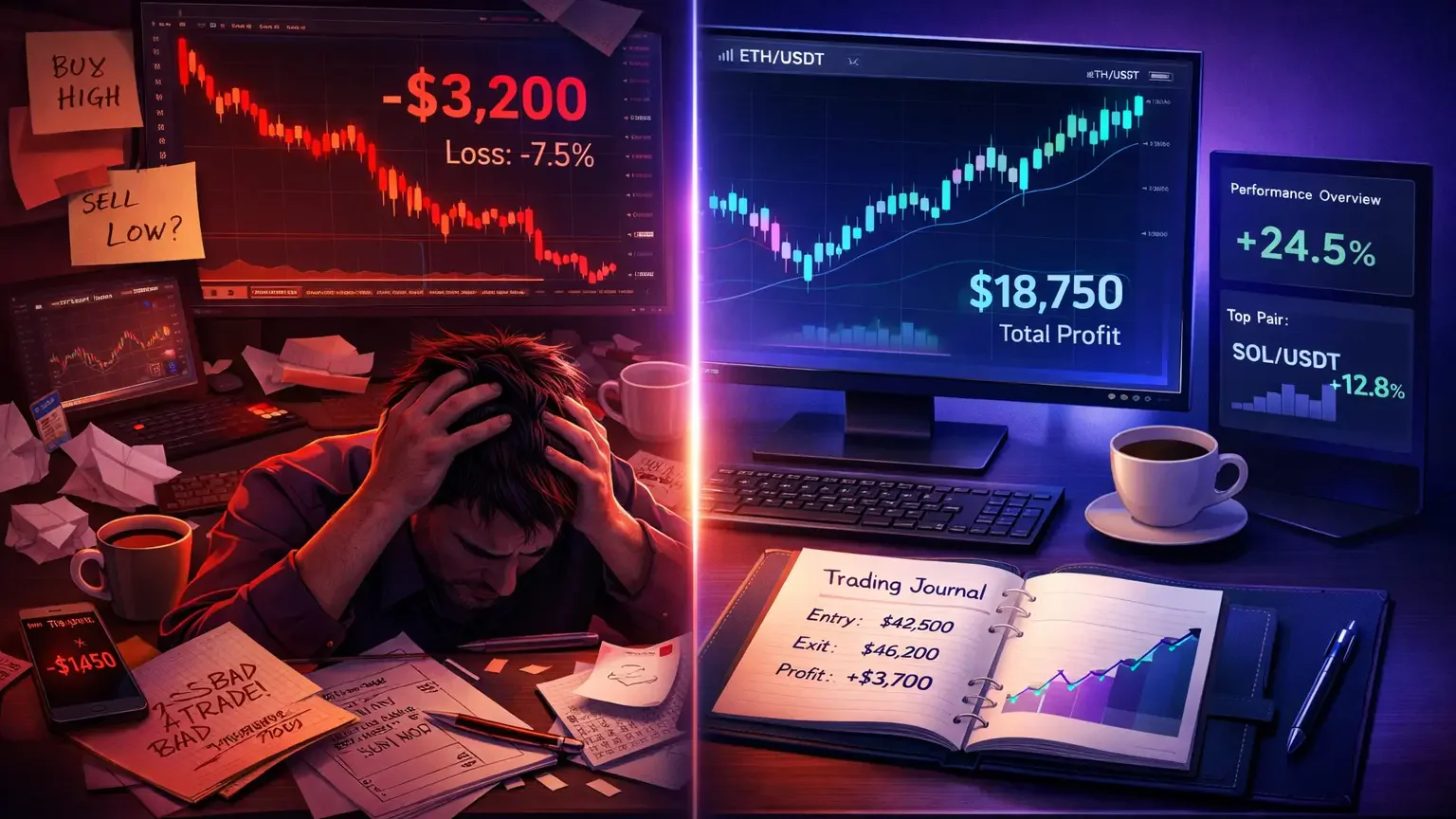
Most crypto traders start a journal because something feels off. Their results are inconsistent. A few good days are followed by a drawdown. They know they are repeating mistakes, but they cannot clearly explain which ones or why. So they open a spreadsheet, log a few trades, and promise themselves they will stay disciplined.
The problem is that most traders build a journal with no job to do. They treat it like record-keeping instead of a decision-making tool. They write things down without knowing what they are supposed to learn. When nothing useful comes out of it, motivation dies.
Overcomplication makes it worse. Traders copy templates that track twenty or thirty metrics per trade. They add screenshots, emotional essays, and detailed market commentary. After a few days, logging one session feels like homework.
Perfectionism finishes the job. Many traders believe a journal must be perfect. They wait until they have a “proper” system before starting. In reality, a journal only becomes useful after data exists.
A working crypto trading journal is not about completeness. It is about usefulness. It should answer real questions. Why am I losing money in certain conditions? Which setups actually work for me? What behavior keeps showing up before bad trades? If your journal cannot answer those, it is just storage.
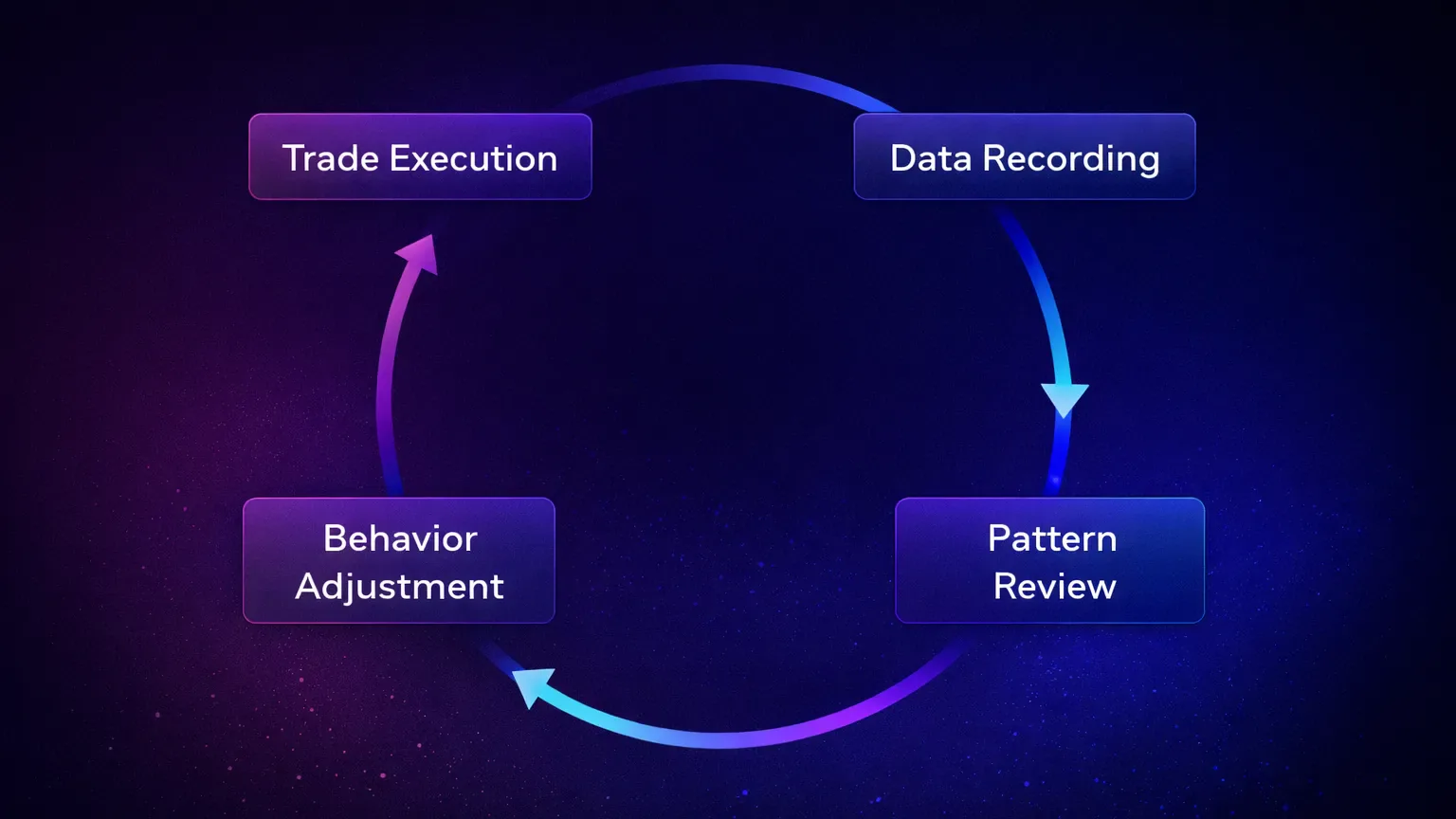
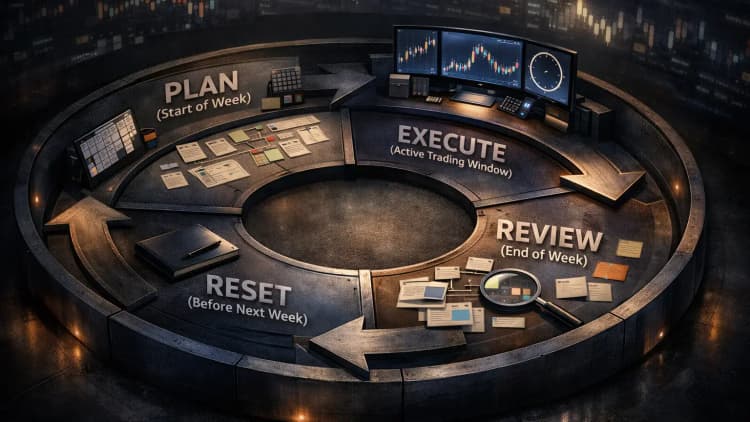
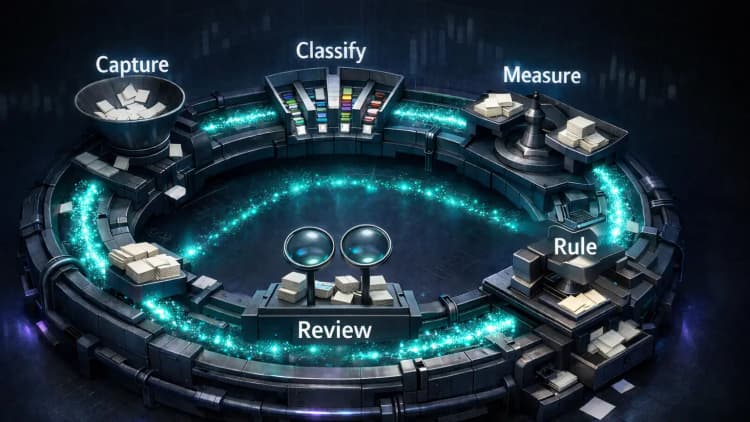
Think of journaling as a feedback loop. You trade. You record a small set of meaningful data. You review patterns. You adjust your execution. Then you trade again with better awareness. That loop is what creates growth.
Traders quit because clear purpose, simple structure, or a habit of review is missing. This guide is built to solve all three.
What Does a Crypto Trading Journal Actually Need to Do?
Before choosing tools or templates, you need to understand what a journal is supposed to accomplish. A trading journal is not a diary. It is not a place to vent emotions or prove discipline. Its job is to expose cause and effect.
A good journal must do three things: separate skill from randomness, show which behaviors repeat, and highlight which conditions fit your edge. If it cannot do these, it is not helping you improve.
Many traders confuse logging with journaling. Logging is collecting data. Journaling is turning data into insight. You need both, but logging alone is useless without review.
| Purpose of a Crypto Trading Journal | Common Mistake |
|---|---|
| Reveal which setups are profitable | Logging trades without analyzing them |
| Expose behavioral patterns | Writing emotional notes without structure |
| Track performance by condition | Mixing all market types together |
| Improve decision quality | Tracking metrics with no plan to use them |
| Support consistency | Creating overly complex templates |
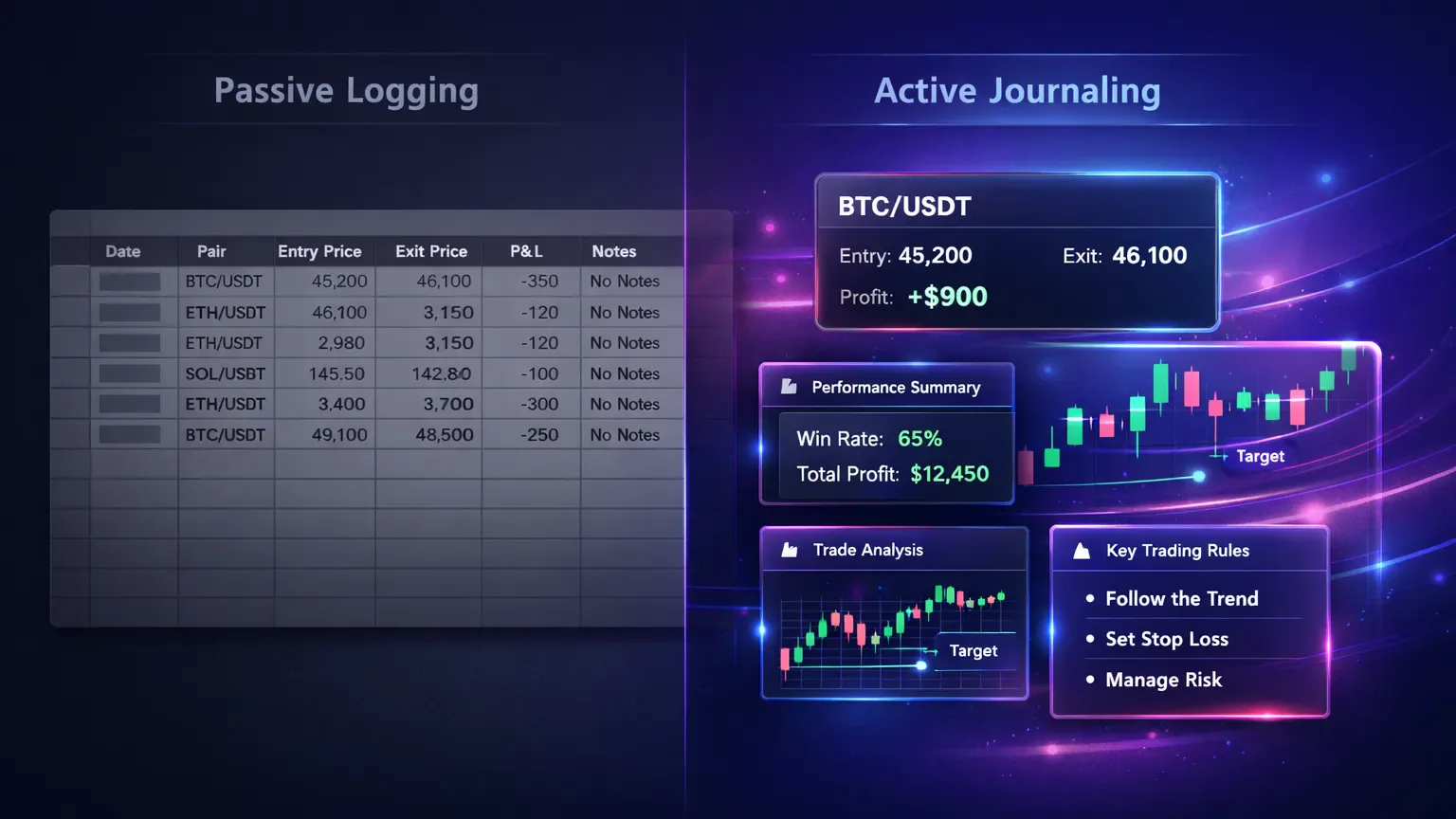
A crypto trading journal must also respect the realities of crypto markets. You trade 24/7 markets with no centralized open or close. Different exchanges behave differently. Fees, funding, and leverage affect performance. Spot and futures trades have different risk profiles. This means your journal must capture context, not just numbers.
For example, two losing trades may look identical on a chart. One was taken during high volatility with clear structure. The other was forced in a choppy session after three losses. Without context, they look the same. In your journal, they should not.
Are You Journaling Spot, Futures, or Both?
Before you record anything, decide what kind of trading your journal will represent. This step is often skipped, and it creates confusion later.
Crypto traders frequently mix spot trades, futures trades, scalps, and swing positions. Each of these has different risk, psychology, and performance expectations. If they are logged together without separation, your data becomes noisy.
A futures trade with 10x leverage behaves nothing like a spot trade held for two weeks. Combining them hides important differences.
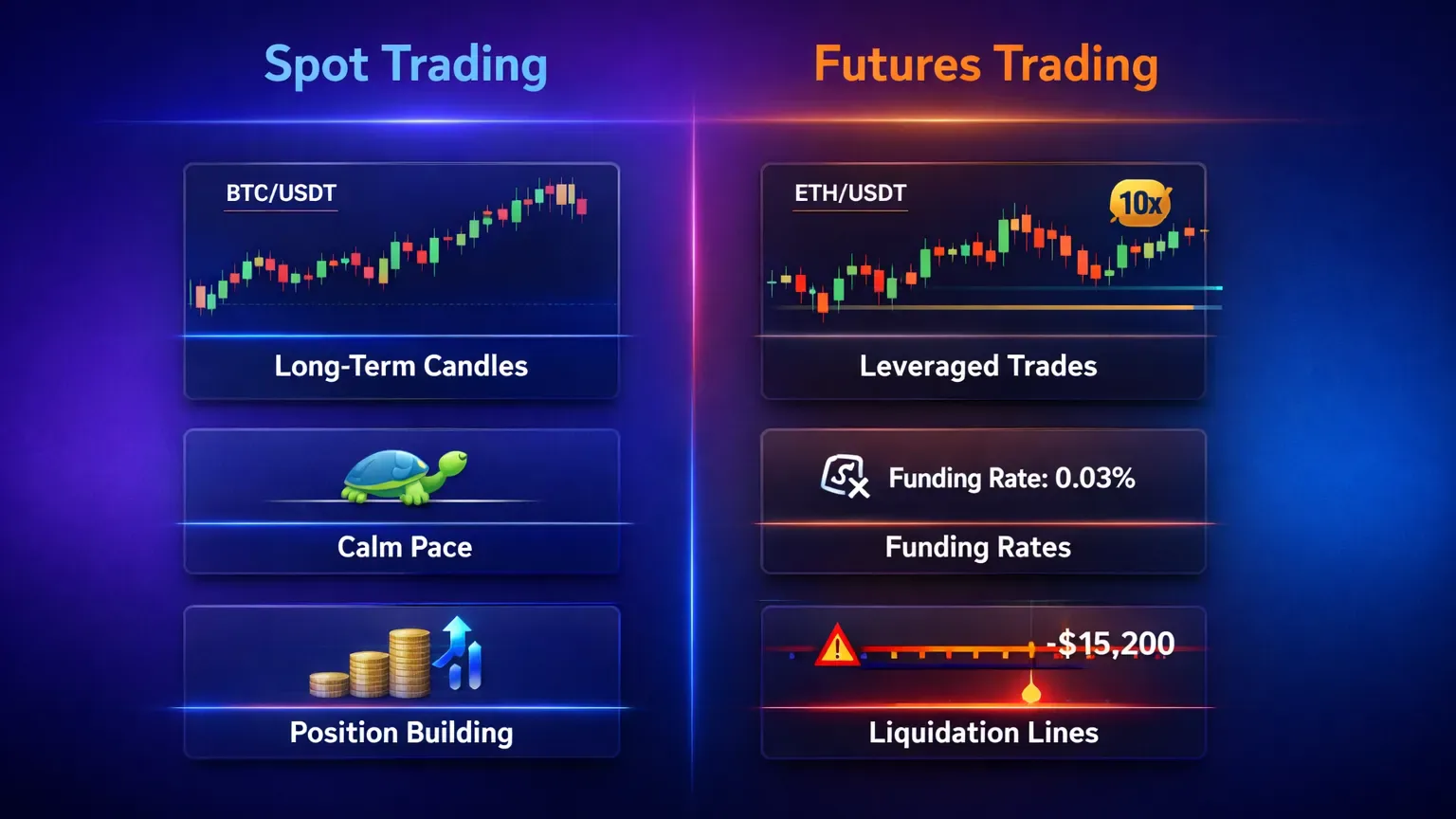
Your answer should fall into one of three categories: mostly spot, mostly futures, or actively trading both. If you trade both, your journal should still separate them, or your statistics will lie to you.
For example, futures trades care about funding, leverage, liquidation risk, and precision timing. Spot trades care more about position building, patience, and broader trend structure. When traders mix them, they often conclude they are inconsistent, when in reality they are running two different strategies inside one dataset.
What Data Should You Track Without Drowning in It?
The biggest mistake traders make at this stage is trying to track everything. They think more data equals better insight. In reality, useless data hides useful data.
Your journal only needs to track information that supports decisions. If a field never changes how you trade, remove it.
There are two levels of journaling data: trade-level data and day-level data.
At the trade level, you need just enough information to understand structure and outcome. At the day level, you need just enough to understand execution quality and emotional control.
| Category | Field | Why It Matters |
|---|---|---|
| Trade Info | Date and time | Links trades to market conditions |
| Trade Info | Exchange | Binance, Bybit, OKX behave differently |
| Trade Info | Pair | Shows which markets suit you |
| Trade Info | Direction | Long or short bias analysis |
| Trade Info | Entry and exit | Core performance calculation |
| Trade Info | Position size | Risk exposure evaluation |
| Trade Info | Fees and funding | Real profitability |
| Trade Info | Leverage (if futures) | Risk and volatility sensitivity |
| Structure | Setup or strategy | What you intended to trade |
| Structure | Stop type | Planned vs reactive exits |
| Outcome | R-multiple or % gain/loss | Normalized performance |
| Context | Market condition | Trend, range, volatility |
| Behavior | Execution quality | Discipline and patience |
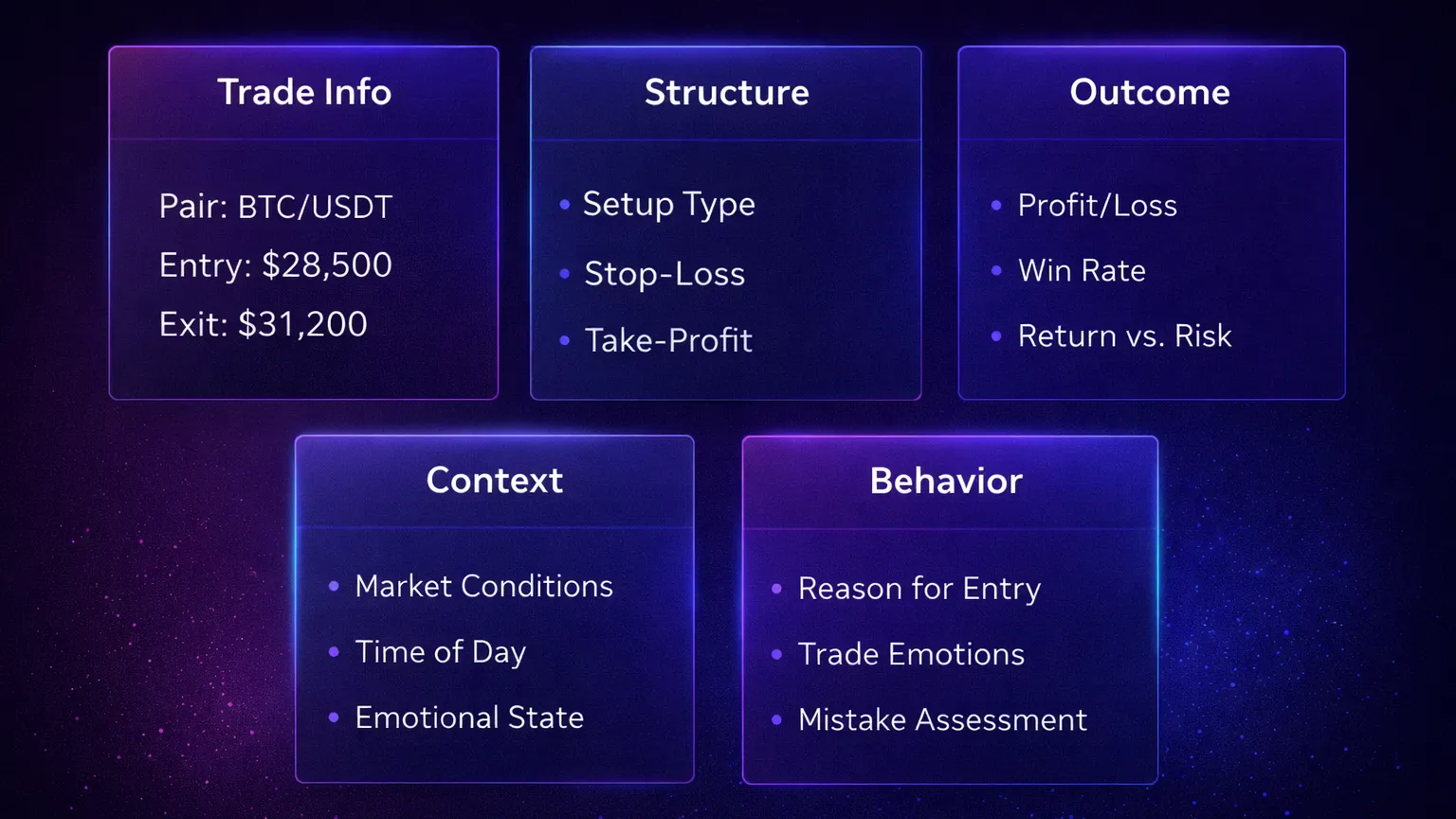
At the day level, you should track whether you followed your plan today, whether you overtrade, whether you were emotionally reactive or controlled, and whether you respected risk limits. This is where growth accelerates. Many traders only log trades. They never log themselves.
Do not add a field just because other traders use it. Add it because it answers a question you care about.
How Do You Set Up a Structure That Stays Fast?
Once you know what data you want to track, you need a structure that makes journaling fast and repeatable. Most traders fail here because they design something that looks impressive but feels heavy to maintain.
Your structure should answer one question: “How can I record a trading day and my trades in under five minutes?”
A simple crypto trading journal has two layers: trade journal and daily journal.
The trade journal is where each individual position lives. It contains the objective data. Entry, exit, setup, risk, outcome, and context.
The daily journal is where your behavior as a trader lives. It answers questions that no single trade can. Did I respect my rules today? Did I force trades? Was my patience good or poor? Did I stop when I should have?
These two layers work together. The trade journal shows what happened. The daily journal shows why it happened.
Many traders only keep one. That creates blind spots. A week of losses could come from bad setups or from good setups traded poorly. Without a daily journal, you cannot separate the two.
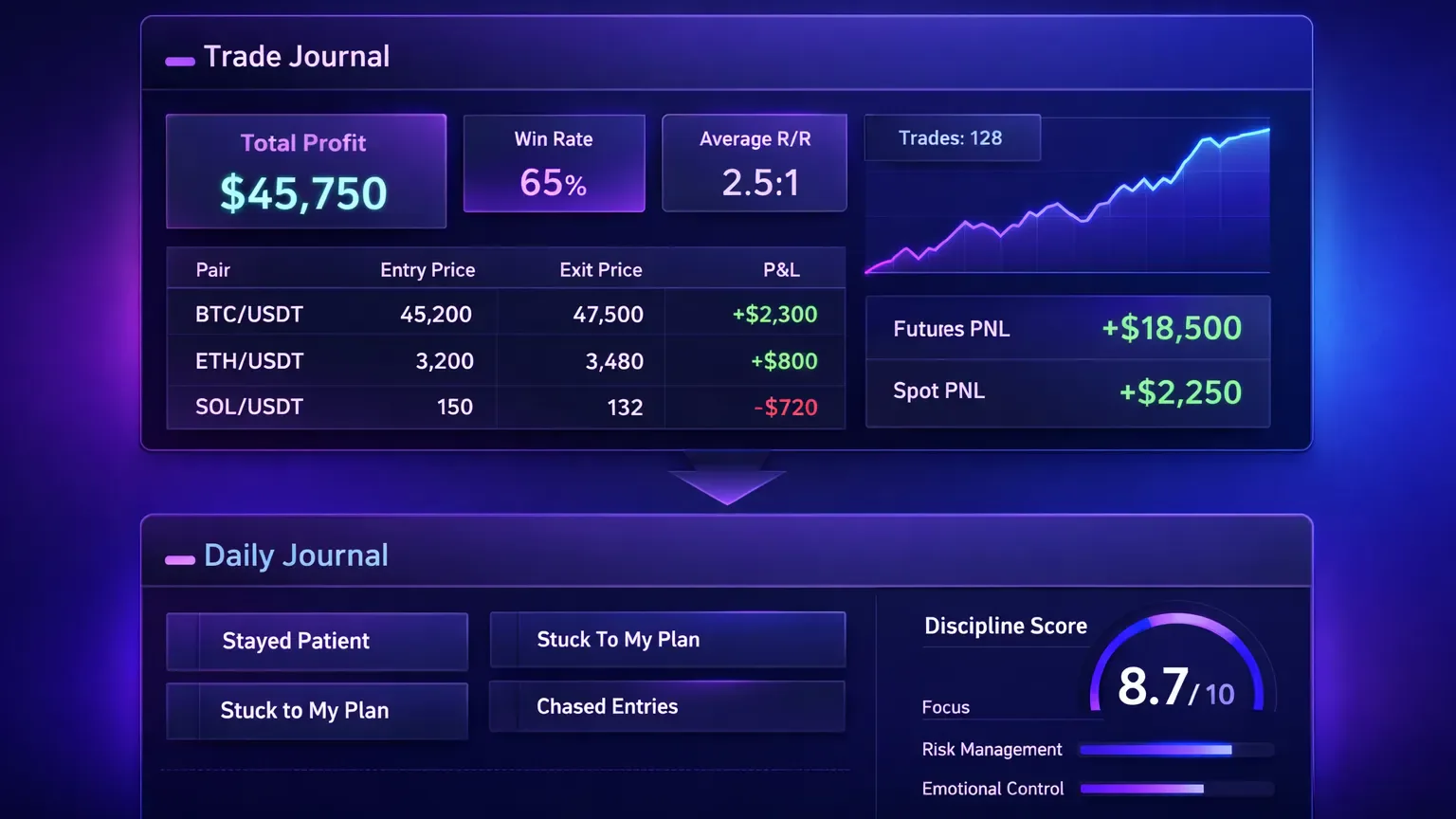
After each trade you log objective trade data, assign setup and context, and add a short execution note. At the end of the day you summarize how you traded, rate your discipline, and write one sentence about what you did well and one about what needs work.
This structure keeps your journal balanced. It avoids turning it into a diary while still capturing your psychology in a way that is measurable.
If journaling feels heavy, it is because the structure is too complex. Simplify it until it fits your real trading speed.
What Do Tags Do When You Use Them Correctly?
Tags are where a crypto trading journal becomes powerful. Without them, your journal is just a list. With them, it becomes a database.
The mistake most traders make is using tags like hashtags. They add many, but they never use them to analyze anything. A tag must serve a purpose.
Your tags should fall into a few clear categories: setup tags, mistake tags, emotion tags, and market condition tags.
Setup tags describe what you intended to trade, like Breakout, Pullback, Range rejection, and Trend continuation. Mistake tags describe what went wrong, like Late entry, Overtrading, Stop moved, and Ignored signal. Emotion tags describe your mental state, like Fear, FOMO, Overconfidence, and Fatigue. Market condition tags describe context, like Trending, Choppy, High volatility, and Low liquidity.
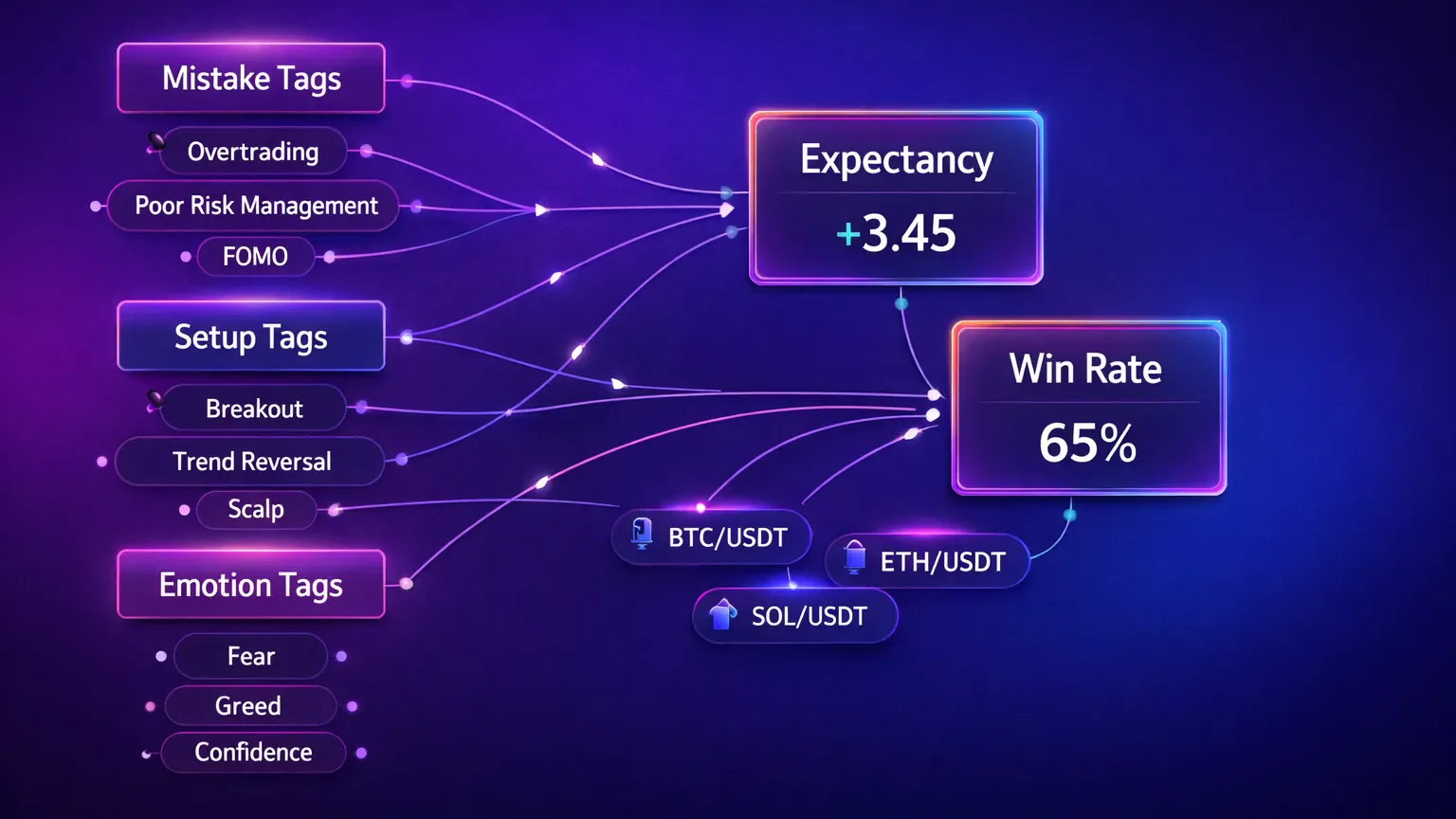
The point of tagging is not description. It is comparison. After thirty or fifty trades, you should be able to ask which setups make money, which mistakes cost the most, which emotions correlate with losses, and which market conditions suit you best. That is where improvement comes from.
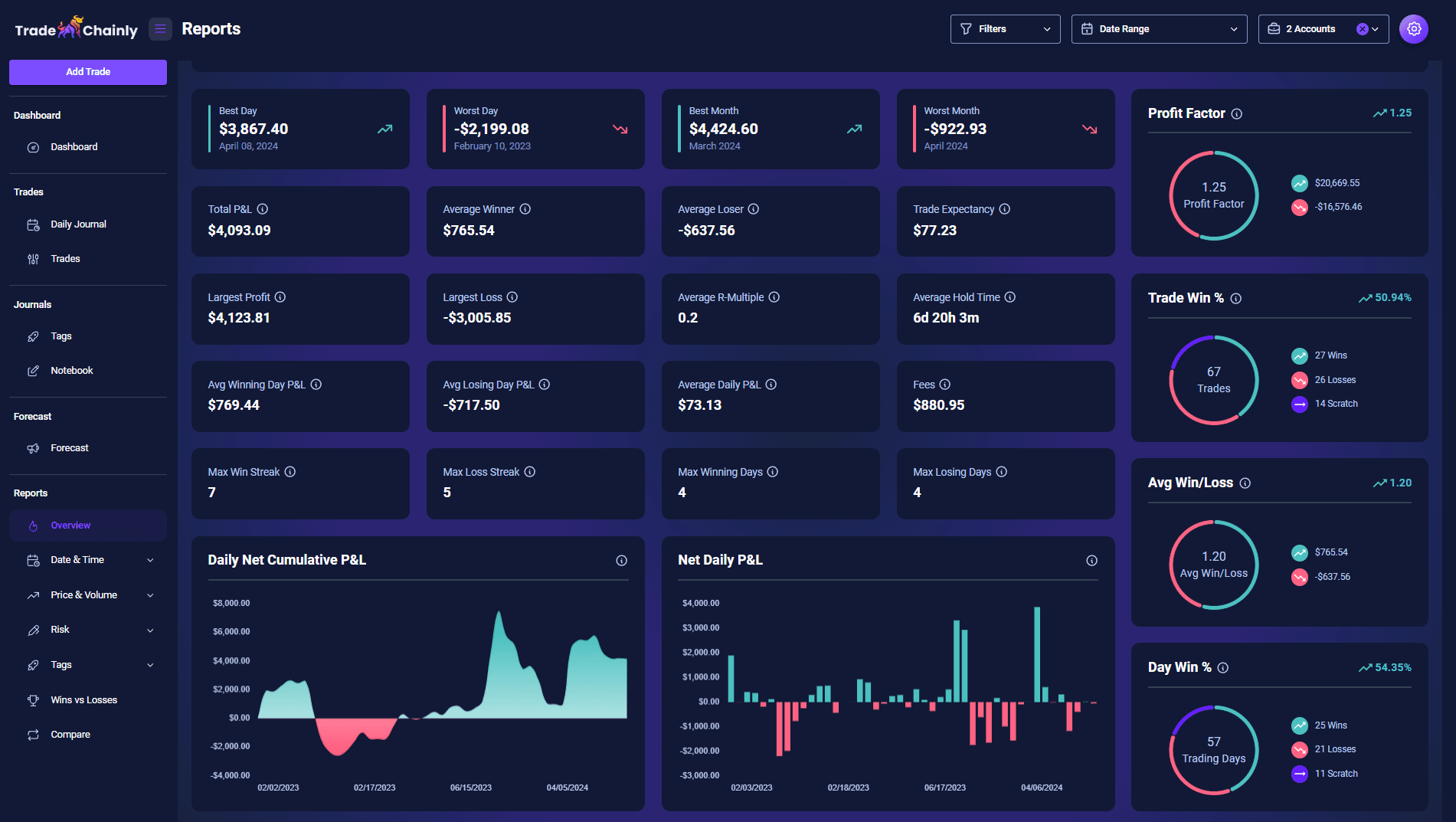
This is also where journaling platforms become useful. In tools like TradeChainly, tags connect directly to analytics, so you can see performance by setup, mistake, or condition without exporting anything.
How Do You Review Without Turning It Into a Second Job?
Journaling without reviewing is like tracking calories without ever checking your weight. Data only matters when it changes behavior.
Your review habit must be realistic. If it takes an hour, you will avoid it. If it takes ten minutes, you will keep it.
The daily review is about behavior. It answers whether you traded your plan, whether you stopped when you should have, and whether emotions controlled any decisions. This should take five minutes. Look at your trades, your daily journal note, one thing you did right, and one thing you want to improve.
The weekly review is about patterns. It answers which setups worked best, which mistakes repeated, and which conditions suited you.
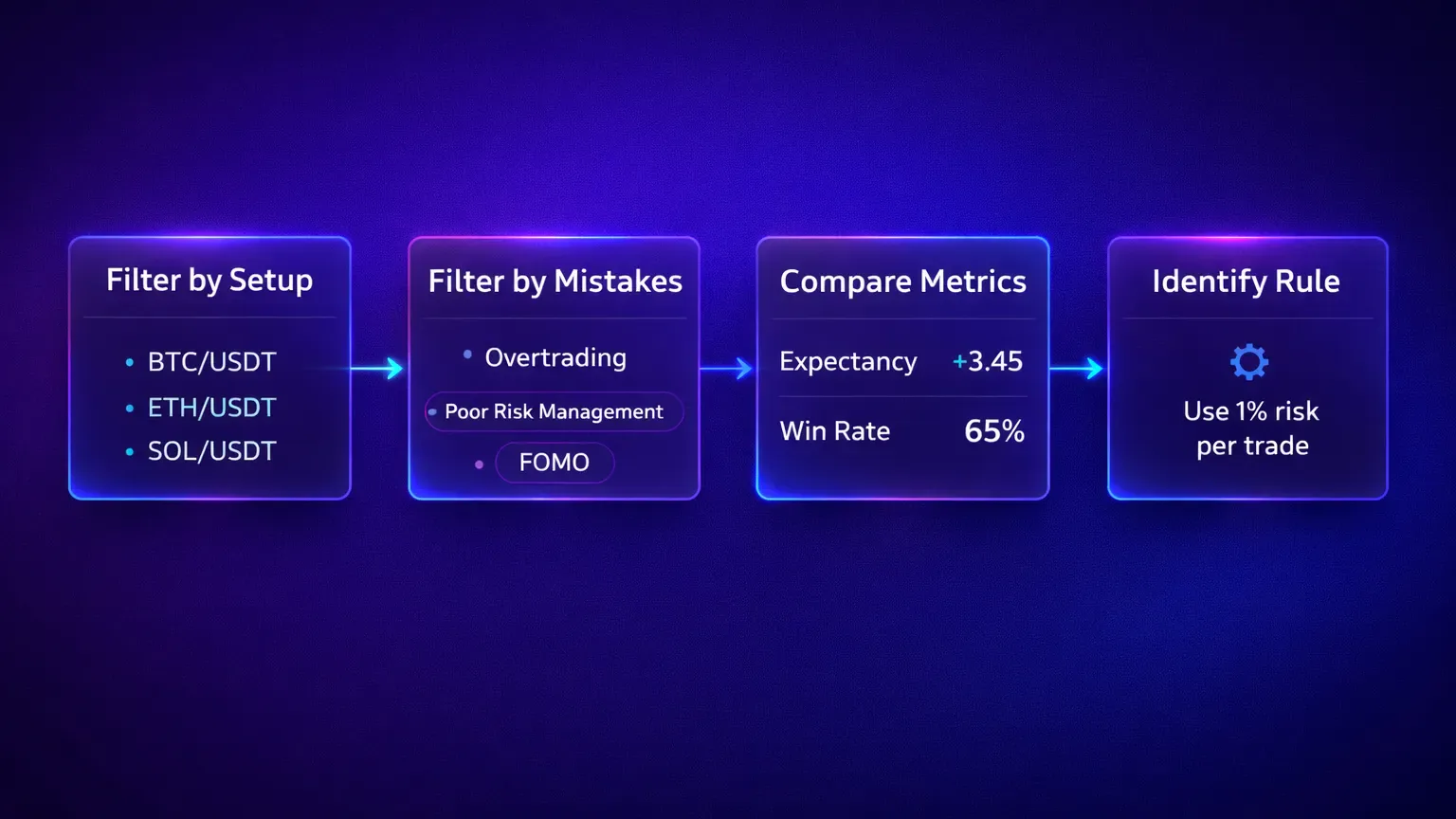
In your weekly review, filter by setup and filter by mistake tags. Compare win rate and average loss. Look for consistency, not perfection. You are not trying to find magic. You are trying to find alignment between what you think works and what actually works.
What Can You Automate Early So You Do Not Quit?
Manual logging kills consistency. Crypto markets move fast. If you have to copy every trade by hand, journaling becomes a chore.
Automation removes friction. It keeps your journal accurate and complete even on busy days.
At a minimum, your system should import trades from your exchange, calculate PnL correctly, and include fees and funding. Exchanges like Binance, Bybit, OKX, Coinbase, and Kraken all provide trade history. When your journal connects directly to these, your data becomes reliable.
This is where platforms like TradeChainly become useful. They continuously sync your trades so your journal fills itself in the background. You only focus on reviewing, tagging, and improving.
If your journal depends on memory and manual effort, it will fail during stressful periods. If your journal runs automatically, it stays alive even when your motivation dips.
How Do You Turn Journal Notes Into Real Changes?
A journal becomes valuable when it starts influencing your decisions. Until then, it is just a record of what already happened. The shift happens when you stop asking “What did I trade?” and start asking “What should I change?”
Most traders get stuck here. They collect data but never translate it into action. They notice patterns but do not adjust size, frequency, or strategy. The journal stays passive.
A feedback system is active. It creates small, continuous improvements.
You review your last thirty trades and notice that your breakout setups are profitable when taken early, but most of your losses come from chasing late entries. That is a clear instruction: keep trading breakouts, but restrict entries to your original trigger zone.
Or you notice that your best days come when you trade only the first two hours of the session, and your worst days come when you keep trading into low-volume conditions. That is another instruction: add a time-based stop to your trading day.
Your journal should create rules, not just insight.
Each review should produce one small adjustment. Reduce size on a certain setup. Remove a weak setup. Add a time limit. Add a risk limit. Add a behavioral rule. These changes are how you evolve.
Which Beginner Mistakes Should You Expect and Avoid?
The first mistake is tracking too much data. If you cannot explain why a field exists, it does not belong in your journal.
The second mistake is never reviewing. Without reviews, a journal has no impact.
The third mistake is emotional journaling without structure. Writing “I felt bad” or “I was scared” is not helpful unless it connects to a trade or decision.
The fourth mistake is inconsistency. Journaling for three days and then stopping teaches you nothing. Ten mediocre entries are more valuable than two perfect ones.
The fifth mistake is expecting fast results. A journal does not improve your trading in a week. It improves your awareness first. Performance follows later.
Journaling is not a productivity task. It is a process-building task.
What Does “Good” Look Like After 30 Days?
After one month, your journal should feel different from when you started.
You should know which setups you trade most, which mistakes cost you the most, and you should have one or two clear rules you are trying to improve. You should also feel more aware before entering trades.
Your journal will not make you profitable in thirty days. But it should make you more honest, more structured, and less impulsive. That is real progress.
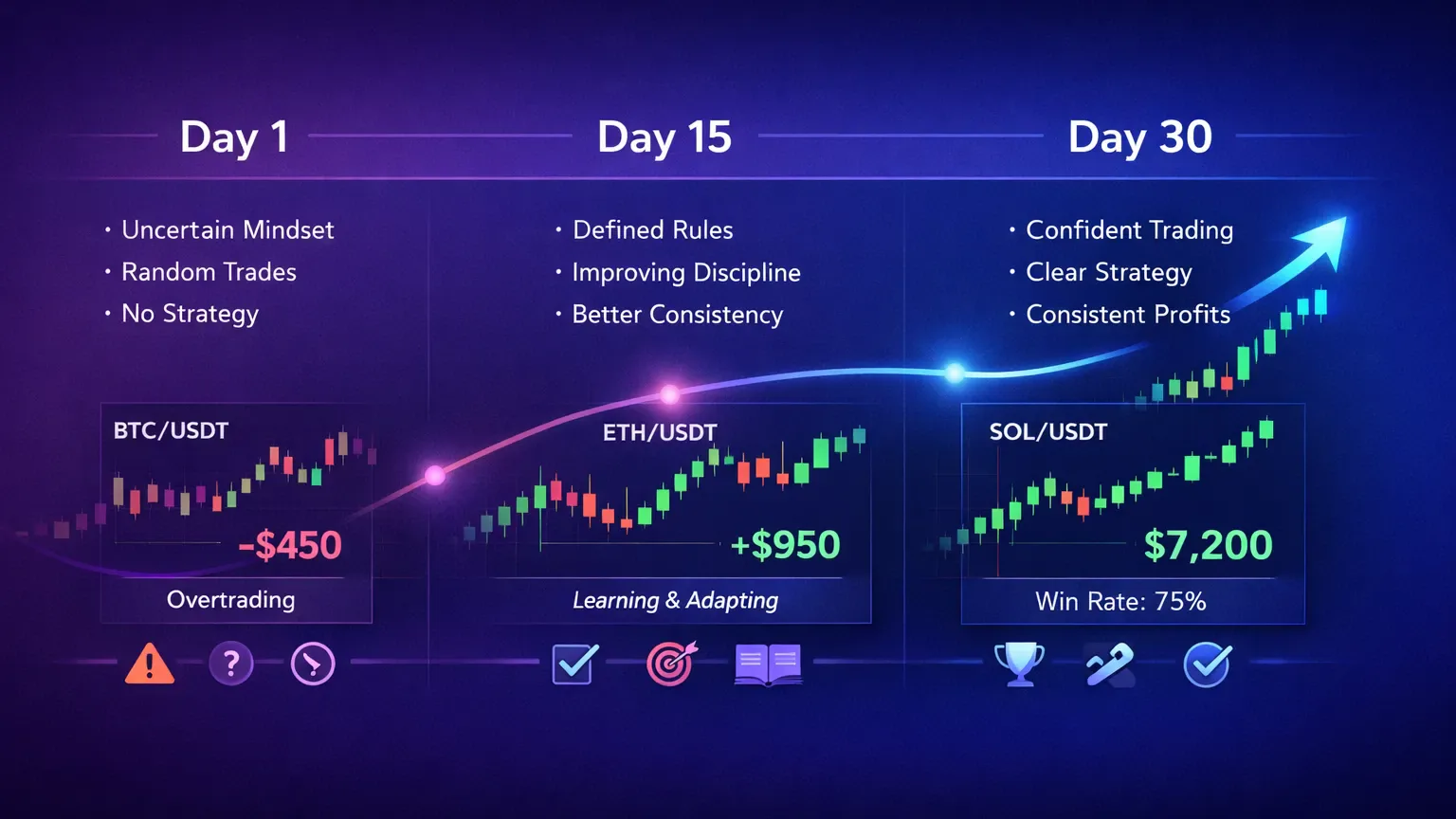
If nothing feels clearer after a month, the issue is not journaling. It is how you are using it. Simplify and refocus on decision-making.
Where Should You Start Today?
Starting a crypto trading journal is not about building a perfect system. It is about building a system you will actually use.
Keep it simple. Track only what matters. Review regularly. Make small adjustments. Let your data guide your behavior instead of emotions.
Crypto markets are fast and unforgiving. Memory is unreliable. A journal gives you objectivity when your mind cannot.
Tools like TradeChainly make this process easier by automating trade imports and connecting tags, analytics, and reviews into one workflow, but the real value comes from how you think about your data. Software only supports the process. It does not replace it.
Trade, record, review, adjust. Repeat. That is how progress compounds.