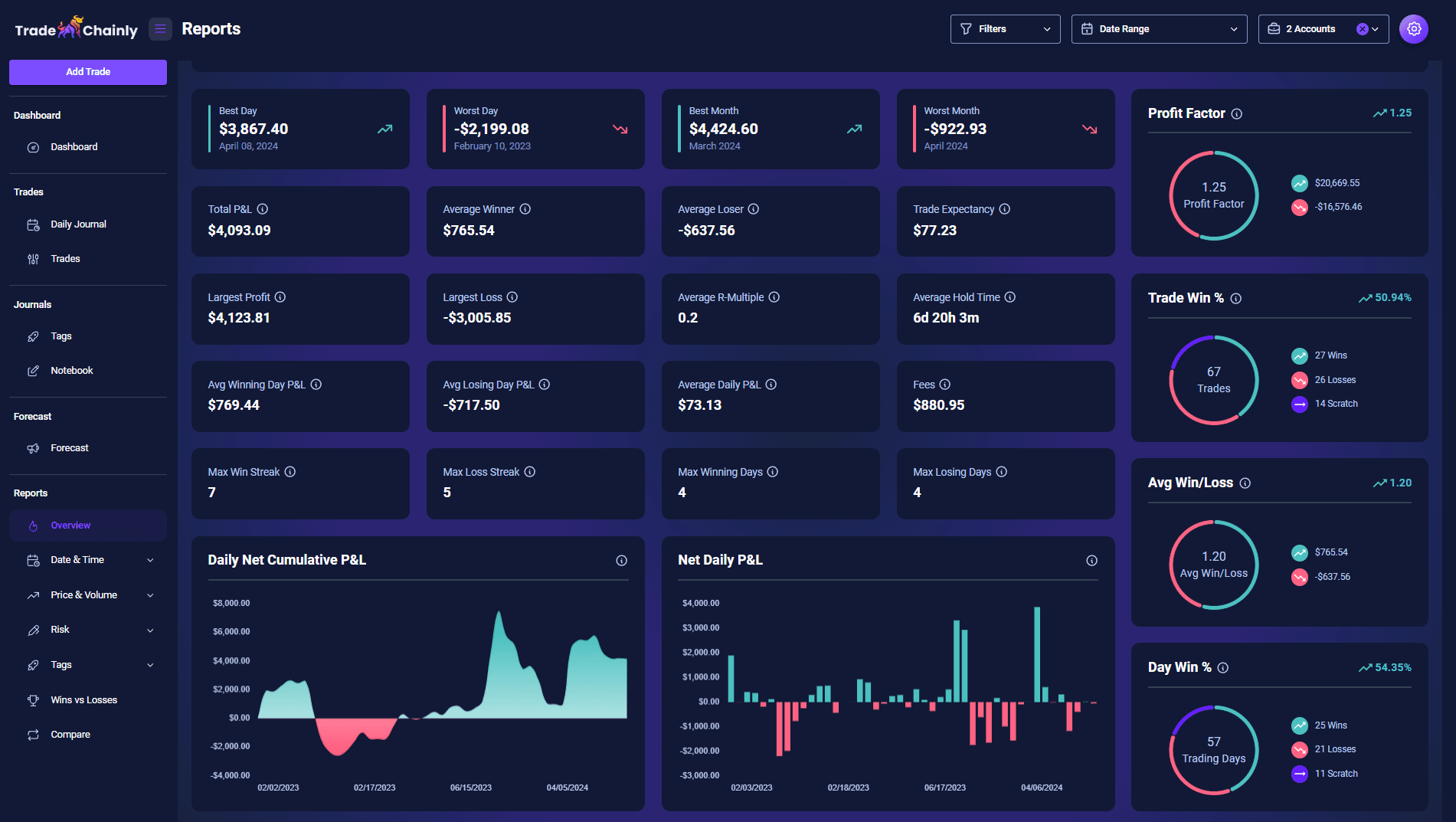

Why Your Trade History Tells a Different Story
Why do you feel like you’re trading well, then look back at your history and barely recognize the decisions you made?
Most crypto traders believe they are trading their system. Entries, exits, risk rules, clear logic. At least that is the story they tell themselves. But if you review enough trades in detail, you start to see something uncomfortable. A big percentage of decisions are not driven by the plan at all. They come from emotional bias that slips in quietly and distorts your judgment in real time.
Crypto makes this even worse. The market never closes. Price can rip five percent in minutes. Liquidation always feels close when you are trading with leverage. Social feeds turn every move into a narrative. Your brain is constantly flooded with signals, opinions, and fear of missing out. That environment rewards speed and confidence, but it also pulls you into subconscious patterns you rarely notice until damage is already done.
The problem is simpler. Emotional bias does not scream at you. It whispers. You justify it after the fact. You convince yourself the setup changed. You say you were adapting to the market. Over hundreds of trades, those tiny emotional distortions compound into inconsistent results, random risk taking, hesitation, overtrading, and strategy drift.
The only reliable way to see these biases is through your own trade data. Not the one or two trades you remember. The full sample. Position sizing, entry timing, MAE/MFE behavior, notes, tags, and session trends. When you zoom out, patterns appear that you never noticed while trading live.
This is about those hidden emotional biases. The ones crypto traders rarely admit to and often do not realize they have. You will learn what they look like, how they show up in your results, and how to correct them using structured journaling and review. Not motivational theory. Practical, data-backed improvement.

Seeing Crypto’s Built-in Emotional Triggers
Emotional bias exists in every market, but crypto multiplies the effect. The structure of the market constantly pushes you into reactive thinking. If you are not aware of that pressure, it quietly rewires how you make decisions.
The first factor is the 24/7 environment. There is no closing bell. You can check price at breakfast, at work, in the gym, and again at 3 a.m. Half of your emotional state as a trader comes from how often you expose yourself to the market. Crypto traders usually check price far more than stock or FX traders. That constant monitoring makes every micro-move feel relevant, which increases the likelihood of impulsive action or fear-driven avoidance.
The second factor is leverage combined with liquidation risk. On Binance or Bybit, a small move against you can erase a big percentage of your account if you size aggressively. Liquidation creates a cliff edge. Your brain reacts differently when the downside is absolute loss rather than a normal drawdown. That fear often shows up as hesitation, early exits, or irrational trade management once price moves near your stop.
Social influence adds another layer. Crypto Twitter, Discord groups, Telegram chats, influencer calls. Opinion flow in crypto is constant and loud. When everyone appears confident, herd bias builds fast. You start to look for reasons to agree with the crowd rather than weighing the setup objectively.
Finally, each exchange has a slightly different feel. Latency, order book depth, funding variations, and UI all influence your perception of risk and opportunity. A trader scalping ETH on Bybit might take twice as many trades as the same trader on Coinbase simply because the platform environment invites faster decision making.
Stack these factors together and you have the perfect breeding ground for emotional bias. Crypto does not just test your system. It tests your psychology every single session, often without you noticing. That is why understanding bias is not optional here. It is part of the job.
Breaking the Bias Blindspot
The pattern is clear. Most traders genuinely believe they are being rational. Not because they are arrogant, but because the human brain is wired to protect the ego. When a trade goes wrong, the mind instantly builds a story that makes the decision seem reasonable. You tell yourself the market changed. You tell yourself you were being flexible. You tell yourself you saw something subtle that others missed.
Over time, these stories become your trading identity. You no longer see the behavior as emotional. You see it as instinct, experience, or “feel for the market.” The problem is simple. If you cannot see the pattern, you cannot correct it.
Bias usually lives in the gap between your plan and your execution. You say you only trade clean breakouts, but half your entries are late chases when price already extended. You say you risk one percent per trade, but when you feel confident you double size without updating your plan. You say you do not revenge trade, but your fastest entries always seem to happen right after a loss.
You say you are following a process, but your execution keeps bending around emotion. That blindspot is where most damage happens.
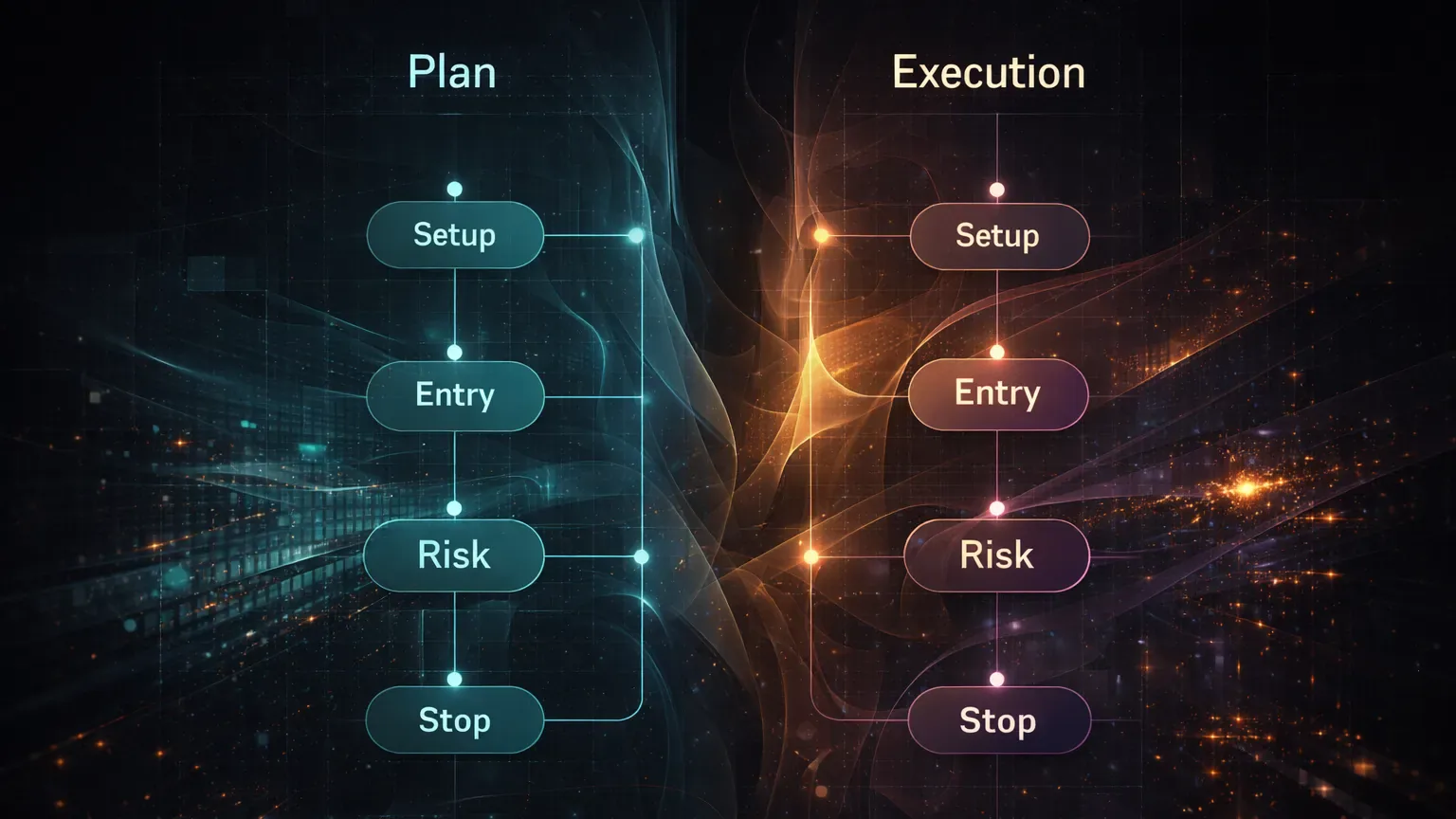
Crypto amplifies this blindness because trades happen quickly and frequently. Your brain does not have time to process each decision consciously. It moves into autopilot. That is efficient for execution speed, but dangerous for discipline. You only realize what happened when you look back later, and by then the rationalization process has already softened the lesson.
Journaling matters for a different reason. Not as a motivational exercise. As a way to create an objective record of what actually happened. Notes, tags, timestamps, and metrics do not care about your emotions. They simply reflect your behavior back to you. When that reflection does not match the story you have been telling yourself, you finally see the bias for what it is.
The Hidden Emotional Bias Problem Set
By the time a trader starts looking into psychology, they already understand fear and greed. Those are obvious. What most crypto traders miss are the quieter biases. These are the mental shortcuts your brain uses to “help” you make decisions faster. In trading, that speed often comes at the cost of discipline and consistency.
You do not consciously choose these biases. They run in the background. They influence the trades you take, how you size, when you exit, and how you respond after a loss or a win. If you have ever said “I don’t know why I did that,” what you really mean is that bias took over for a moment.
Let’s look at the most common hidden biases that show up in crypto trading data.
Turning Recency Bias Into Something You Can Catch
Recency bias happens when your most recent trades feel more important than the full history of your performance. Your brain gives outsized weight to what just happened, and you unconsciously adjust behavior around it.
After a losing streak, many traders tighten stops, hesitate, reduce size, or avoid valid setups altogether. They are no longer trading probability. They are trading the fear of the next loss. On the other side, after a strong run of winners, traders often size up recklessly or take lower quality trades because their confidence shifts from the system to themselves.
Crypto supercharges this bias because you can take dozens of trades per week, especially if you scalp BTC, ETH, or SOL futures on platforms like Binance or Bybit. When trade frequency rises, the last few outcomes feel like the truth about your skill, even though they are nothing more than random variance inside a longer-term edge.
In your data, recency bias often shows up as sudden volatility in risk per trade, erratic trade frequency after a win or loss streak, or big swings in MAE and MFE behavior. None of those reflect market change. They reflect emotional reaction.

The FOMO Confirmation Trap
Confirmation bias means you look for information that supports what you already want to do. In crypto, it usually merges with FOMO. You see price breaking out. You already want to be long. So your brain starts filtering the world for reasons to hit buy.
Twitter is bullish. Funding is rising. Open interest is increasing. Altcoins are moving. Someone posted a chart with laser eyes. Suddenly every datapoint feels like proof that entering late is still justified.
What you don’t notice is what you ignore. Extended move. High risk entry. No clear invalidation. Thin liquidity. Prior resistance. All gone from your awareness because your brain is chasing psychological relief. You don’t want to miss it.
This bias is deadly because the logic feels solid in the moment. It only looks emotional in hindsight, when you realize you did not evaluate both sides of the trade objectively.
How Loss Aversion Warps Trade Management
Loss aversion bias means losing hurts more than winning feels good. In crypto, the pain is amplified by liquidation and leverage. The possibility of a position going to zero changes how you manage risk.
This often leads to cutting winners too early and holding losers longer than planned. Traders will close a good trade at a small profit to “lock it in,” then refuse to close a losing trade because doing so would make the pain real.
On perpetual futures, unrealized PnL fluctuates quickly. The emotional rollercoaster makes disciplined execution difficult. You might find yourself moving stops, adding to losers, or waiting “just a bit longer” because the red number on screen feels unbearable.
In the data, loss aversion often shows up as small average winners and outsized losers. Your edge is not broken. Your pain tolerance is.

The Sunk Cost Attachment Problem
Sunk cost bias happens when you stay attached to a trade, strategy, or bias simply because you have already invested time, energy, or money into it.
For example, you spend days researching a narrative. You enter multiple trades around it. When the market starts invalidating your idea, you do not cut. You do not adapt. You keep forcing trades because you feel like you “deserve” to be right after all the effort.
This is common in sideways markets. A trader will keep re-entering the same setup after repeated stop-outs, not because it still makes sense, but because walking away would feel like admitting defeat.
In the data, you will notice clusters of nearly identical trades around the same idea with poor expectancy. That is not strategy. That is attachment.
Availability Bias in a Headline Market
Availability bias means your decisions are shaped by whatever information is most vivid or recent in your mind. In crypto, this often comes from news and social narratives.
ETF rumors. Exchange drama. Funding spikes. A viral account predicting a 30 percent move. You start to overweight these stimuli and underweight your actual system rules. Your trading becomes reactive to headlines rather than structured setups.
This leads to inconsistent trade selection. Some days you are systematic. Other days you are chasing whatever the crowd is focused on. The market dictates your emotional state, and your emotional state dictates your trades.
Overconfidence After a Hot Streak
Overconfidence bias shows up after a strong run. You start to believe your intuition is sharper than usual. You feel like you are “in sync” with the market. Rules begin to feel restrictive.
In crypto, this is particularly dangerous because leverage provides instant reinforcement. A good streak can multiply your account very quickly. That dopamine hit makes you feel invincible.
Then you size up. You remove stops. You trade lower quality setups. Eventually the losing streak arrives, and the account gives back weeks of progress in days.
In the data, you see risk per trade expanding exactly when discipline should be tightest.
These biases are not signs of weakness. They are the default human operating system. The real mistake is pretending you are immune to them. The goal is awareness, then structure, so emotion cannot quietly rewrite your trading plan in the moment.
Turning Bias Into Data Signals
Emotional bias sounds abstract until you connect it to numbers. Once you start reviewing your trade history with intent, bias becomes visible. It leaves fingerprints across your metrics, tags, and session results. The key is knowing what to look for.
One of the clearest signals is volatility in your risk profile. If you normally risk a fixed amount per trade, but your sizing swings up and down depending on recent wins and losses, that is recency bias in action. You may think you are adapting to market conditions. The data often shows you are simply reacting to emotion.
MAE and MFE can also expose bias. If your losing trades regularly show deep excursions beyond your stop level (because you keep moving it), while your winners rarely expand far beyond your take-profit, that is often loss aversion. You are allowing losers to breathe while suffocating winners. Over a large sample, that destroys expectancy.
Trade frequency patterns are another clue. Look for sudden spikes in the number of trades taken after a loss or a breakout move in the market. If activity increases without a corresponding improvement in edge, you are probably seeing FOMO, revenge trading, or availability bias.
Tags and notes matter too. If you consistently tag trades with words like “late entry,” “chasing,” or “emotional,” you will eventually notice clustering. The same mistakes happen at the same times. Often this lines up with specific environments, such as high funding periods, strong trend days, or low-liquidity weekend sessions.
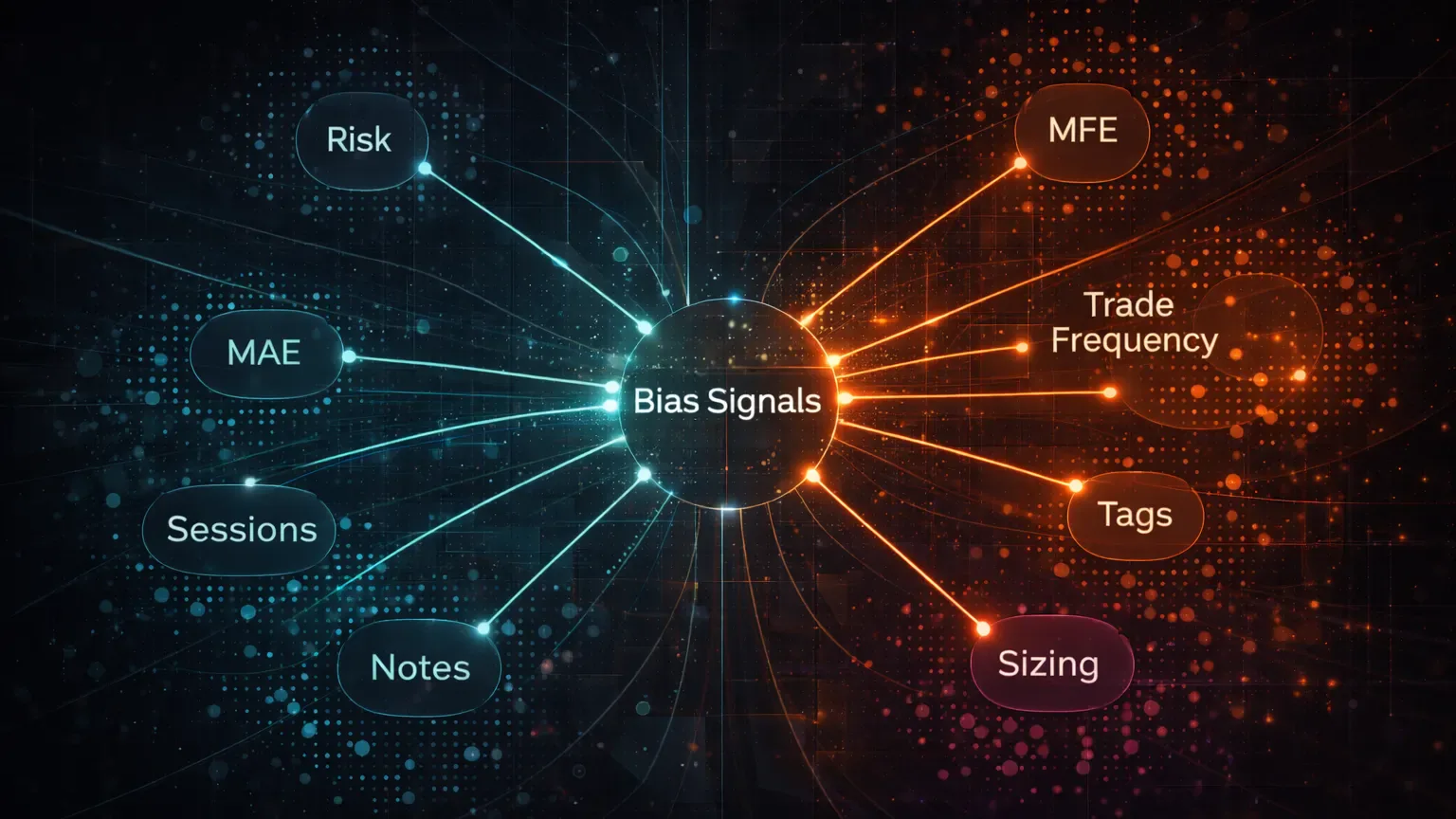
Session performance can reveal bias as well. Some traders perform well during structured hours, then bleed profits trading at random times because they “happened to open the chart.” That is often availability bias or boredom trading, not strategy execution.
Structured journaling platforms help because they create consistency. A tool like TradeChainly allows you to auto-import trades, apply consistent tags, and review performance across different conditions without relying on memory. The goal is not to obsess over every number. The goal is to let the data tell the truth about how emotion shapes your behavior.
When you see the patterns clearly, change becomes possible. Until then, bias remains invisible, and the same mistakes repeat month after month.
A Realistic Example: Fixing Recency Bias in a Scalping Routine
Consider a futures trader scalping SOL and ETH perpetuals on OKX. He has a simple system. Fixed risk per trade. Clear breakout criteria. Strict stop placement. Over a few months, the strategy performs well. Nothing spectacular, but consistent.
Then he has a bad week.
Three losing trades in a row. Nothing unusual statistically, but emotionally it feels heavy. He responds by cutting his position size in half and becoming more selective. The next few days include multiple valid setups, but he either hesitates or enters late with small size. Ironically, those trades win.
Now the opposite problem begins. Confidence returns. He sizes back up. A few wins arrive, and soon he is risking more than his original plan. Then the market chops. Two losses erase most of the prior gains. His emotions spike again. Size drops. Hesitation returns.
From the outside, this looks chaotic. From the inside, it feels rational.
Eventually he starts journaling properly. He tags trades based on emotional state and reviews weekly reports. A pattern emerges. Risk per trade is not stable. It moves almost perfectly in sync with the last three to five outcomes. His system is fine. His emotional reaction to variance is the real problem.
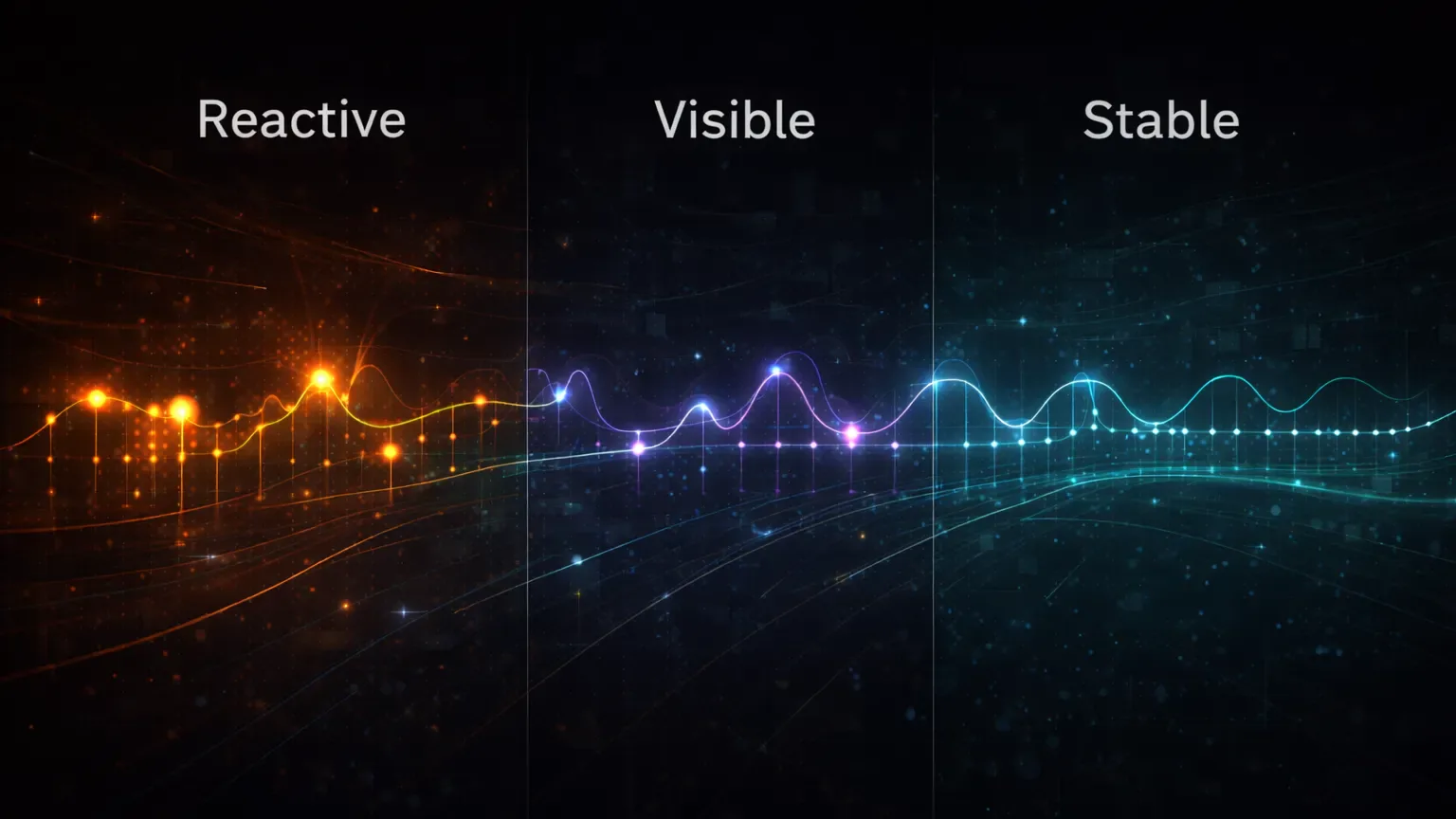
He makes one change. Fixed risk per trade. No exceptions. Confidence no longer dictates size.
Over the next month, his equity curve smooths out. The edge did not improve. His decision making did.
This is the power of seeing bias in your own data. A structured review process, whether done manually or inside a journal like TradeChainly, turns vague frustration into a measurable problem you can correct. Once the behavior becomes visible, you can build rules that protect you from yourself.
Building a Bias-Resistant Review Loop
You cannot eliminate emotion from crypto trading. The goal is not to become robotic. The goal is to build a structure that prevents emotion from quietly rewriting your rules while you trade live.
Start with awareness. Identify the bias that shows up most often in your trading. Maybe you chase breakouts late. Maybe you size up after wins. Maybe you refuse to close losers. Do not label it as weakness. Treat it like a recurring pattern that needs a system-level fix.
Next, translate that bias into something you can tag or track. For example, you might create tags like “late entry,” “over size,” “ignored stop,” or “emotion driven.” These tags create visibility. Over a few weeks, the patterns in your data will confirm or challenge the story you have been telling yourself.
Then create clear rules designed to neutralize the bias. If you struggle with recency bias, commit to fixed risk per trade for at least 30 days. If you chase breakouts, set a rule that you do not enter extended candles. If you hold losers, define a maximum stop distance and refuse to move it once the trade is open.
A weekly review beats daily obsession. Crypto trades happen fast and randomness creates noise. A weekly review rhythm helps you see the broader trend without reacting emotionally to every fluctuation.

Finally, track improvement using metrics that matter. Risk multiple consistency. Win rate stability. Average R per trade. Trade frequency. Tag frequency. If those stabilize over time, you are moving in the right direction.
If you use a structured trading journal like TradeChainly, automating import and tagging helps keep the process consistent. But even if you journal manually, the principle is the same. Your job is to create a feedback loop that exposes emotional bias and stops it from controlling your execution.
This is not about becoming “perfect.” It is about reducing unforced errors so your actual edge can play out over hundreds of trades rather than being drowned out by impulsive decisions.
What Changes When You Track It
Many traders respond to inconsistency by hunting for a better strategy. New indicators. New timeframes. New markets. Sometimes that helps. Often it is a distraction from the real issue, which is emotional bias slipping into execution.
Your goal as a crypto day trader is simple. Build an edge. Protect it from yourself. That means noticing when your perception gets distorted by fear, confidence, attachment, or social influence. It means reviewing your trades honestly, not selectively.
The good news is that emotional bias is predictable. It leaves a trail in your data. Risk swings. Tag clusters. Session drops. MAE and MFE distortions. If you review consistently, the patterns become obvious. Once they are obvious, you can design rules that keep you grounded no matter what the market does.
If you want structure around that process, use a journal that fits the way you trade. A crypto-focused platform like TradeChainly makes it easier to import trades, tag behavior, and review performance over time. But the principle comes first. Awareness. Structure. Consistency.
Your strategy might already work. Cleaning up your emotional bias may be the real upgrade.