
Crypto Losses Hit Harder Than You Expect
Losing streaks happen in every market, but crypto hits differently. You are trading in a 24/7 environment where volatility can expand without warning, funding rates change the cost of holding positions, and liquidation always sits in the back of your mind. One bad session can quickly spill into the next because there is no closing bell that forces you to stop.
When you combine that environment with leverage, losing streaks stop feeling like normal variance. They feel personal. You begin to question whether you actually know what you are doing. You hesitate when you should execute. You size up when you should slow down. Or worse, you start revenge trading to “get back to even.”
Most traders don’t spiral because they took one bad trade. The spiral begins when emotions start influencing execution, which compounds losses further.
This guide is about stopping that spiral.
Not through motivational quotes, but through real trading process:
- understanding why streaks snowball
- stabilizing your risk
- separating bad trading from bad conditions
- rebuilding confidence around execution, not PnL
If you trade crypto intraday, this will feel familiar. The goal is not to eliminate losing streaks. The goal is to recover from them without blowing up your account or your mindset.
Loss Spirals Start With a Familiar Session
A realistic example.
A trader is scalping SOL and ETH perpetuals on OKX. They have been profitable for months, but during a sharp liquidation cascade, they get stopped multiple times. Frustrated, they increase size to “make it back.” A few trades later, they are down far more than they ever planned.
The next day, they sit down to trade again. But now they are trading scared. They hesitate on valid setups, then chase late breakouts with too much size. Emotions are running the show.

When they review their trades, several patterns show up:
- position size increased after the first loss
- entries came later than usual
- trades without notes performed worse
- there were more intraday trades than usual
- confidence tags dropped
- MAE widened
Nothing about their strategy changed. Their execution degraded.
So they reset:
- size back to minimum
- only A-setups
- pre-trade notes required
- maximum 5 trades per session
- review at the end of each day
After two weeks, the numbers stabilize. Win rate returns to normal. MAE shrinks. Mistake tags drop.
Profit did not come back because the market changed. Profit came back because their process improved.
That’s what real recovery looks like. Boring. Systematic. Focused on discipline rather than outcome.
Crypto Creates the Perfect Conditions for Losing Streaks
Crypto exposes you to more decision fatigue than most markets. There is always another candle forming. Another pair moving. Another breakout alert pinging. That constant stream of opportunity becomes dangerous when you are already frustrated or mentally overloaded.
A few forces make losing streaks escalate faster in crypto.
First, emotional overdrive in a 24/7 environment.
There is no natural reset point like traditional markets. So instead of stepping away when tilted, traders keep going. You take one loss. Then you try again. Then again. Before you realize it, you have traded for 9 hours fueled by cortisol and frustration.
Second, leverage multiplies consequences.
A trader using 10x or 20x leverage doesn’t just lose money. They lose emotional stability much faster. Watching price tick toward your liquidation point rewires your decision making into fear mode. You stop thinking about execution quality and only think about survival.
Third, noise fatigue from funding, open interest changes, and sudden liquidity shifts.
Crypto can look strong until a cascade liquidation wipes out open interest across the board. If you happen to be on the wrong side, it reinforces the belief that the market is “out to get you,” which often leads to hesitation later.
The spiral looks like this:
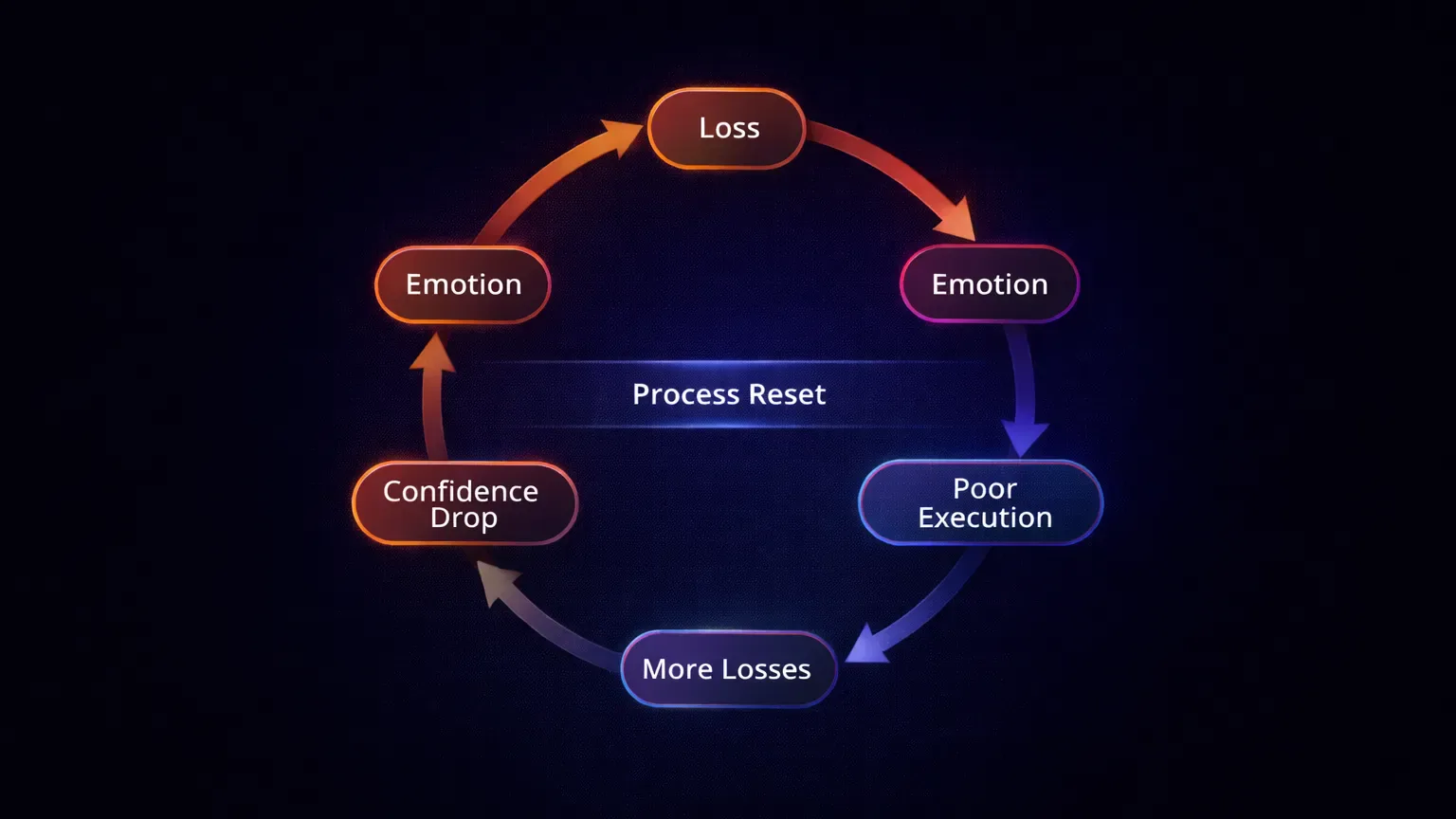
Loss → emotion → worse execution → more losses → panic or tilt → account drawdown → loss of confidence
Recovering from trading losses means interrupting that loop as early as possible. Not by quitting trading forever. But by stabilizing your process so your brain stops operating in emergency mode.
Risk Resets Stop the Bleeding Without Killing Confidence
There is a fine line between “protect your capital” and “become afraid to trade.” The goal is not to disappear from the market. The goal is to reduce risk to a level where you can think clearly again.
That starts with a risk reset.
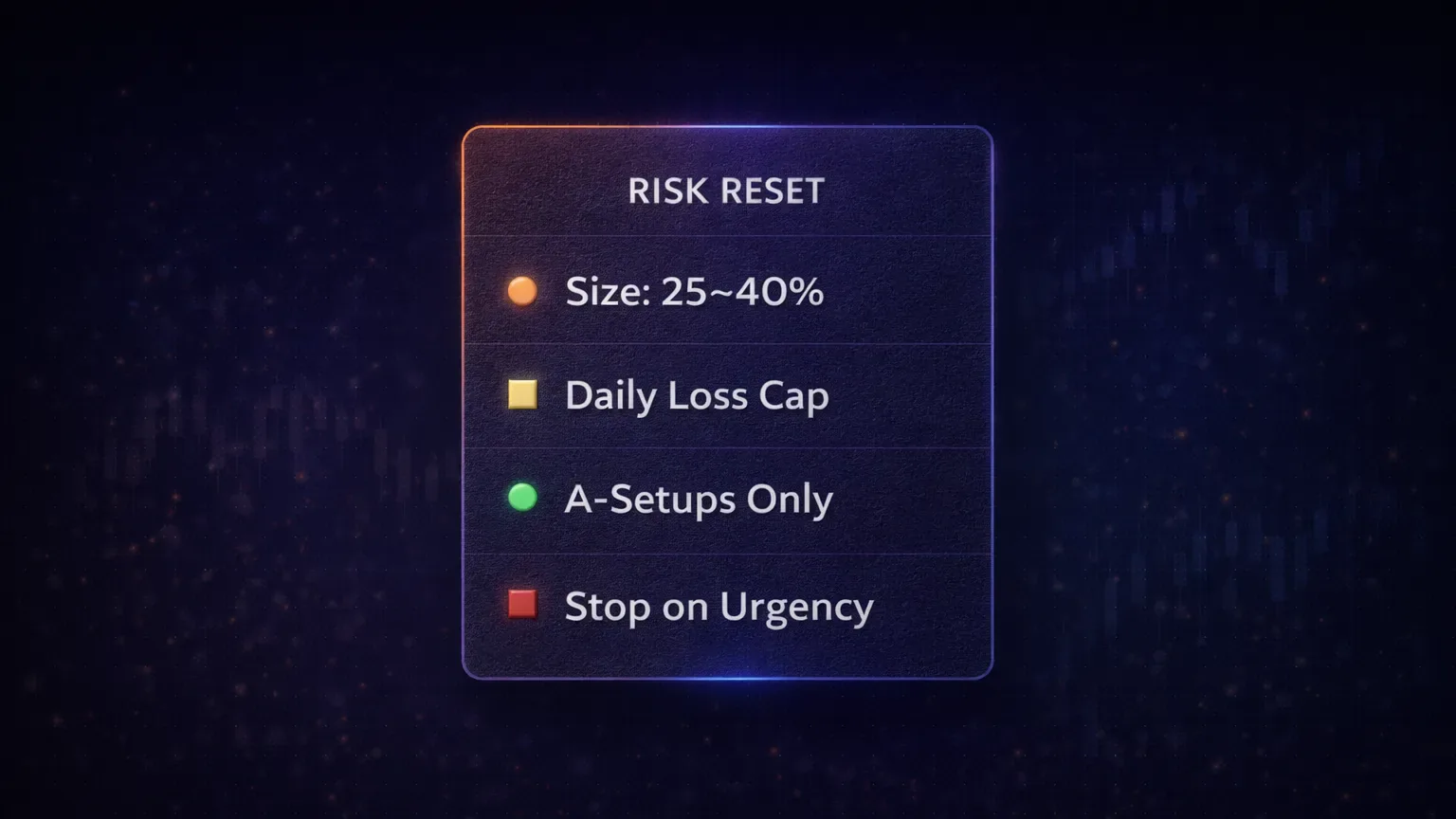
Not a complicated one. Something simple like:
- cut your normal size to 25–40 percent
- set a small daily loss cap
- limit trades to your best setups only
- trade fewer pairs
- stop trading when you feel urgency instead of clarity
Two things happen when you do this.
First, it stops PnL from dominating your emotions. Losing $20 on a micro position hurts far less than losing $400 on a full-size trade. Lower emotional weight brings your brain out of fight-or-flight mode.
Second, you continue trading.
And this matters. Because disappearing for weeks often makes traders rusty, overly cautious, or fearful when they return. You want controlled exposure, not avoidance.
A useful reference point is a “minimum confidence size.” That is the smallest position where you still take execution seriously. Trade at that level until your discipline and clarity return.
It’s closer to physical rehab. You do not run sprints on a strained muscle. But you also don’t stay in bed for a month.
Diagnosis Separates Market Conditions from Execution Errors
Once the bleeding has stopped, it is time to understand what actually caused the drawdown.
Most traders go wrong here. They either blame the market entirely or blame themselves entirely. The truth is usually somewhere in between.
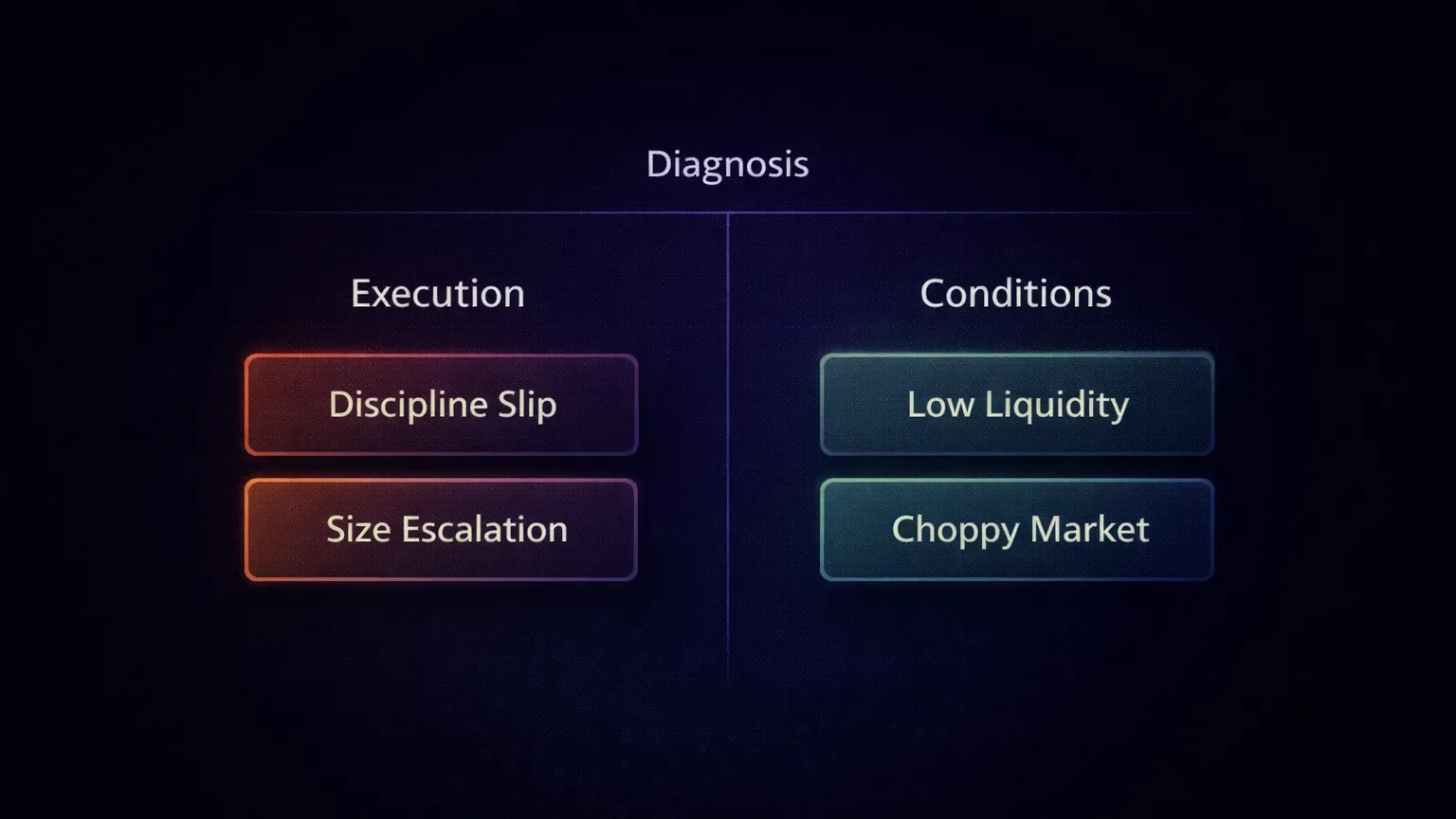
There are two main categories:
- Bad trading in normal conditions
- Decent trading in difficult conditions
Your job is to determine which one you are dealing with.
Journaling matters here. You want to look at:
• MAE (maximum adverse excursion)
• MFE (maximum favorable excursion)
• win rate across trending vs ranging periods
• trade timing
• entry quality
• position size creep
• emotional tags (fear, tilt, revenge)
For example:
If your MAE increased sharply but MFE stayed similar, you may be entering worse locations or chasing breakouts too late.
If win rate collapses only during low volume sessions or chop, it may be a conditions problem rather than a skill problem.
If your losing trades show larger size than winners, that hints at size escalation under stress.
Inside a crypto trading journal, this becomes clear through reports, tags, and notes. A trader might notice they consistently lose USDT pairs on Bybit during Asian session chop, while performing well during US market hours. Another trader might find that liquidation fears make them close winners too early after taking a big loss.
This diagnosis removes emotion. You are not judging yourself. You are looking for patterns in execution and conditions.
Tools like TradeChainly help uncover these patterns because your data is organized, tagged, and reviewable. But the key principle applies no matter what you use: identify whether you need a market adaptation or a discipline reset.
A Recovery Framework Rebuilds Process in Steps
Once you stabilize and diagnose, it’s time to rebuild properly. Think of this as a structured reset designed for crypto specifically.
Step 1: Stabilize
Your only goal is to remove emotional chaos.
So you:
- reduce size
- reduce frequency
- eliminate impulsive trades
- define sessions ahead of time
You should still trade. But only at a level where mistakes do not trigger panic.
Step 2: Clarity
Now you refine what “good trading” looks like.
This means formally defining your A-setups. Not vague descriptions. Real criteria such as trend presence, volume confirmation, entry trigger, stop logic, invalidation level, and profit-taking structure.
You might also tag confidence levels to see how conviction aligns with results.
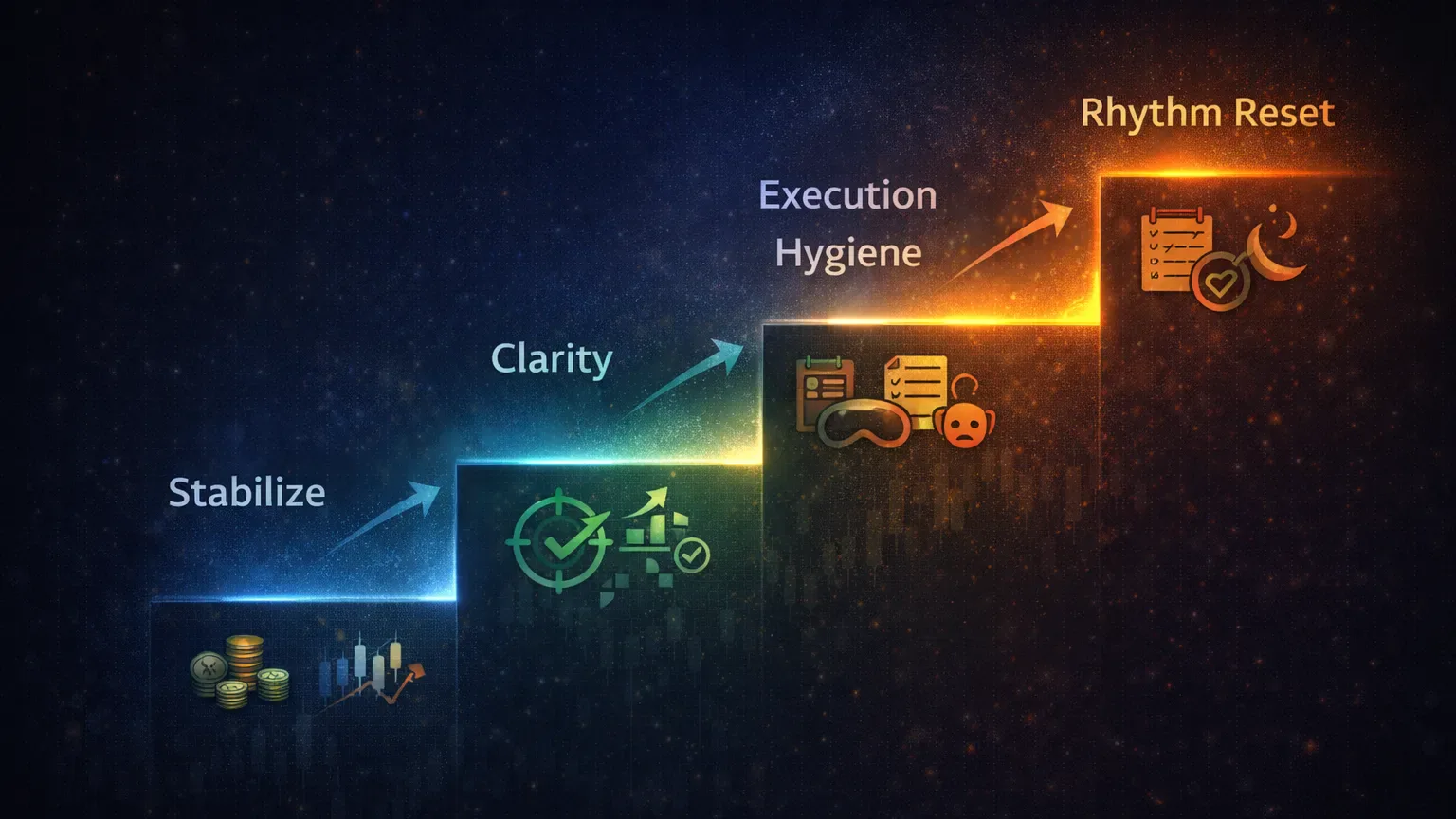
Step 3: Execution Hygiene
This is simple but powerful.
• write a short pre-trade note
• tag emotions after the trade
• document mistakes honestly
• review end-of-day
Most traders underestimate how much emotional honesty improves execution. You are not trying to look good in your journal. You are trying to see the truth.
Step 4: Rhythm Reset
Crypto doesn’t force you to stop. So you must create your own structure.
- set trading windows
- stop after clear mental fatigue
- protect sleep
- define maximum session length
Fatigue equals bad decisions. And fatigue compounds losing streaks more than most traders realize.
TradeChainly can support this style of workflow because automated exchange sync removes friction from journaling. But the important thing is that you actually review your data, whatever tool you use.
Confidence Returns When Results Stop Defining You
Confidence does not come from winning trades. It comes from trusting your process.
When you attach identity to PnL, every loss becomes a threat to your self-worth. That’s when traders spiral. They do not fear losing money. They fear what that loss “means” about them.
So part of recovery is psychological reframing.
A losing day means:
- variance happened
- execution needs review
- risk must be controlled
It does not mean:
- you are failing
- you are incapable
- you should chase
Remind yourself that even elite traders lose often. The difference is how they respond.
Process creates stability. Stability rebuilds confidence. Confidence supports execution. And execution eventually produces results.
Breaks Are Sometimes the Correct Trade
There are times when continuing to trade is not productive. You may need a full temporary break if:
• you cannot follow your rules
• you feel physical stress when trading
• you keep increasing size emotionally
• you cannot sleep because of trades
• life circumstances are overwhelming
Stopping trading does not mean quitting. It means removing risk exposure while you reset mentally.
Other times, simply reducing size and structure is enough. If you still feel calm, still follow rules, and losses are within plan, then a full stop may not be necessary.
The key is honesty. If you are trading to soothe emotion rather than execute a plan, step back.
Short breaks can protect both capital and mindset. But always return with structure, not desperation.
Anti-Fragile Review Habits Reduce Future Damage
Recovery from trading losses is not a one-time fix. You want a system that makes future streaks less damaging and easier to diagnose.
A strong prevention rhythm might include weekly trade summary review, tag-based performance breakdowns, highlight top mistakes, track emotional triggers, document lessons, and adjust rules slowly.
Crypto rewards structured traders. The ones who journal properly tend to see patterns sooner, reduce tilt faster, and keep losses controlled.
Automated journaling tools like TradeChainly make this easier for crypto day traders because your trades import automatically, which removes the friction that usually kills consistency. But again, the important part is the habit.
You are not trying to eliminate losing streaks. You are building resilience so they no longer control you.
Recovery Is a Skill You Build
Every trader goes through rough patches. What separates professionals from emotional gamblers is how they respond.
Recovery is not about chasing losses or waiting for a miracle run. It is about slowing down, reducing risk, studying your data, and rebuilding trust in your own execution. Crypto markets will always be volatile. Your edge comes from discipline that remains stable in the middle of that chaos.
If you want structure around your review process, a crypto-focused trading journal like TradeChainly can support you. But the real work is still yours. Observe. Reflect. Adjust. Stay consistent.
Losing streaks are temporary. Good process is permanent.