Why Journaling Starts Feeling Like Extra Work
Why does journaling feel like extra work when it is supposed to make you better?
Most traders do not fail at journaling because they do not care. They fail because the process quietly asks for more time than they can realistically give. After a trading session, energy is low, focus is gone, and the last thing you want is another thirty minutes spent copying numbers from an exchange into a spreadsheet or a journal app. Over time, that friction builds resistance. You skip days. You delay reviews. Eventually the journal becomes something you “should” do instead of something that actively helps you trade better.
The irony is that journaling is supposed to save time. It is meant to shorten your learning curve, reveal patterns faster, and prevent you from repeating the same mistakes. But when the act of recording trades becomes the most time-consuming part of the process, the entire system works against itself.
Crypto trading makes this even worse. You are dealing with higher trade frequency, partial fills, funding payments, different fee structures, and activity across multiple exchanges. A single active futures trader can generate dozens of trades. Manually logging all of that is not just boring, it is unsustainable.
Automated trade import changes the equation. It removes the main time sink in journaling: data entry. Instead of spending your limited mental energy on copying numbers, you can use it to analyze performance, review execution, and refine your strategy. Automation does not just make journaling faster. It makes journaling possible to maintain over years, which is where real improvement actually happens.

This article will show how automated trade import saves time, not as a marketing claim but as a workflow shift that affects your consistency, data quality, and trading performance.
The Hidden Time Cost of Manual Trade Logging
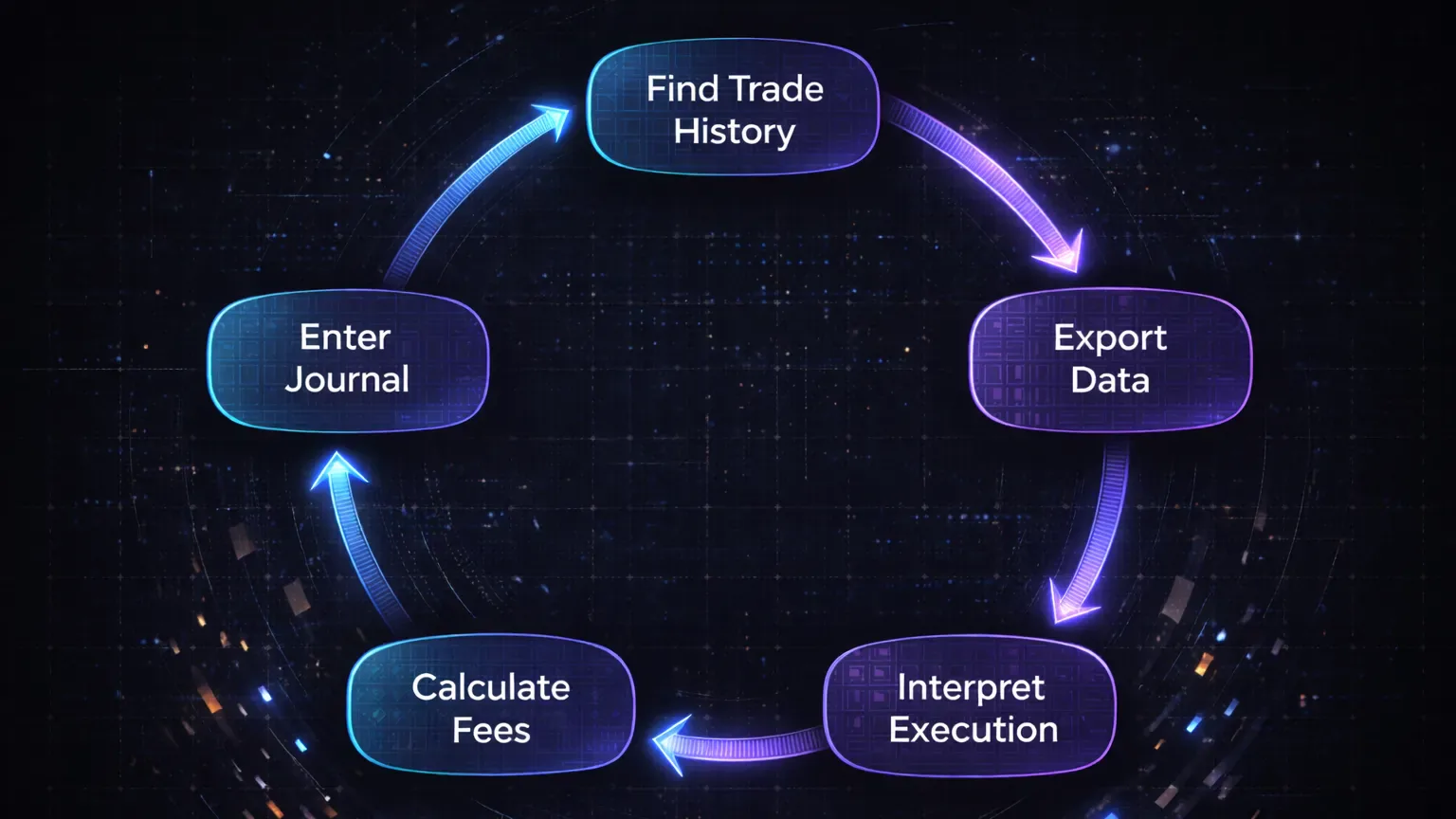
Manual journaling feels manageable when you look at a single trade. It is only a few numbers: entry, exit, position size, fees, result. The problem is not the individual action. The problem is how often you have to repeat it, and how many small steps are involved each time.
Start with where your data lives. On Binance, Bybit, OKX, or Coinbase, your trade history is buried inside several menu layers. You filter by symbol, adjust the date range, and export a CSV or scroll through pages. Already, you have spent a few minutes before you have copied anything. If you trade multiple pairs or use more than one exchange, you repeat this process again and again.
Then comes normalization. Exchanges do not present data in the way most journals need it. You have to interpret position size vs executed size, entry price vs average fill price, maker vs taker fees, funding payments for futures, and partial fills that split one idea into multiple executions. Each one requires a mental check and sometimes a calculator. Small mistakes are easy to make, especially after a long trading session.
Now multiply that by frequency. An active futures trader might place 20 to 50 trades in a single day. Even if each trade takes just 45 seconds to log correctly, that is 15 to 40 minutes of data entry. Over five trading days, you are looking at one to three hours per week doing nothing but copying information.
| Trading Style | Trades per Day | Time per Trade (Manual) | Weekly Time (Manual) | Weekly Time (Automated) |
|---|---|---|---|---|
| Casual Spot Trader | 5 | 45 seconds | ~19 minutes | ~1 minute |
| Active Day Trader | 15 | 45 seconds | ~56 minutes | ~2 minutes |
| Futures Scalper | 40 | 45 seconds | ~2.5 hours | ~3 minutes |
This does not include corrections, missing trades you discover later, or the mental cost of knowing you still “have to journal” after you are done trading.
The real damage is not the time itself. It is what happens around it. When journaling takes too long, you start postponing it. When you postpone it, details fade. When details fade, your data becomes less reliable. At that point, the journal loses its authority. You stop trusting it. And once you stop trusting your data, reviewing it feels pointless.
Manual logging also encourages shortcuts. Traders skip fees. They round numbers. They stop recording emotions or context because “I will remember later.” Those small omissions compound into a dataset that looks complete but lies to you.
Automated trade import does not just remove busywork. It protects the integrity of your journal by removing the conditions that cause you to rush, approximate, or avoid the process.
See Automated Trade Import in Action
For a lot of traders, “automated” sounds vague or even risky. It feels like something abstract happening in the background that you are supposed to trust without understanding. In reality, automated trade import is simple. It is just a structured way for your journal to read your trading history directly from the exchange instead of asking you to copy it manually.
Most platforms use API connections. An API key is a permission token that lets one system read data from another. When you connect your Binance, Bybit, OKX, or Coinbase account to a journal, you create a read-only API key. That means the journal can see your trades, balances, and fills, but it cannot place orders, close positions, or move funds. It is view access only. This matters because it removes the biggest fear traders have about automation: loss of control.
Once connected, the journal periodically pulls new data. Every execution, every partial fill, every fee, and every funding payment gets synced automatically. You do not need to export CSVs or refresh anything manually. You just open your journal and your trading activity is already there.
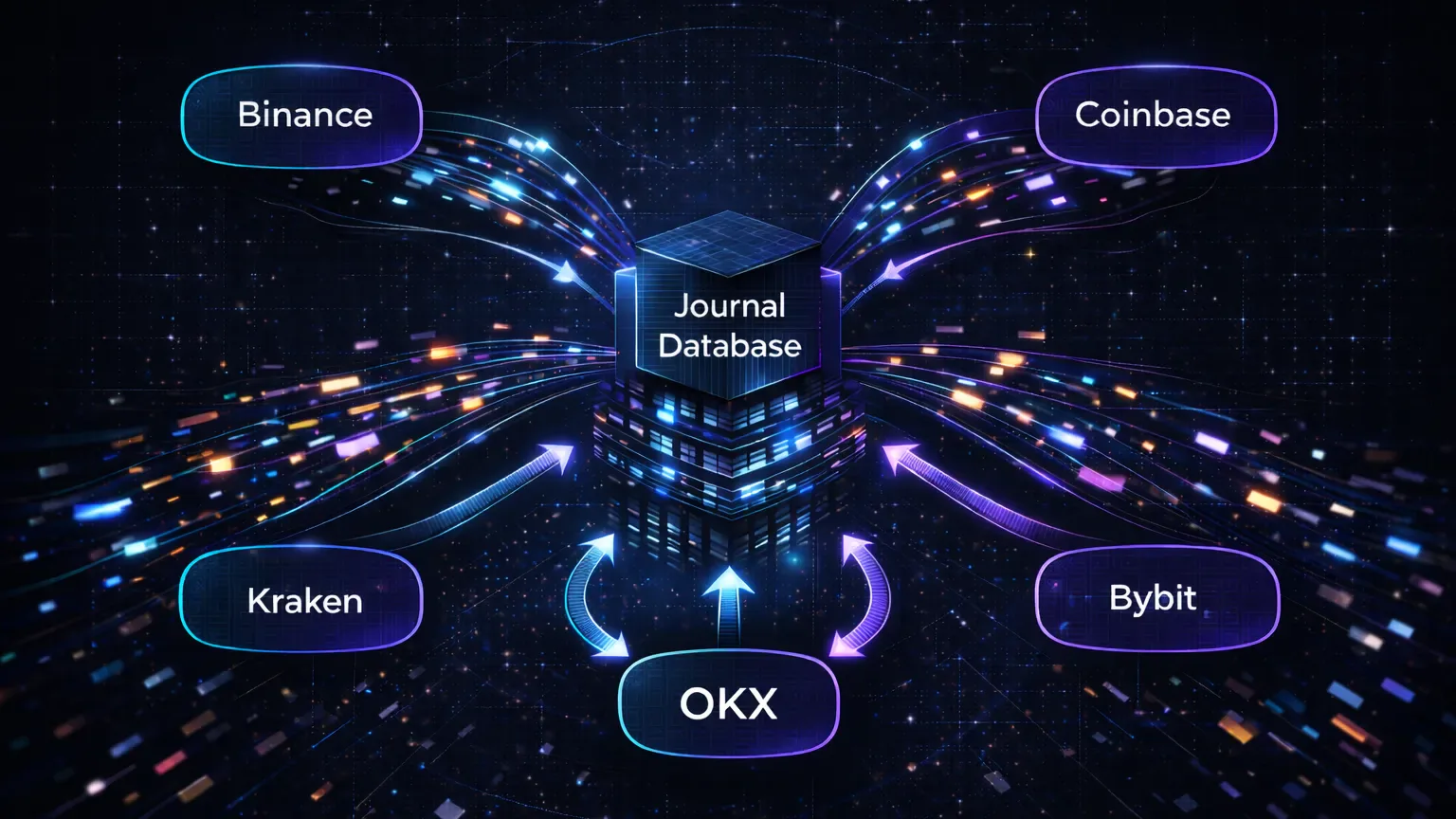
This is especially important in crypto because trade data is more complex than in traditional markets. A single position can generate multiple entry fills, multiple exit fills, separate fee entries, separate funding entries, and different fee rates depending on maker or taker execution. When you log manually, you collapse all of this into one simplified row. Automation preserves the structure. It gives you the full picture without extra effort.
Another key difference is continuous syncing. Automated import is not a one-time upload. It is ongoing. Trade today, it shows up. Trade tomorrow, it shows up. This changes journaling from a batch task into a background process. The journal stays up to date, even if you forget for a few days.
Spot and futures trading benefit differently from automation. Spot traders mostly save time on entry and exit tracking. Futures traders save time on everything: funding, liquidation risks, leverage-adjusted position sizes, and position-based performance metrics. The higher the complexity of your trading, the more valuable automation becomes.
Automation also standardizes your data. Instead of mixing exchange formats, spreadsheet formulas, and personal shortcuts, everything enters your journal in a consistent structure. That consistency is what makes later analysis reliable. Reports, filters, and tags only work when the underlying data is clean and complete.
This is why automated trade import is not a luxury feature. It is the foundation that makes accurate analysis possible at scale.
Build Consistency from Time Saved
Saving time sounds practical, but the real impact of automation shows up in how it changes your behavior around journaling. When logging trades becomes instant instead of effortful, the relationship you have with your journal shifts.
With manual logging, journaling feels like a task you have to schedule. You finish trading and then you still have work left to do. That separation creates friction. You start thinking in terms of “I will journal later.” Later turns into tomorrow. Tomorrow turns into the weekend. At that point, the data is stale and your motivation is gone. The journal becomes a backlog instead of a living system.
Automated trade import removes that gap. Your trades are already there. The journal is no longer something you prepare. You just open it. That difference is subtle but powerful. It turns journaling from a delayed obligation into an immediate feedback loop.
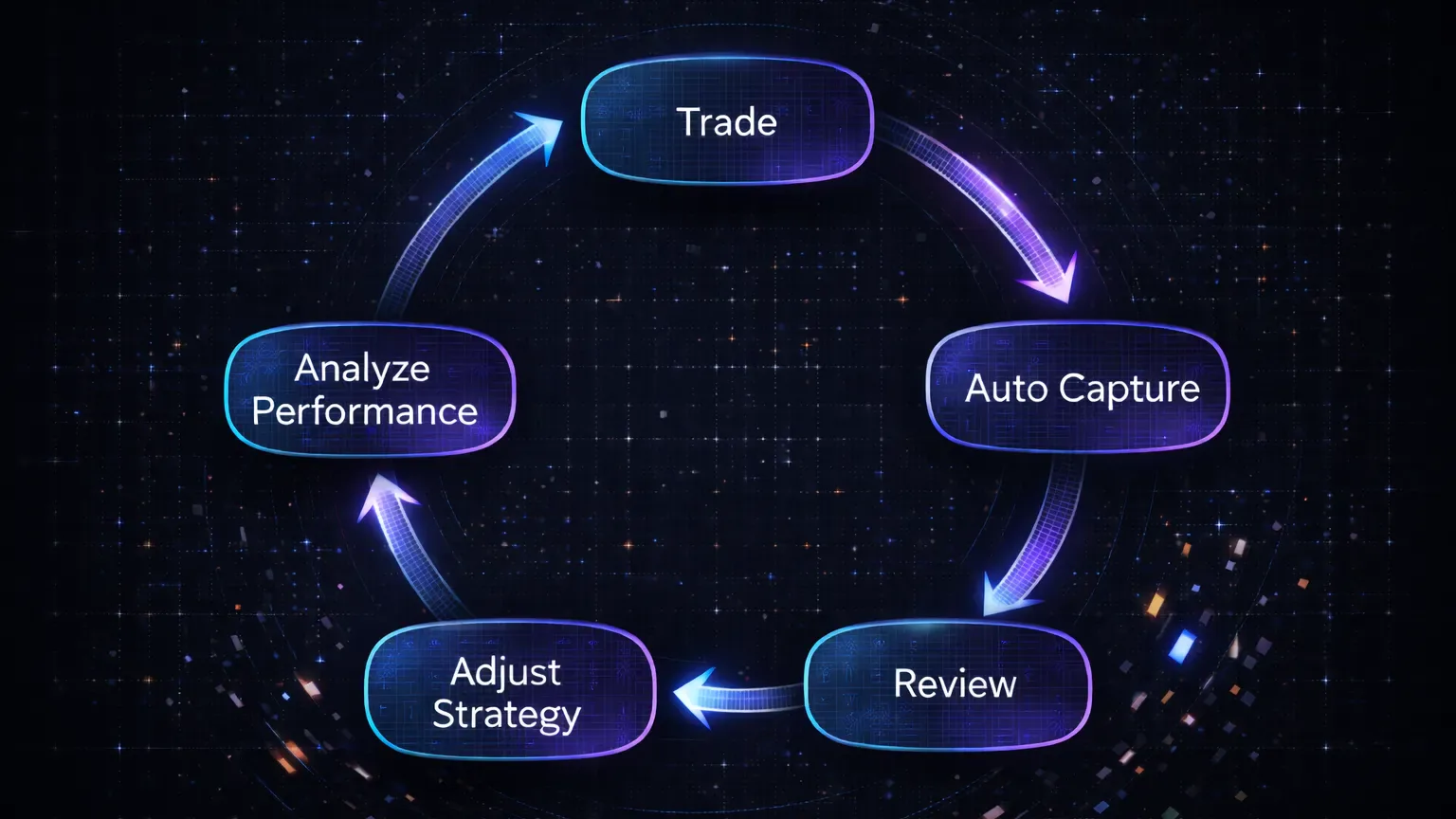
This is where consistency improves. Traders who automate import tend to review more often because the barrier to entry is gone. You are not thinking about logging. You are thinking about analysis. That means shorter, more frequent review sessions instead of rare deep dives.
It also changes how honest your journaling becomes. When you know you cannot “skip” a trade because it is automatically imported, you stop filtering your own data. Losing trades show up. Revenge trades show up. Overtrading days show up. The journal becomes a mirror instead of a highlight reel. That honesty is uncomfortable at first, but it is the foundation of real improvement.
Another behavioral shift is momentum. Once traders see that journaling no longer steals time from their day, they are more willing to add small layers on top of it. They tag trades. They leave short notes. They review daily instead of weekly. None of this feels heavy because the biggest cost, data entry, is already gone.
Automation also protects your journal during stressful periods. Drawdowns, life events, or burnout phases are exactly when traders abandon manual processes. With automated import, your data keeps flowing even when your motivation drops. When you come back, the journal is still complete. That continuity is rare and valuable.
In practice, automated trade import does not just save time. It stabilizes your workflow. It turns journaling from a fragile habit into a system that survives bad weeks, low energy, and emotional swings. That reliability is what allows the journal to compound value over time instead of constantly resetting.
Improve Data Quality While You Speed Up
Most traders think about automation in terms of speed. Fewer clicks. Less copying. Faster setup. What gets overlooked is that automated trade import improves data quality more than any manual process ever could.
Manual journaling forces you to simplify. You turn complex execution into a single line. You merge multiple fills into one average. You approximate fees. You forget funding. None of that is malicious. It is just what happens when the goal is to get the task done as quickly as possible. Over time, those shortcuts distort your statistics.
Automation preserves structure. Each fill is recorded as it happened. Fees are exact. Funding is captured separately. Position sizes match reality, not memory. When you analyze performance later, you are working with a representation of your trading that is far closer to what actually occurred.

This matters most when you start asking precise questions. Which setups work best in high volatility? Are maker orders actually improving your expectancy? How much of your monthly profit is eaten by fees and funding? Manual logs struggle to answer these because the raw inputs are already blurred. Automated imports give you the resolution needed to trust the output.
Clean data also makes tagging more powerful. When every trade is imported consistently, your tags stop being cosmetic and start becoming analytical tools. You can filter by setup, mistake, emotion, or market condition without worrying whether half your dataset is missing key information.
Another subtle benefit is correction handling. When an exchange updates trade history, corrects executions, or posts delayed funding entries, automated systems pick that up. Manual systems do not. Your journal quietly diverges from reality unless you constantly audit it.
For futures traders, the quality difference is even more dramatic. Funding, liquidation prices, leverage-adjusted sizing, and partial close behavior are hard to model manually. Automation captures these without effort. That means your statistics around risk, drawdown, and efficiency are grounded in what truly happened, not in what was easiest to record.
Speed saves time. Accuracy saves decisions. Automation gives you both, but accuracy is the one that changes how much you can trust your journal when the numbers actually matter.
Turn Saved Minutes into Better Decisions
Saving time only matters if you reinvest it into something that improves your trading. Automated trade import frees you from data entry, but its real value appears in how you use the space it creates. Instead of spending energy logging trades, you can spend it reviewing them.
Short, frequent reviews become realistic. Five or ten minutes after a session is often enough when the data is already there. You can scan your trades, notice execution errors, and leave quick notes while the memory is still fresh. That kind of immediacy is almost impossible with manual logging because you are already tired by the time the data is entered.
This also makes tagging practical. When trades arrive automatically, adding tags becomes the primary interaction you have with your journal. You tag setups, mistakes, emotions, and market conditions instead of recreating the trade itself. Over time, your dataset shifts from being a list of executions to being a map of your decision patterns.

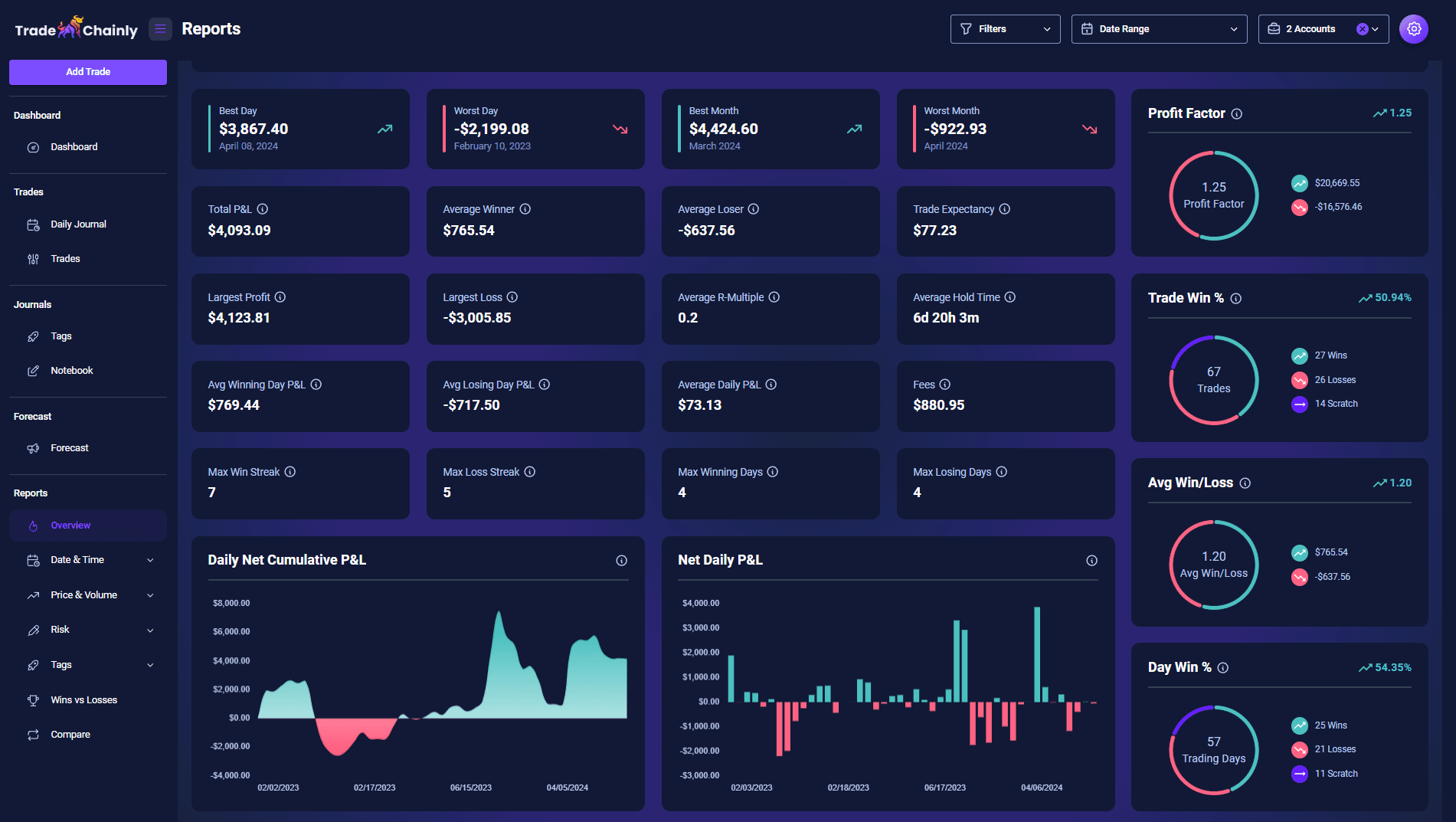
Automation also changes how you use reports. Instead of waiting for a “review day,” you can glance at performance metrics anytime. You can check which setups are trending up or down. You can see if a specific mistake is reappearing. These small checks compound into better awareness.
Another benefit is emotional regulation. When your journal is always current, you do not have to rely on memory to judge how you are doing. You can see it. That clarity reduces overconfidence after winning streaks and panic during drawdowns. The numbers ground you.
For many traders, automation is what makes a lightweight workflow possible. Trade, open journal, tag, leave one or two notes, close. No backlog. No dread. No “I will fix it later.” The journal becomes part of trading instead of something separate from it.
This is where tools like TradeChainly fit naturally. When trades sync continuously, your time goes into tagging, reviewing, and analyzing patterns rather than collecting data. That is how journaling shifts from record-keeping into decision support.
Build a Journal You Can Maintain
Most traders do not quit journaling because they stop believing in its value. They quit because the process becomes heavier than the reward. Manual logging turns something that should support your trading into another obligation competing for time and energy. Automated trade import removes that weight. It changes journaling from a task you manage into a system that supports you in the background.
When your trades arrive automatically, the journal stops being about data collection and starts being about decision quality. Your time goes into tagging, reviewing, and understanding patterns instead of copying numbers. That shift is what makes consistency realistic. You are no longer relying on motivation. You are relying on structure.
Automation also protects you during the moments when discipline is weakest. Busy weeks, emotional drawdowns, and low-energy periods no longer break your dataset. Your trading history stays complete even when your attention drops. That continuity is rare, and it is what allows long-term improvement to compound instead of constantly resetting.
This is why automated trade import is not just a productivity feature. It is an architectural choice. It determines whether your journal is something you use occasionally or something that becomes part of your trading identity.
Platforms like TradeChainly are built around this idea. When trades sync continuously, journaling becomes lighter, faster, and more reliable. The focus shifts toward analysis, pattern recognition, and behavioral improvement, which is where the real edge is created.
If your journal feels fragile, inconsistent, or exhausting, the problem is not your discipline. It is your workflow, and automation fixes that at the root.