
Why Good Traders Still Break Their Own Rules
Why do you keep breaking your rules when you already know what to do?
Most traders think their biggest problem is strategy. They believe if they just find the right indicator, the right entry, or the right risk parameters, everything will fall into place. But if you actually trade crypto every day, you eventually realize something much more uncomfortable.
Your execution breaks down because of emotion, not because of missing technical knowledge.
You know the feeling. You get stopped out. Price spikes without you. Then you chase the next move out of frustration. Or you hesitate on the clean breakout because the last one failed. Or you size up mid-session because you want the day to end green. None of that is about skill. It is about what was happening in your head while the candles were printing.
Crypto makes this worse than traditional markets. The market is open 24/7. Perpetuals give you instant leverage. Funding shifts. Liquidations cascade. News hits Telegram at 03:00. You never fully switch off, so your nervous system stays partially “in-market.” That creates fatigue, overreaction, tunnel vision, and tilt.

Emotional journaling solves this. Not as a motivational exercise. Not as therapy. But as a way to track how emotions show up in your execution, then connect those emotions to real trading data. When you see the pattern clearly, you can build rules around it. That is what professionals do.
A trading emotions journal helps you answer questions like:
- When do I get impulsive?
- When do I hesitate?
- When do I size up irrationally?
- When do I stop following my plan?
You cannot eliminate emotion from crypto trading. But you can build awareness and control. The more honestly you track it, the more your decision-making stabilizes. And that is often the real turning point in a trader’s development.
The Revenge-Trade Spiral Problem
Let’s look at a simple example of how emotional journaling can change real trading behavior.
Imagine a futures day trader on OKX. He mostly trades BTC and SOL perpetuals with 5–10x leverage. His biggest recurring problem is what happens after a losing trade. Especially after a hard stop-out or near-liquidation move. He hates ending the day red, so he often jumps straight back into the market trying to win it back.
He starts journaling emotions consistently. Nothing complex. Just tagging each trade with one or two emotions and writing one short sentence when something feels off.
After a few weeks, he notices a pattern in his review. Trades tagged “revenge” have a terrible win rate. The losses are larger as well, because he usually increases size or removes structure when he is frustrated. He also sees that most revenge trades happen within thirty minutes of a prior loss, often during choppy price action when he is emotionally charged but the market is not clear.
This is uncomfortable to look at, but it is also very clear.
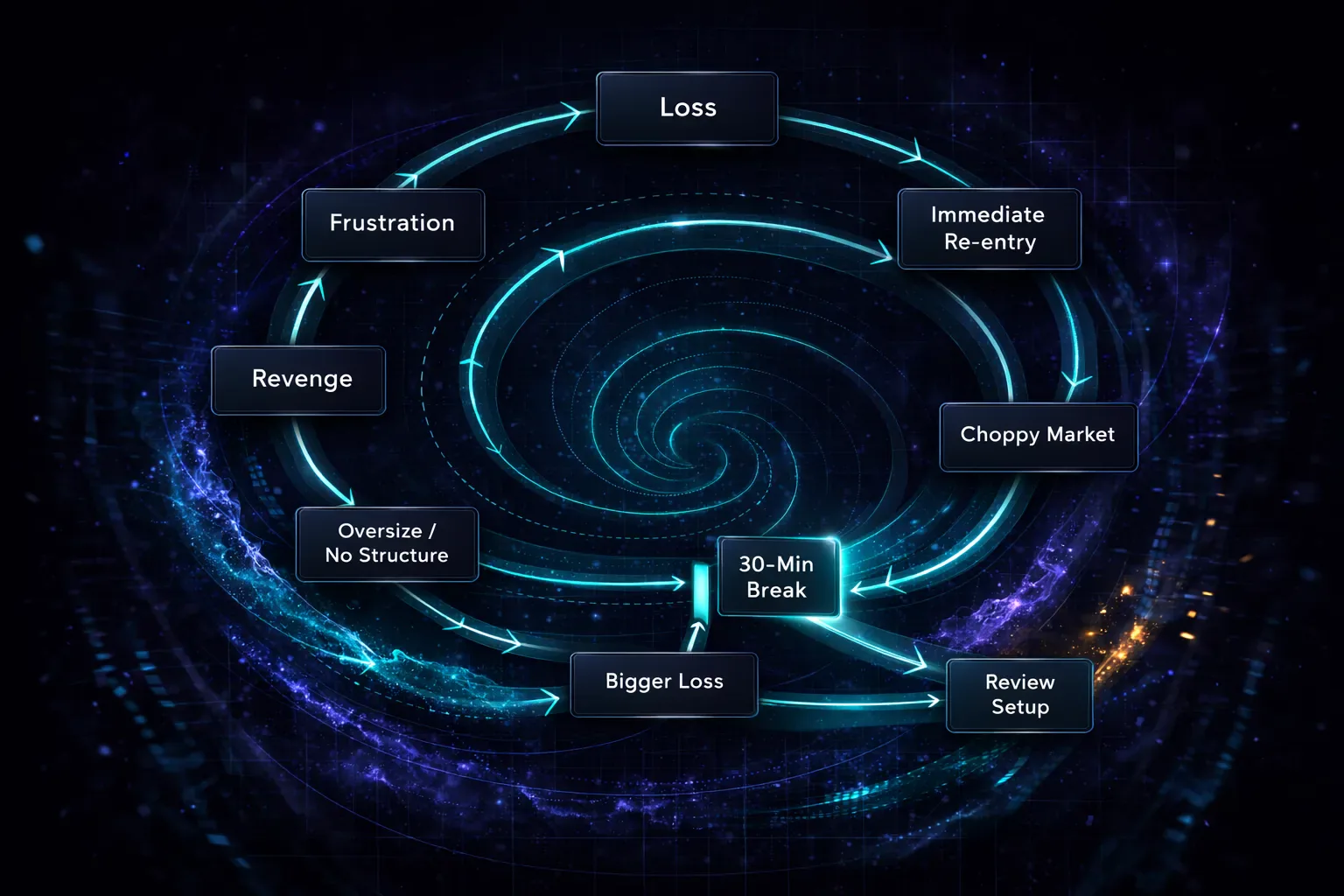
So he makes one simple rule: after any loss, he takes a mandatory thirty-minute break before entering the next trade. No exceptions. During that break, he reviews the setup that lost, checks whether it was valid, and resets emotionally.
He keeps journaling.
Over the next month, the number of trades tagged “revenge” drops sharply. His equity curve smooths out. His average loss decreases. He still has losing days, but the emotional spiral where one loss turns into three or four stops happening much less often.
Nothing about his technical strategy changed. His psychological awareness improved, and he built a rule around it. That is exactly how emotional journaling is meant to work.
Why Crypto Triggers Emotion So Easily
If you only traded stocks during regular market hours, you would already deal with enough emotional pressure. Crypto multiplies that stress because the structure of the market itself constantly pushes you toward emotional decision-making.
Volatility is the first trigger. Bitcoin can move five percent in an hour. ALT pairs can move twenty percent in a session. If you are trading perpetual futures with leverage, those moves feel even bigger. A small hesitation or impulsive entry is punished immediately. That creates a feedback loop where every decision feels critical, and urgency replaces patience.
The second trigger is leverage. It is one thing to be wrong with spot. It is another thing entirely to watch unrealized PnL swing violently because you are trading 10x or 20x. Leverage compresses time. Your brain starts thinking in terms of “save the trade” instead of “execute the plan.” That emotional shift is subtle at first, but it affects nearly every intraday decision you make.
Then you have funding rates and open interest shifts. These create a constant sense that the market may flip against positioning at any time. Even if you have a strong setup, the awareness of aggressive positioning can introduce doubt, fear of being trapped, or FOMO if the move starts running without you.
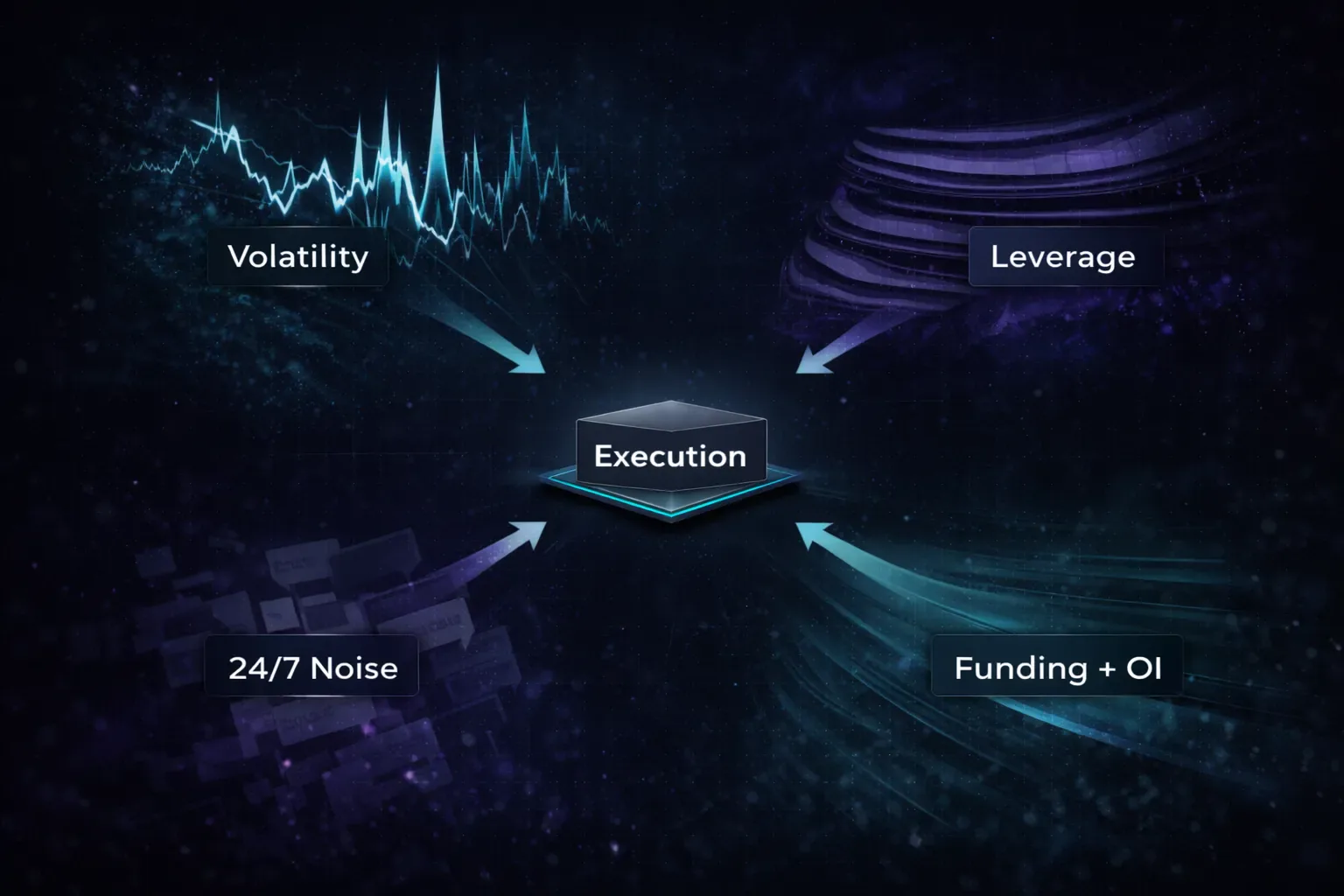
There is also the reality of 24/7 trading. You might trade Asia session one day, New York the next, and grind through weekends. Sleep schedules drift. Recovery disappears. Most traders underestimate how much poor sleep amplifies emotion. Hesitation increases. Impulsiveness spikes. Tilt becomes more likely after losses, because you are already running on low mental reserves.
And finally, there is noise. Discord, Telegram, Twitter, TradingView chats, orderflow screenshots, “alpha threads,” and constant PnL posts. You are always one swipe away from someone else’s narrative. That makes it much harder to stay anchored in your own plan.
None of these triggers are going away. They are part of crypto. Which means emotional awareness is not optional if you want long-term consistency. It is a skill you deliberately develop, and journaling is the foundation of that skill.
The “I Journaled” Trap
Most traders understand that emotions affect their decisions. The problem is that the way they journal those emotions is usually useless. They either do not write anything at all, or they treat emotional journaling like a confession log after a bad day.
A common pattern looks like this: nothing is written after winning days, then after a loss the journal suddenly says, “I need to be more disciplined” or “I let emotions take over.” That type of entry feels honest in the moment, but it contains no information you can actually use later.
Another mistake is being vague. Traders write things like “felt bad,” “confidence low,” or “market felt choppy.” None of that helps identify the exact moment where emotion influenced execution. You need clarity, not emotional poetry.
Some traders go to the other extreme and overanalyze. They write long reflections, but they are more like essays than data. There is insight, but no structure. When they look back weeks later, the notes are hard to quantify or compare.
And then there is honesty. This one hurts. A lot of traders simply do not tell themselves the truth. They adjust the narrative to protect their ego. They pretend a chase entry was part of the plan. They ignore the revenge trade after liquidation. They underplay fear or frustration. If the journal is not accurate, it becomes useless.
Emotional journaling works only when it is consistent, structured, and brutally honest. When it becomes a habit rather than a reaction to pain, that is when the data starts telling the real story.
How a Simple Framework Fixes It
The goal of emotional journaling is not to write your life story. The goal is to create a simple structure that captures what you were feeling at the exact moments that matter. If the structure is simple, you will actually use it. If you use it consistently, the patterns will eventually become obvious.
Use this framework for crypto day traders and scalpers.
First, check in before the session. This is not complicated. Write a short baseline sentence about your emotional state before you open the chart. Examples: “Calm, slept well.” Or “Tired, didn’t sleep enough.” Or “Eager to trade after yesterday’s loss.” This gives you context later. If you keep breaking rules after bad sleep, you will see it.
Second, track emotions during trades. This does not mean journaling in long paragraphs while price is moving. Instead, tag the emotion. Examples: fear, FOMO, frustration, greed, hesitation, revenge. If you can add a three to five word note about what triggered it, even better. Something like “hesitated at breakout” or “chased wick long.” Keep it short and objective.
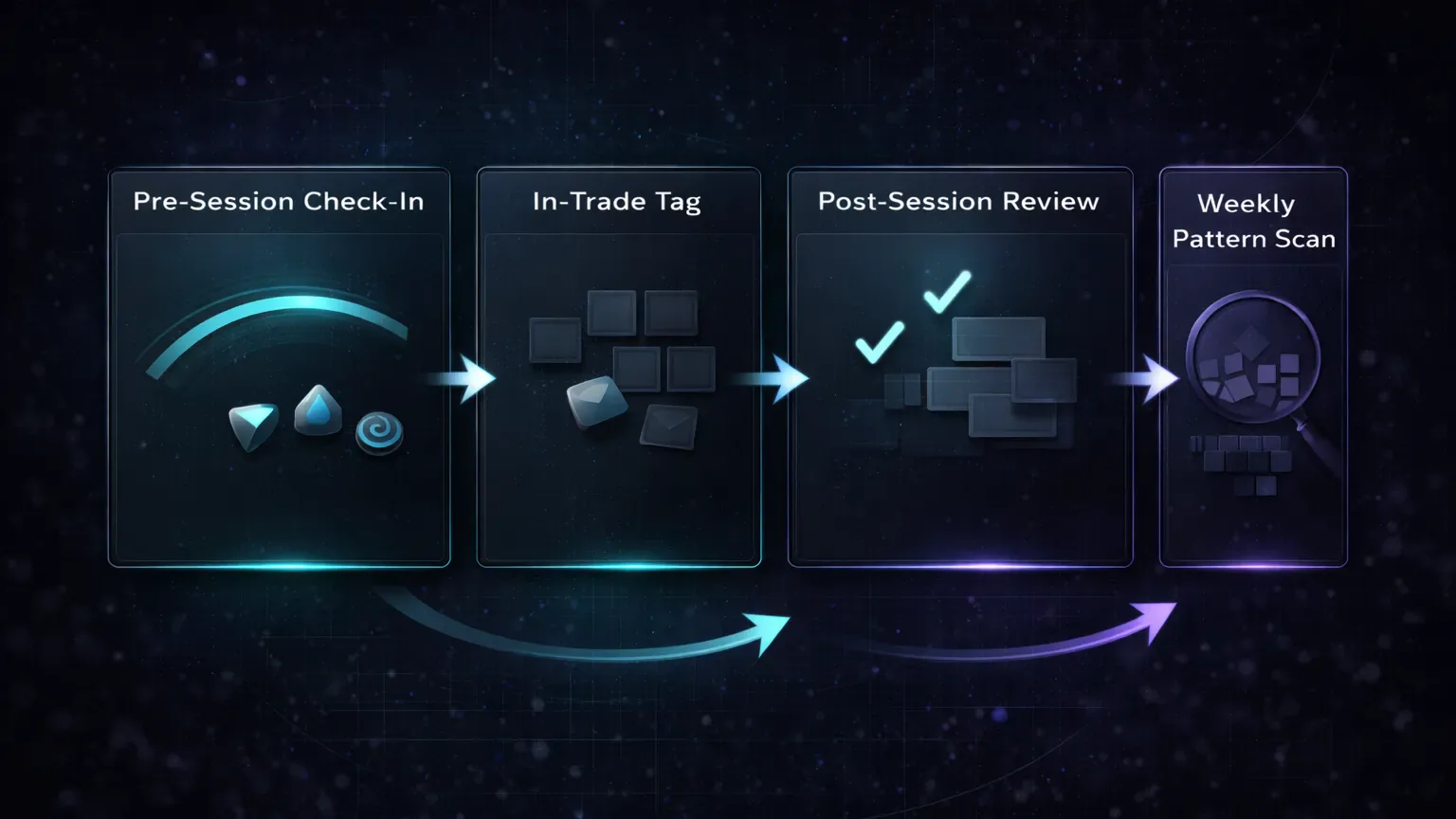
Third, reflect after the session. Look back at your trades and ask: where did emotion influence execution? Did you skip valid setups? Did you chase moves outside your plan? Did you size up irrationally? Write short, factual observations. Avoid blaming the market. Focus on your process.
Finally, review weekly. This is the step almost everyone skips, but it is where the real progress happens. Scroll through your notes and tags for the past week. Look for repetition. Are the same emotions showing up again and again? Are they clustered around certain setups, times of day, or exchange pairs? Once you see a pattern, you can turn it into a rule or system change.
This framework works because it blends awareness with structure. You are not trying to suppress emotion. You are learning how it shows up in your execution so you can manage it with intention.
Turning Emotion Into Measurable Data
At some point, emotional awareness needs to move beyond “I felt bad during that trade.” The real edge comes when you start linking emotions to performance data. That is when feelings turn into something you can measure and improve.
One of the first places you will see emotional bias is in your win rate. Filter your trades by emotion tags and compare them. Many traders discover that their “planned” trades perform far better than trades entered under FOMO or frustration. The setups were not different. The emotional state was. That is usually the first reality check.
You will also see it in MAE and MFE. Fear often shows up as early exits. The trade eventually moves in your direction, but you scratched it because the small pullback triggered anxiety. On the other side, greed and tilt often show up as oversized losses with deep MAE because you refused to cut the position. These patterns are easier to accept when the data is staring back at you.
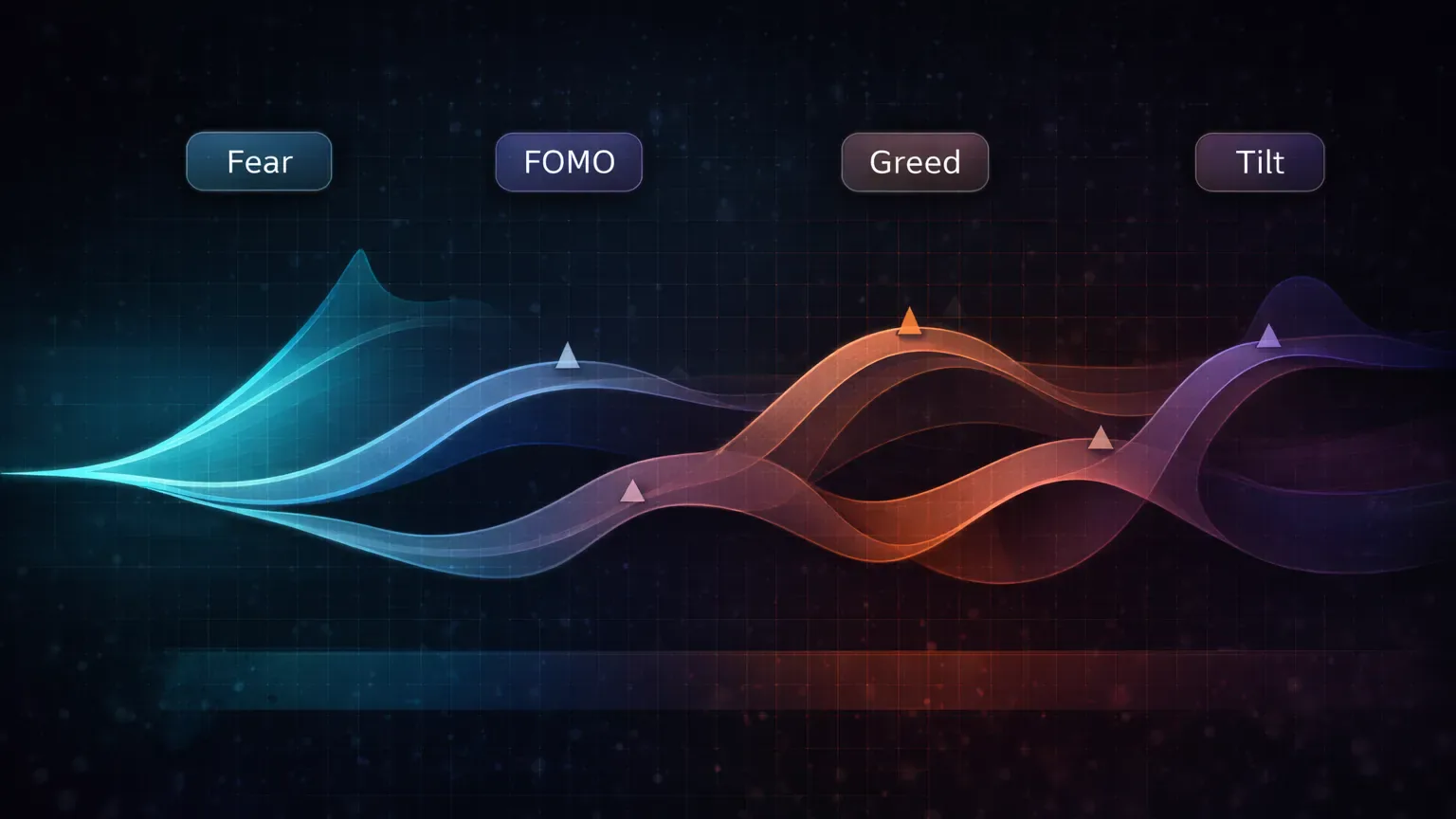
Risk distribution tells a story as well. Emotional trades tend to break your normal risk rules. You might size up after a losing streak. Or scale in aggressively during strong momentum. When you journal emotions alongside position size, the deviation becomes obvious. You are not “optimizing.” You are reacting.
Time of day is another factor. Many crypto traders notice that emotional errors cluster around fatigue points. Early morning trades after poor sleep. Late-night grind sessions. Overtrading during slow weekend price action. When you line up emotions, outcomes, and session timing, you start to understand your psychological weak spots.
And of course, crypto market structure influences emotion. Funding rate flips, trending vs ranging conditions, liquidation spikes, and session volatility shifts all impact how you feel. When those conditions repeat, so do the emotions. Journaling helps you catch that connection sooner.
None of this requires perfection. What matters is that you turn emotion into data instead of leaving it as vague memory. Once you can measure it, you can manage it.
Building This Into Your Journal Workflow
So what does this actually look like when you are journaling every day, not just thinking about it in theory?
The simplest approach is to treat emotions the same way you treat setups or trade types. You tag them. Each time you place a trade, you log the basic details as usual. Alongside that, you add one or two emotion tags that describe what was happening internally at the time. For example: “calm,” “confident,” “FOMO,” “hesitation,” “tilt,” or “revenge.”
Short notes help as well. Not essays. Just simple factual statements like “entered early to avoid missing move” or “reduced size because last trade lost.” The key is to describe the behavior, not justify it.
Over time, those tags and notes turn into usable data. You can filter trades by emotion and see how your performance changes. Maybe you notice that trades tagged “FOMO” have a significantly lower win rate than your planned trades. Or you see that hesitation leads to worse entries, which creates worse risk-to-reward outcomes.
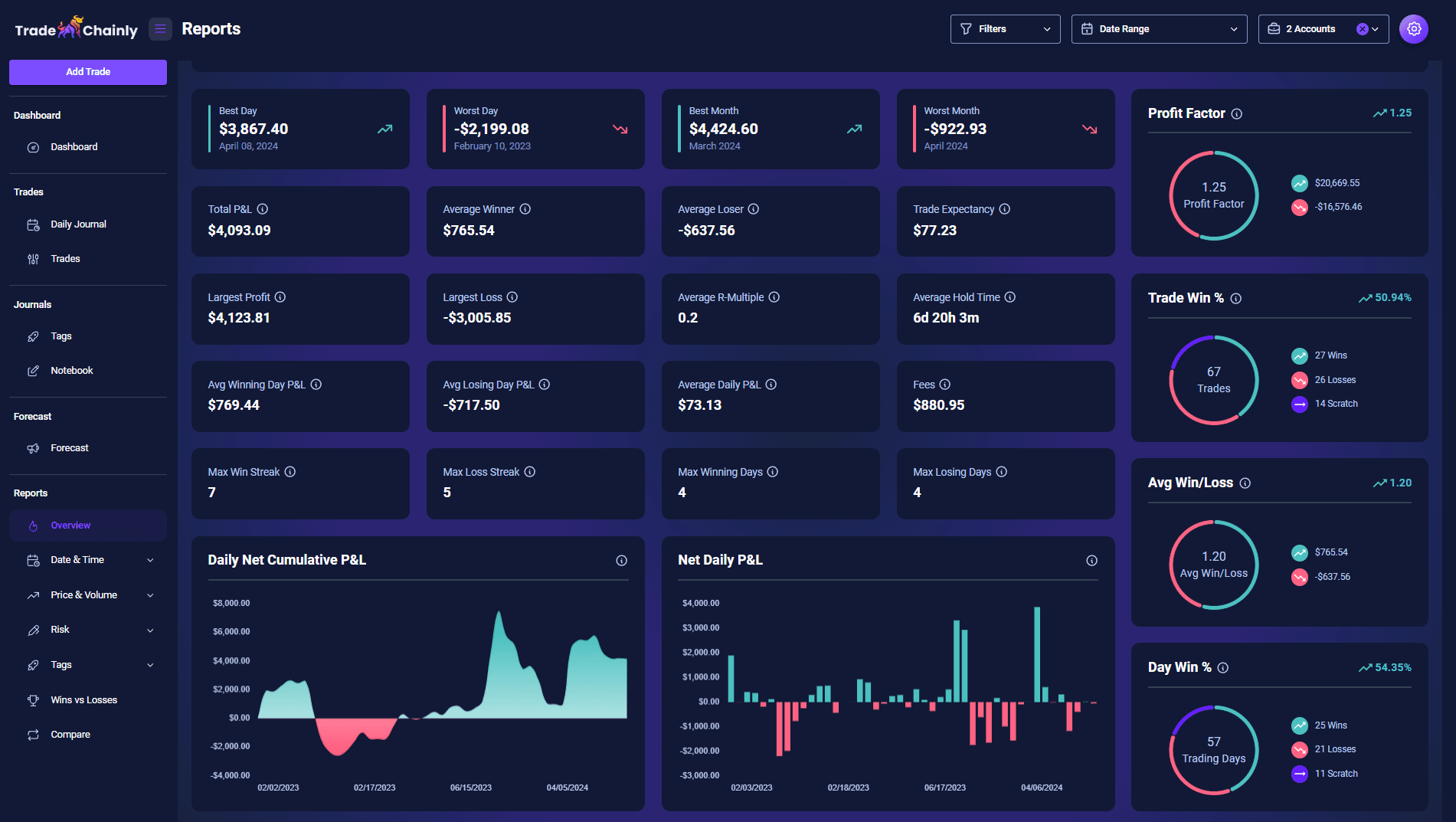
In a crypto-focused trading journal like TradeChainly, this becomes especially powerful because crypto traders tend to take a high number of short-duration trades. When your trades are already fast and frequent, emotional bias can creep in quietly. Seeing your emotions side-by-side with PnL, drawdown, MAE/MFE, and tag reports makes those patterns much harder to ignore.
You are not journaling for motivation. You are building a feedback loop. Real trades. Real emotions. Real outcomes. And once the data exposes the pattern, you can decide what to change in your execution.
Staying Honest When It Stings
Emotional journaling only works if you are honest with yourself. That sounds obvious, but it is one of the hardest parts of trading. Your ego always wants to protect its image. It wants to believe you are disciplined, rational, and in control. So when you break your rules, the mind quickly creates a story that makes it sound reasonable.
That is the danger.
If you treat your trading emotions journal like a performance review from a boss, you will start filtering reality. You will soften the language. You will avoid writing down the truth about revenge trades, hesitations, fear, or greed. Over time, the journal becomes a highlight reel, not an accurate record.
The goal is not to criticize yourself. The goal is to describe what happened without self-judgment. Instead of “I was stupid and chased the move,” you write “I chased price outside of plan due to fear of missing the move.” One statement attacks your identity. The other documents behavior. Only one of those helps you improve.
This honesty gets easier when you accept that emotion is normal. Every trader feels fear, greed, doubt, and frustration. Professionals are not emotionless robots. They just remove the ego layer and look at their behavior like data.
If you can do that consistently, your journal becomes a mirror. Sometimes you will not like what you see. But that clarity is what allows you to change.

The Patterns You Will Keep Seeing
Once you start journaling consistently, the same emotional patterns begin to show up again and again. They appear in different market conditions and different pairs, but the underlying drivers are usually the same.
One of the most common is FOMO. Price starts running and you worry that this is the move of the day. Instead of waiting for your setup, you chase. These trades often have poor entries and tight stops, which leads to unnecessary shakeouts.
Another pattern is fear of being wrong. This shows up as hesitation. You see a valid setup, but you delay the entry until you “feel safer.” By the time you finally enter, the risk-to-reward is worse and the stop is less comfortable. You were right about the setup, but emotion damaged the execution.
Greed shows up when you are winning. A few strong trades increase confidence, and suddenly you push size or loosen rules. What felt like skill is often just euphoria disguised as certainty.
Revenge trading is another classic pattern. A loss triggers anger or the urge to win it back quickly. Instead of stepping away, you push harder. These trades usually ignore structure and end badly.
There is also avoidance. After a losing streak, some traders begin skipping valid setups entirely. They are still watching the market, but they stop trusting themselves. That loss of confidence quietly damages performance.
Your exact pattern will be unique to you. The point of emotional journaling is not to eliminate emotion. It is to reveal which emotional cycles are most likely to derail your execution so you can manage them deliberately.
The “No Emotion” Myth, and What Actually Matters
A lot of traders misunderstand the goal of emotional work. They think the objective is to become completely emotionless. As if the best trader is the one who feels nothing when price spikes against them or a trade gets stopped out.
That is not realistic. And it is not necessary.
Emotion is part of trading. Especially in crypto, where price moves fast, leverage amplifies pressure, and the market never closes. You will always feel something. Fear. Excitement. Hesitation. Doubt. That will never fully disappear, no matter how experienced you become.
What actually matters is whether those emotions control your execution.
A professional trader still feels frustration after a loss. The difference is that they do not let that frustration trigger impulsive decisions. They have awareness, they have process, and they have structure. Emotional journaling builds that awareness. It acts as a buffer between feeling and reaction.
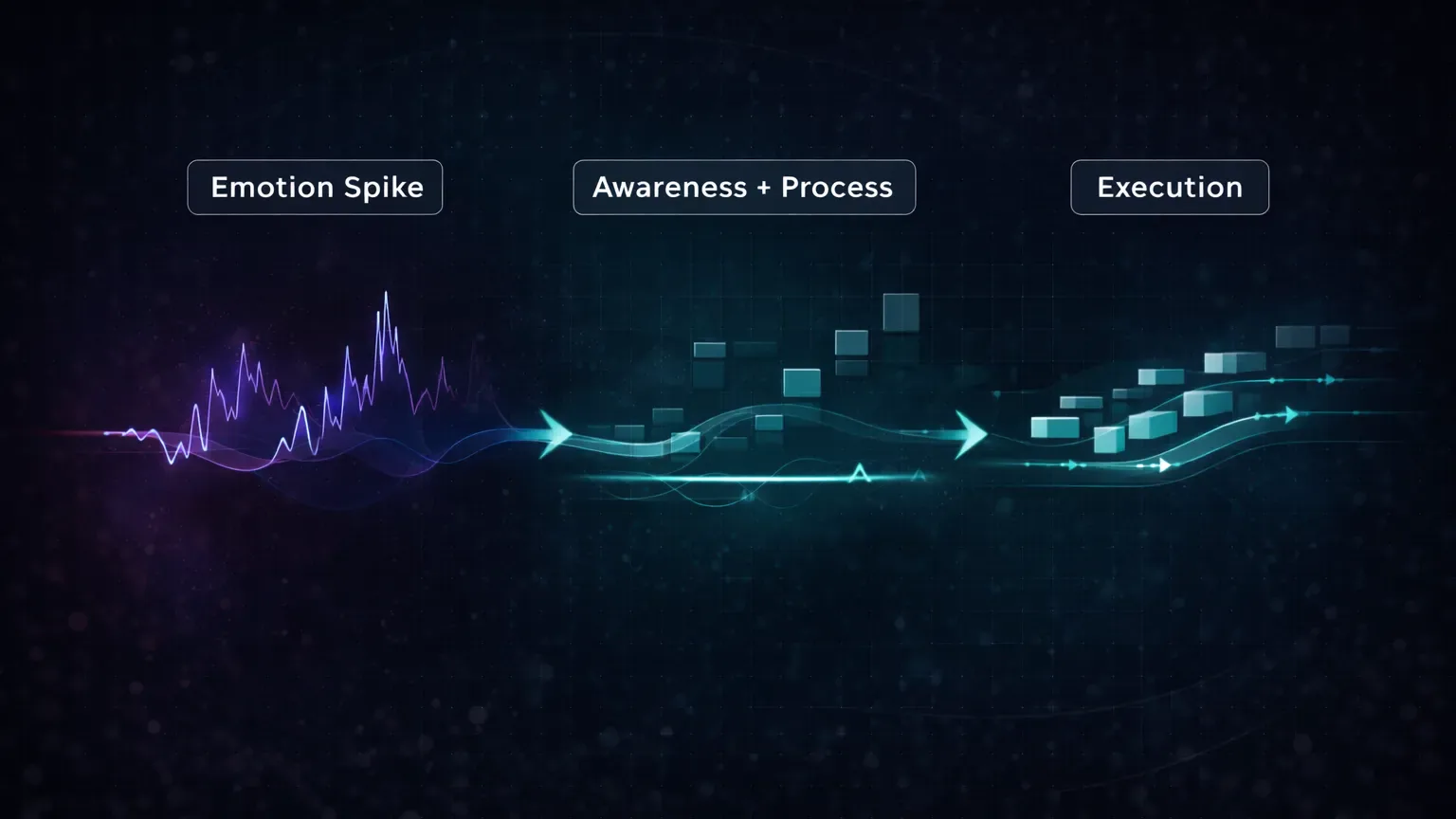
Instead of trying to remove emotion, focus on building discipline around it. Clear rules. Defined setups. Consistent journaling. Real review. When emotions spike, the process holds you steady. And when you start drifting, the data in your journal pulls you back to reality.
That is what consistency actually looks like. Not emotional perfection. Just better execution under pressure.
Closing the Loop
Emotional journaling is not about writing feelings for the sake of it. It is about improving execution. When you track how your emotions influence your trades, you start seeing patterns that were previously invisible. You realize that many of your losses were not caused by strategy failure, but by impulse, hesitation, or frustration.
Once you see that clearly, you can build guardrails. You can create rules that protect you from yourself when emotions spike. And over time, your trading becomes steadier. Fewer impulsive trades. Fewer emotional spirals. More consistency.
If you trade crypto intraday, this work matters even more. The combination of leverage, volatility, and a 24/7 market means your psychology is constantly being tested. A structured emotions journal gives you a way to stay grounded inside that environment.
Tools like TradeChainly make this process easier because your trades, tags, notes, and performance data live in one place. That means you can see emotional patterns inside your real results instead of guessing from memory. But the real edge does not come from the tool. It comes from your willingness to sit down, review, and be honest with yourself.
Start simple. Track your emotions. Review them weekly. Let the data guide you.