Why Do Your Weeks Feel Random?
Most traders do not struggle because they lack strategy. They struggle because their weeks have no structure. One week feels productive, the next feels chaotic, and there is no reason why. Trades happen, charts are analyzed, and notes are sometimes written, but everything feels disconnected. Without a defined rhythm, it becomes impossible to tell whether progress is real or just random fluctuation.
In crypto, this problem is amplified. The market never closes. There is always a setup, a candle, a reason to check charts. When your trading has no weekly framework, every decision becomes reactive. You trade when you feel confident, stop when you feel tired, review when you remember, and skip it when you do not want to face your results. Over time, this creates emotional trading patterns that have nothing to do with your actual skill.
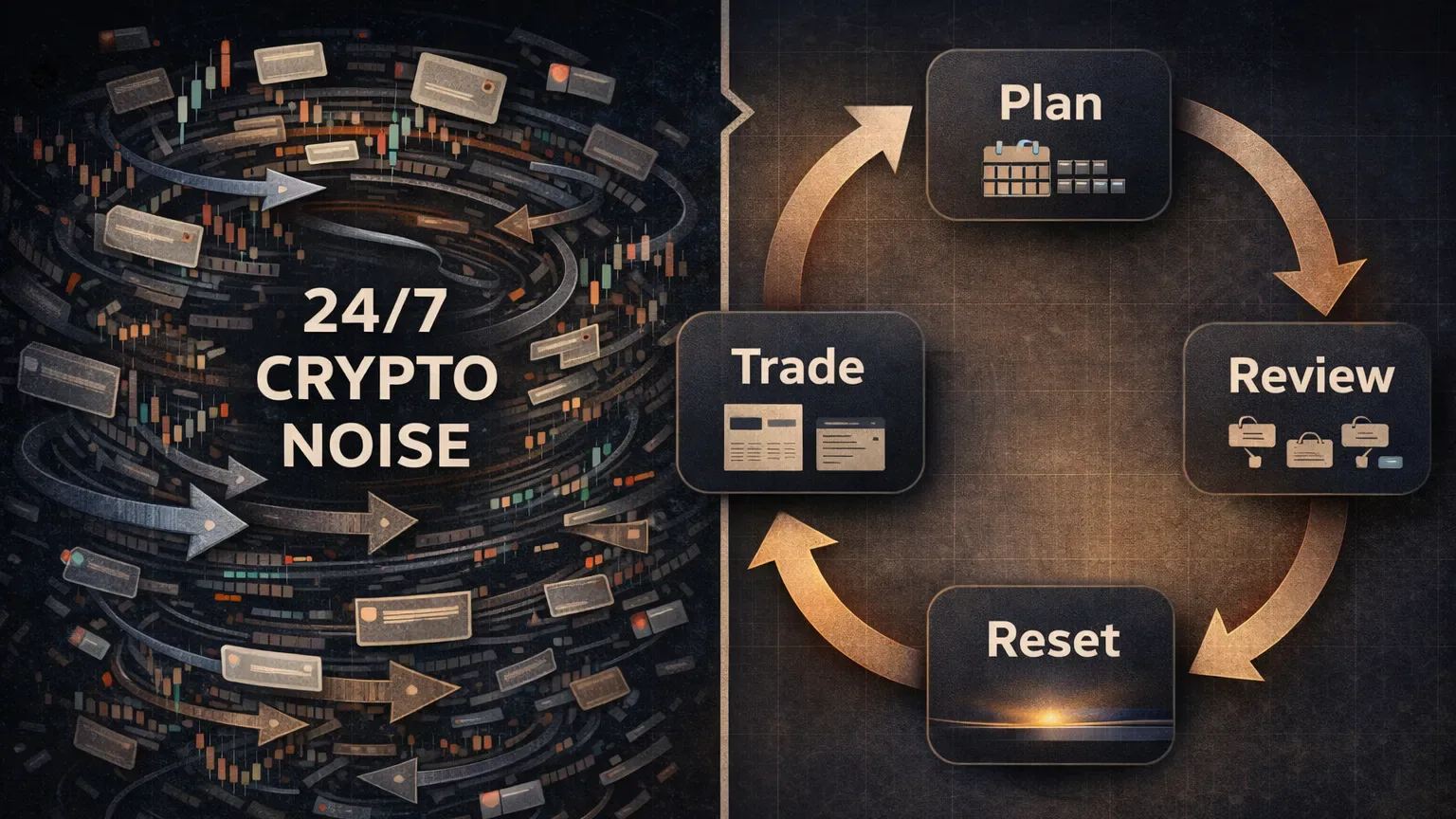
Inconsistency usually comes from treating each day as a separate event. You judge yourself based on single trades or daily PnL swings instead of looking at performance in meaningful blocks of time. A bad day feels like failure. A good day feels like confirmation. Both can be misleading when removed from context.
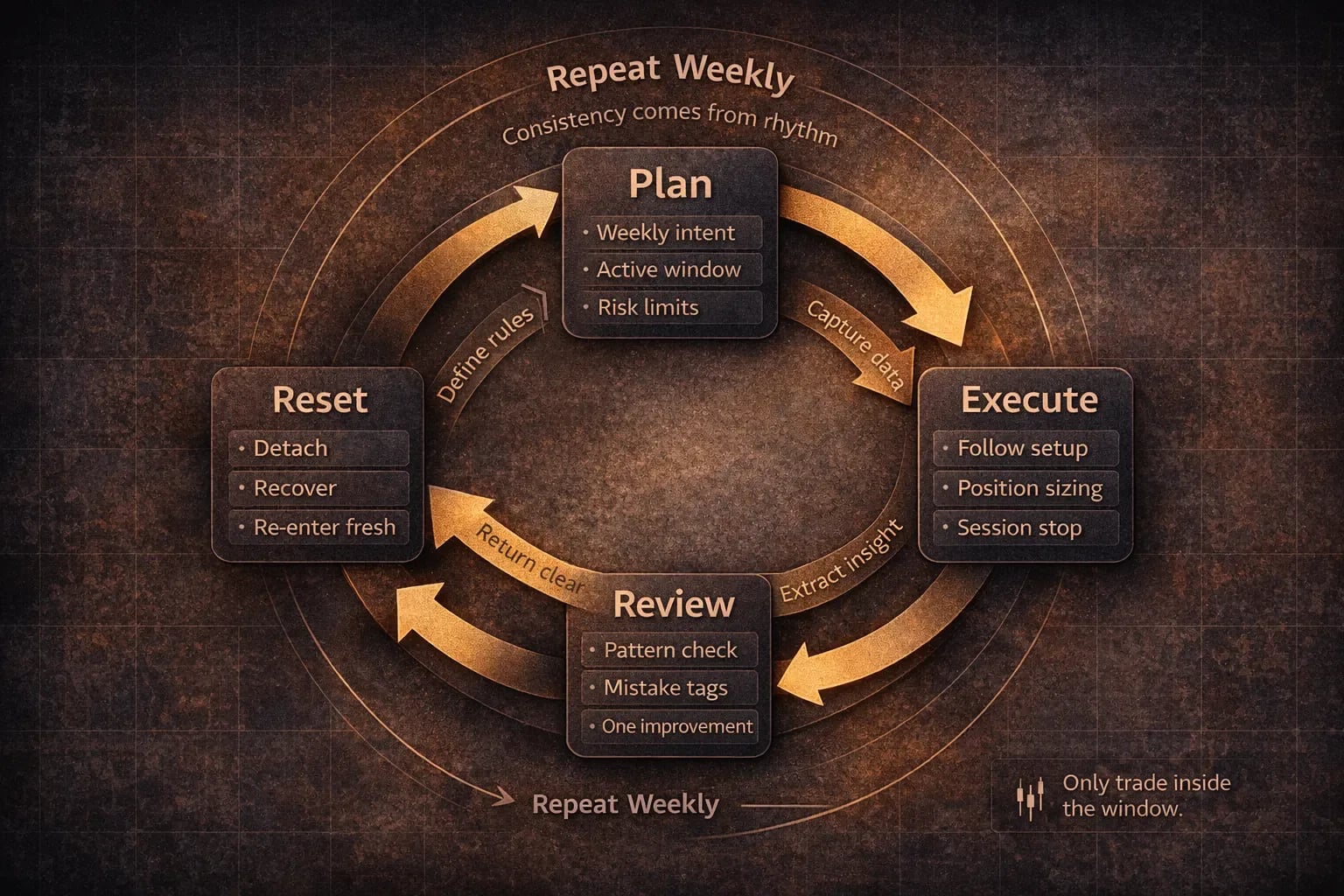
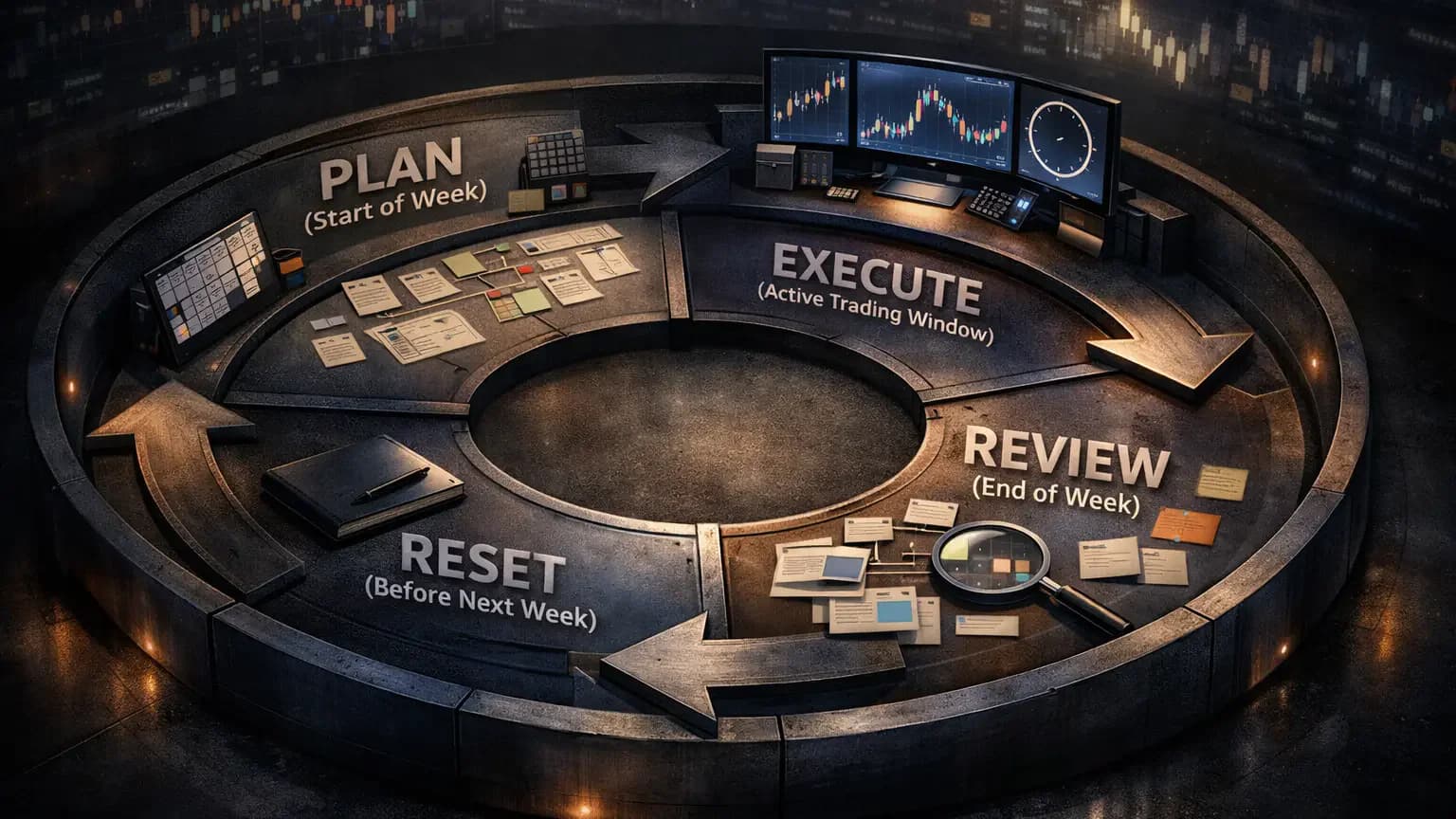
A structured trading week changes that. It turns your trading from a series of isolated actions into a system. Each week becomes a repeatable cycle where you plan, execute, review, and adjust. Instead of asking, “Was today good or bad?” you start asking, “Did I follow my process this week?”
A Week as a Performance System
Most traders do not struggle because they lack strategy. They struggle because their weeks have no structure. One week feels productive, the next feels chaotic, and there is no reason why. Trades happen, charts are analyzed, and notes are sometimes written, but everything feels disconnected. Without a defined rhythm, it becomes impossible to tell whether progress is real or just random fluctuation.
In crypto, this problem is amplified. The market never closes. There is always a setup, a candle, a reason to check charts. When your trading has no weekly framework, every decision becomes reactive. You trade when you feel confident, stop when you feel tired, review when you remember, and skip it when you do not want to face your results. Over time, this creates emotional trading patterns that have nothing to do with your actual skill.
Trading is noisy. Good trades lose and bad trades win. Single results are unreliable signals of skill. A week starts to show whether your decisions align with your plan. It gives you enough data points to evaluate behavior rather than luck.
Crypto markets make this even more important. Price moves do not respect weekends. Volatility spikes at random hours. Funding rates change incentives. When there is no natural market close, you must create your own boundaries. A defined trading week gives your brain permission to start, focus, and stop.

Once your week has structure, your questions change. You stop asking, “Why did this trade fail?” and start asking, “What pattern showed up in my execution this week?”
A proper trading week also protects you from emotional decision spirals. Without structure, one bad day often leads to revenge trading or complete withdrawal. With structure, the day is just one data point inside a larger cycle. You know there will be time to review it, so you are less likely to overreact.
The goal is a stable rhythm where trading, reflection, and adjustment happen automatically. That rhythm allows consistency to exist even during losing weeks.
Your Active Trading Window
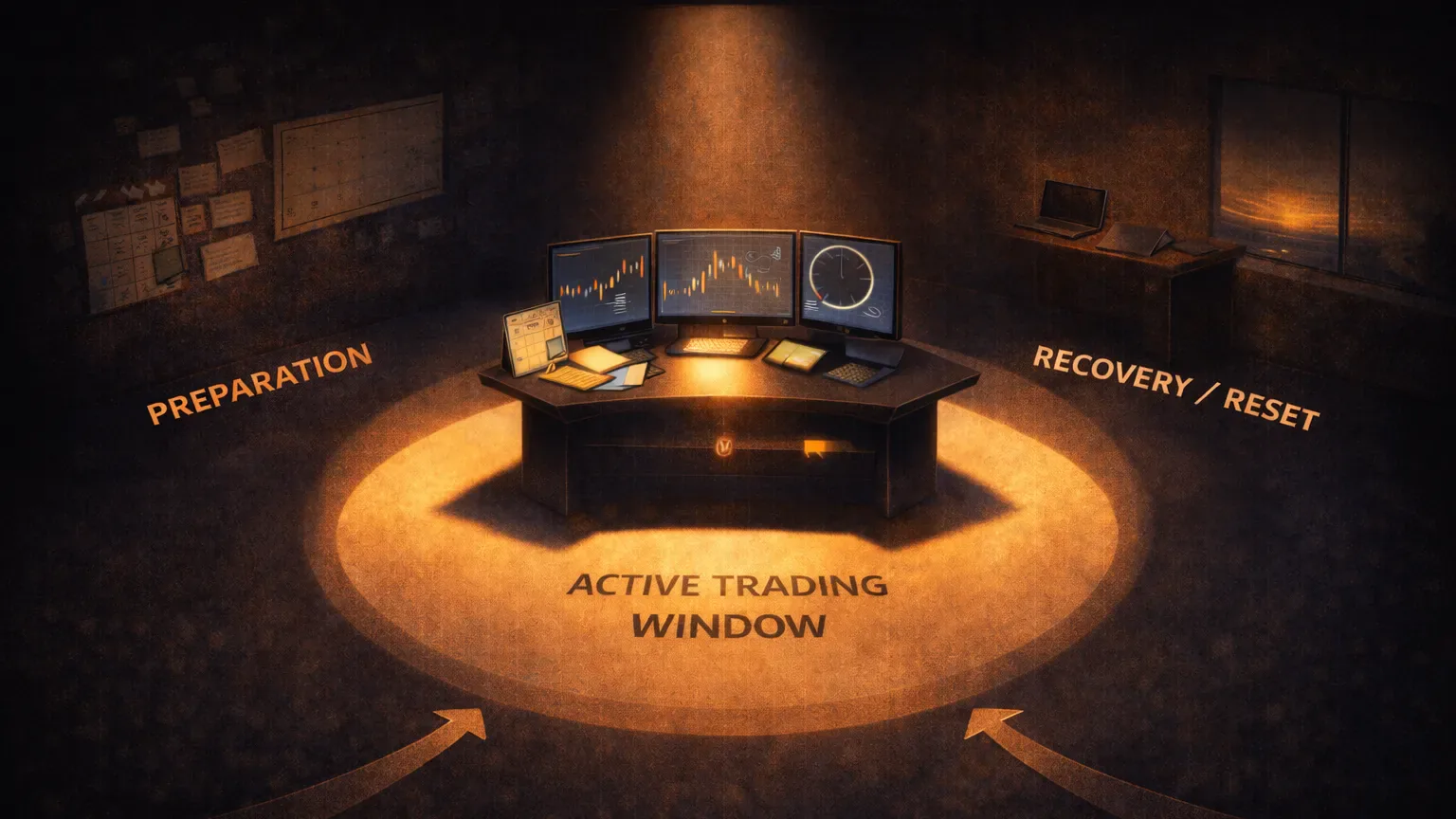
One of the fastest ways to destroy consistency is trying to trade all the time. Crypto being open 24/7 makes this tempting. There is always movement somewhere, so it feels like you should always be available. That approach fragments your focus and turns trading into background noise. A structured trading week starts by defining when you are actually in “trading mode.”
Your active trading window is the specific part of the week where you are engaged in execution. It is not when you casually check charts or scroll Twitter. It is when you are mentally prepared and ready to follow your rules. Outside of that window, your job is to rest, review, or prepare.
Your window depends on your style and your lifestyle. A scalper might only have one or two high-quality sessions per day. A day trader may focus on specific market opens. A swing trader may only need short execution windows combined with longer review and planning periods. There is no universal schedule, but there is a universal principle: fewer high-quality hours beat unlimited low-quality exposure.
| Trader Type | Typical Active Days | Active Session Focus | Review Time | Notes |
|---|---|---|---|---|
| Scalper | 4–5 days | 1–3 hours per day around high liquidity sessions | 30–45 min daily, 1 longer weekly review | Needs high mental energy and fast execution |
| Day Trader | 3–5 days | 2–4 hours per day during chosen market window | 30–60 min daily, 1 weekly review | Focused on intraday structure and momentum |
| Swing Trader | 2–4 days for entries | 30–60 min per day for management | 2–3 longer review sessions per week | Trades higher timeframes, slower pace |
| Part-Time Trader | 2–3 days | 1–2 hours in fixed evening or morning window | 1 structured weekly review | Must protect limited time aggressively |
Once you define this window, you protect it. You treat it as a professional commitment, not a flexible hobby. That also means respecting its boundaries. When the session ends, you stop trading. You do not open positions out of boredom or emotion.
A clear trading window also improves your data quality. Your journal becomes cleaner. You know which trades belong to focused execution and which ones were emotional or impulsive. Over time, you can measure the difference in performance between disciplined sessions and unstructured activity.
Everything outside your active trading window is preparation or recovery. When you separate those roles, your week gains clarity and your decisions become easier to trust.
Trading, Review, Reset
Most traders blur everything together. They trade, glance at results, feel something emotionally, and then either keep clicking or walk away. That separation problem is a reason consistency breaks down. A structured trading week only works when you clearly divide your time into three different modes: trading, review, and reset.
Trading mode is execution. This is where rules matter the most. You focus on entries, exits, risk, and your plan. There is no analysis of performance here beyond what is required to manage open positions. The moment you start judging yourself mid-session, your execution quality drops. Trading mode should feel narrow and mechanical.
Review mode is analytical. This is where you step back and look at what actually happened. You are not trying to justify trades or defend your decisions. You are trying to understand patterns. What setups did you trade most often? Where did you hesitate? Did you respect your risk? Did emotions change your behavior after wins or losses? Review mode is slow and honest. That is where improvement is born.
Reset mode is psychological. This is the part most traders skip. Reset means letting the week settle emotionally before the next one begins. It might be a day off charts. It might be exercise, journaling, or anything that helps you detach from short-term outcomes. Without reset, emotions carry forward and contaminate the next week.
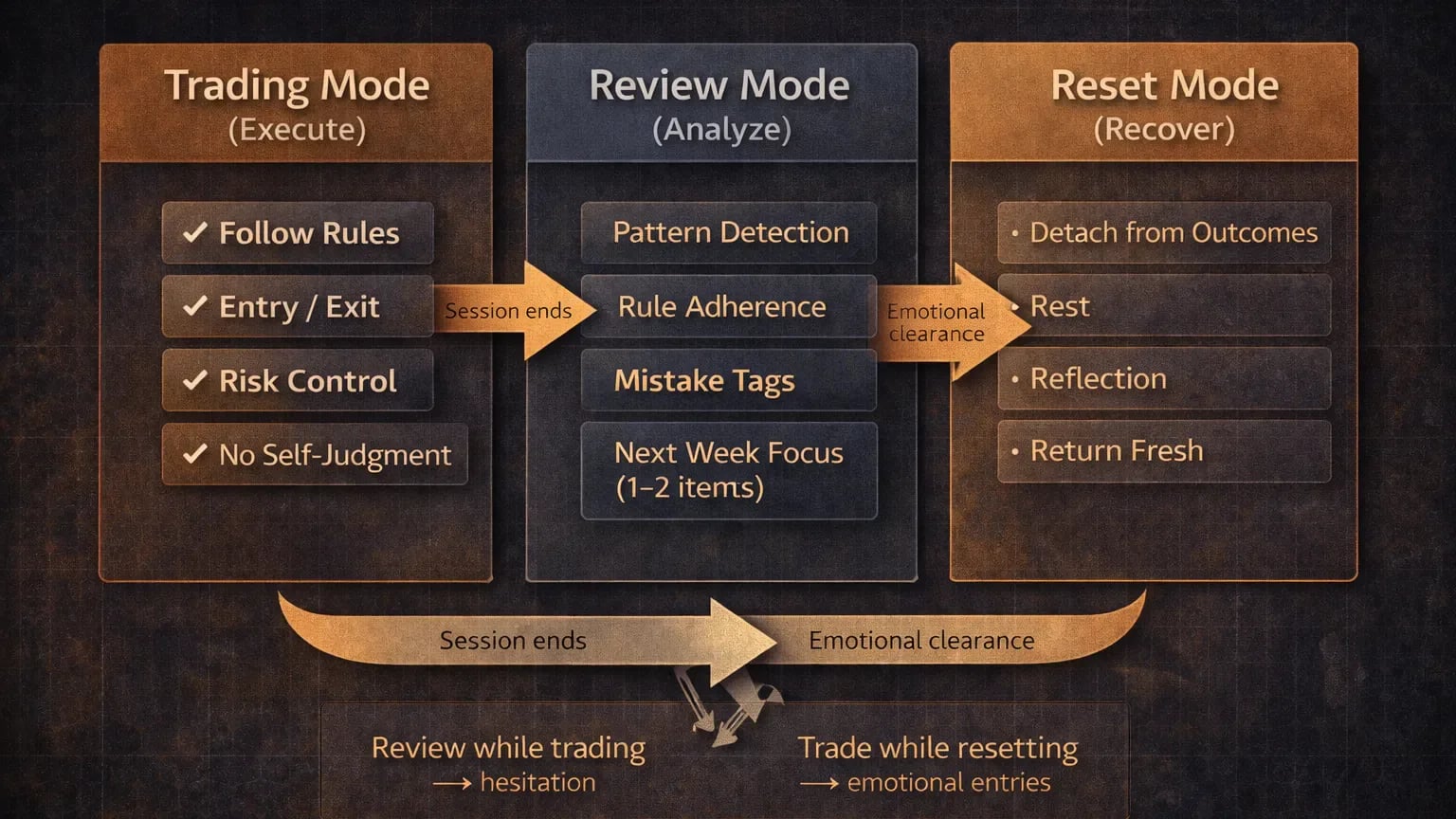
When these phases overlap, confusion follows. If you review while trading, you become self-conscious and hesitant. If you trade while resetting, you are likely acting on emotion rather than clarity. If you skip review, you repeat mistakes blindly.
A simple weekly rhythm could look like this. Early week focused on execution, midweek light check-ins, end of week full review, then a short reset before restarting.
The exact timing is flexible, but the separation is not. Your brain needs to know what job it is doing at any given moment. Over time, this structure reduces stress. You stop carrying unfinished emotional business from one session into the next.
This separation also improves your journaling. Trades logged in trading mode are cleaner. Reviews written in review mode are more objective. Reflections written in reset mode are more honest. The quality of your data and insights rises when each phase has its own space.
A Weekly Review That Works
Most traders say they review their trades, but what they usually mean is that they glance at their PnL and maybe scroll through a few charts. That is not a review. A proper weekly review is where your trading actually improves.
The goal of a weekly review is not to judge yourself. It is to detect patterns that are invisible during execution. You are looking for repetition in behavior, decision quality, and market interaction.
Start by separating results from process. PnL shows outcomes. Your review should focus on behavior. Did you follow your entry rules? Did you respect your stop losses? Did position sizing stay consistent? Did you take trades that were not in your plan? These answers matter more than whether the week was green or red.
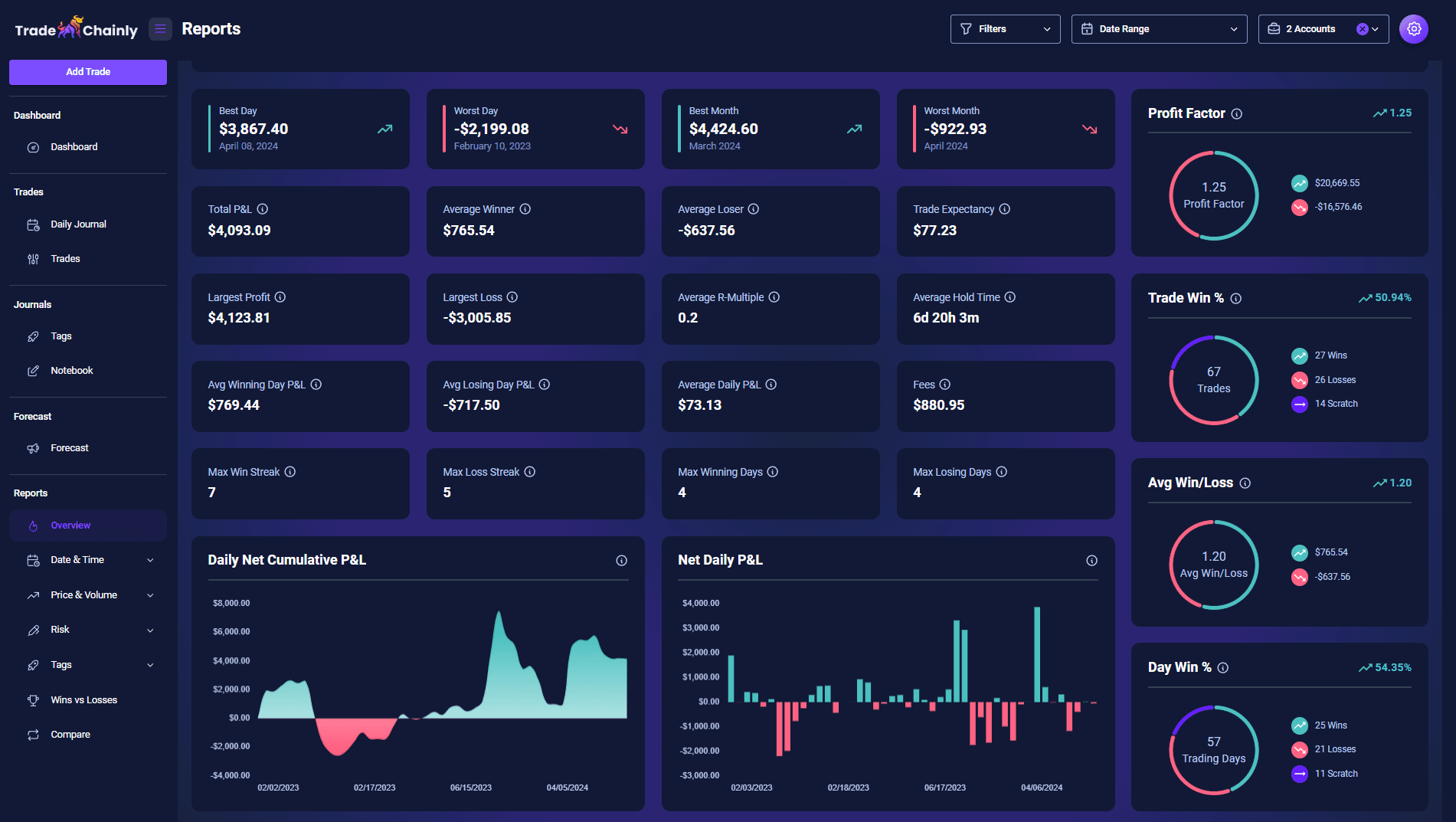
Your review should touch three layers. First, performance metrics. This includes win rate, average win versus average loss, total trades, and risk exposure. These numbers show whether your strategy is functioning at a basic level. Second, execution quality. Here you look at how closely your trades matched your rules. Late entries, early exits, skipped setups, or emotional sizing changes belong here. Third, psychological behavior. This is where you notice patterns like revenge trading, hesitation after losses, overconfidence after wins, or fatigue toward the end of the week.
| Review Area | What to Check | What It Reveals |
|---|---|---|
| Performance Metrics | Total PnL, win rate, average R, number of trades | Whether the strategy is statistically healthy |
| Risk Control | Max drawdown, position sizing consistency | Discipline and capital protection |
| Execution | Rule adherence, entry timing, exit discipline | Quality of decision-making |
| Trade Selection | Setup frequency, skipped or forced trades | Clarity of strategy |
| Emotional Behavior | Overtrading, hesitation, revenge patterns | Psychological stability |
| Process Consistency | Journal completeness, note quality | Seriousness of your workflow |

A strong review ends with adjustment, not emotion. You choose one or two specific things to focus on next week. Maybe tighter stop placement. Maybe fewer impulsive trades. Maybe better patience.
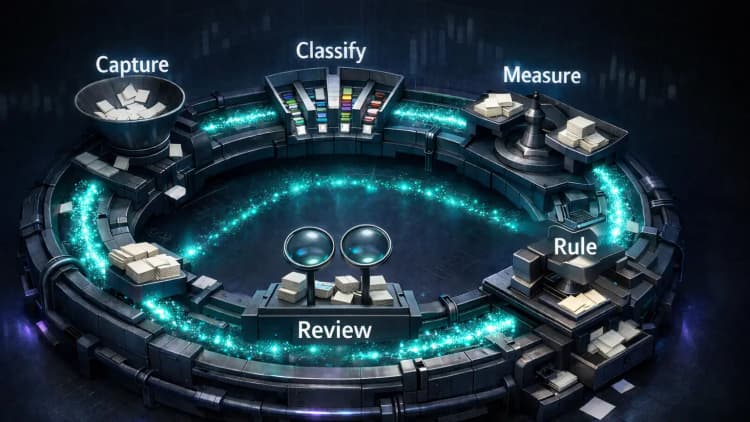
When trades are automatically logged, tagged, and grouped by week, the review becomes frictionless. Instead of reconstructing your activity from memory, you analyze real data. Platforms like TradeChainly make this easier by centralizing trade stats, notes, and tags so patterns show up naturally without manual spreadsheets.
A good weekly review is calm and objective. If it feels heavy or emotional, it is probably happening too close to the trading session. The quality of your insights depends on it.
Journaling to Reinforce Structure
Weekly structure only works if your data reflects it. Without consistent journaling, your trading week becomes a concept instead of a measurable system. The journal is what turns structure into feedback. It shows you whether your execution actually follows your intentions.
When your week is organized, your journal naturally becomes cleaner. Trades are grouped by time period. Patterns appear because the environment is stable. You stop mixing random trades from different mental states and start seeing how you behave inside a controlled framework.
Tags are especially powerful in this context. When you tag trades by setup, mistake, emotion, or market condition, your weekly review becomes sharper. Instead of asking vague questions like “What went wrong this week?” you can ask precise ones. Which setup performed best? Which mistake appeared most often? Which emotion showed up before losing streaks? These questions only make sense when your trading week is structured.
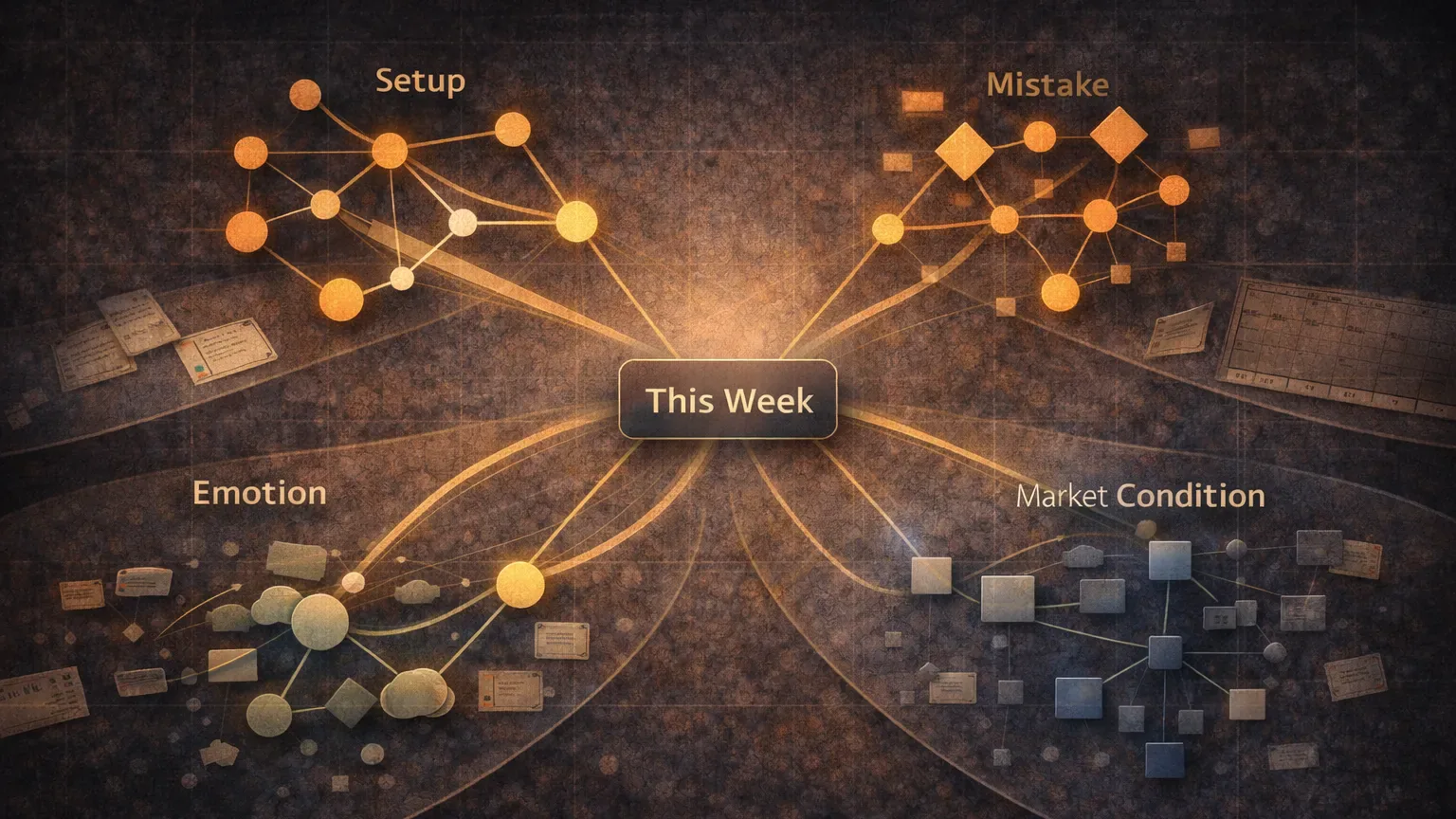
Notes work differently at the weekly level than at the trade level. Trade notes capture execution details. Weekly notes capture behavior patterns. One is tactical. The other is strategic. Together, they show you how your system and your psychology interact over time.
Reports and dashboards are where structure pays off. When your journal is consistent, weekly performance becomes easy to compare. You can look at two different weeks and immediately see differences in trade frequency, risk exposure, execution quality, and emotional stability. Without structure, those comparisons are meaningless.
This is where automation matters. When trades sync automatically and your journal updates in real time, the barrier to consistency disappears. You are no longer choosing between trading and logging. The system does both. Tools like TradeChainly support this kind of workflow by continuously importing trades and letting you focus on analysis instead of data entry.
Over time, journaling stops feeling like a task and starts feeling like part of trading itself. Your week is no longer complete until it has been reviewed and documented. That is when structure becomes habit.
What Breaks Consistency
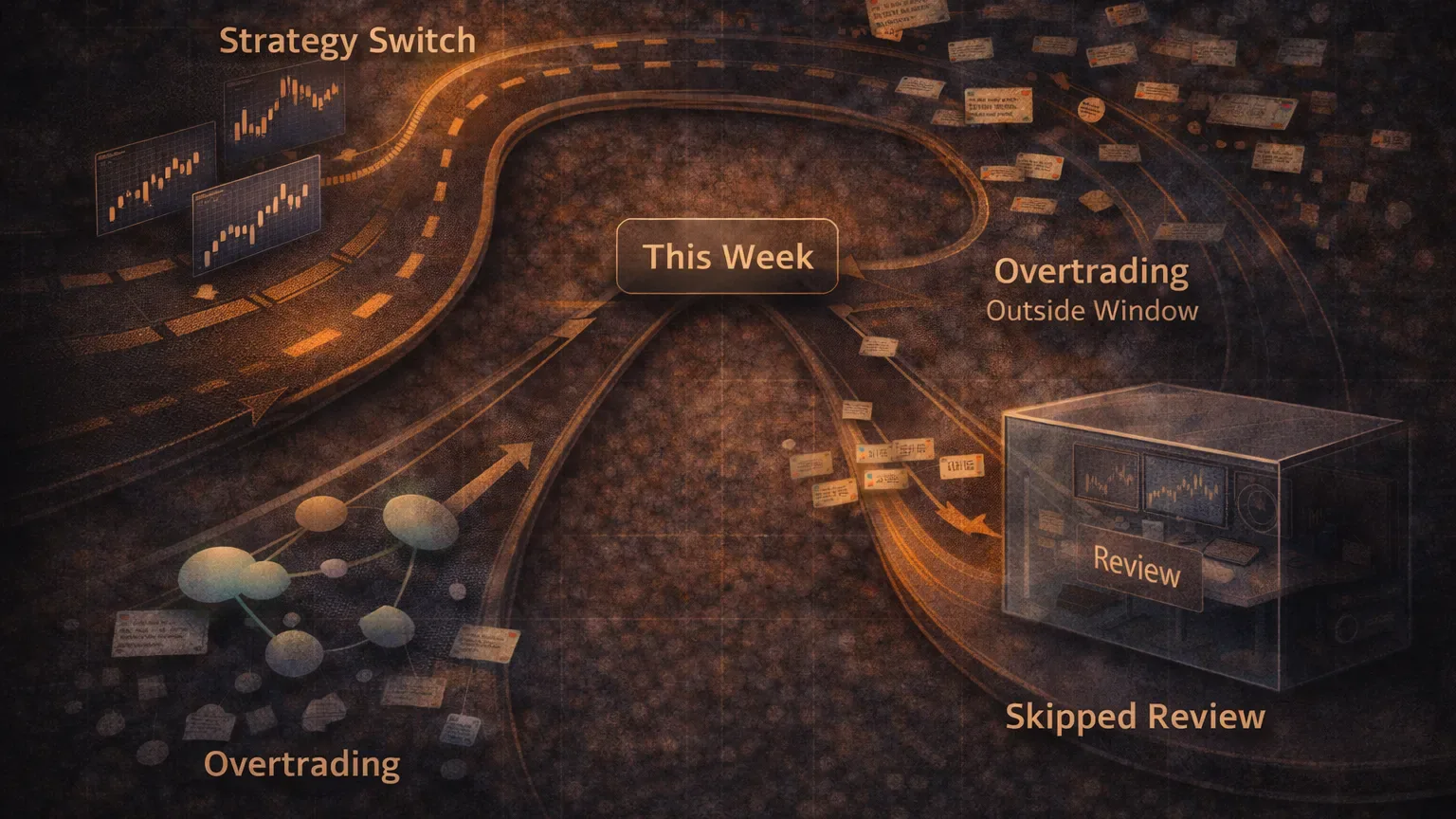
Most traders fail to stay consistent not because they lack structure, but because they quietly sabotage it during the week. The first mistake is changing strategy mid-week. You start with one plan, then after a few losses you switch setups, timeframes, or risk rules. That destroys the integrity of your data. A trading week only means something if the rules stay stable long enough to evaluate them.
Another common mistake is letting one day define the entire week. A bad Monday leads to overtrading on Tuesday. A strong Wednesday leads to reckless sizing on Thursday. When daily emotions take control, the weekly framework collapses. The point of a structured week is to absorb daily variance, not react to it.
Skipping the review when emotions are high is another silent failure. The weeks that feel worst need review the most. Avoiding them reinforces emotional decision-making. Consistency grows when you review even when it is uncomfortable.
Overtrading outside your active window also breaks structure. One impulsive trade late at night or during a low-energy moment contaminates the quality of your data. It turns a clean week into a mixed one. Discipline is not only about taking good trades. It is about not taking unnecessary ones.
Finally, many traders overload their process. They try to track too many metrics, write too much, or change too many things at once. Weekly structure should simplify your trading, not make it heavier. One or two focused improvements per week is enough.
Consistency survives on simplicity and patience. When your week becomes complicated, it stops being repeatable.
Making It Stick
Structure is not about control. It is about clarity. When your trading week has a defined rhythm, decisions become easier, reviews become honest, and progress becomes visible. You stop guessing whether you are improving and start seeing it in your behavior and your data.
Most traders search for consistency in better indicators or new strategies. Consistency comes from repeatable process. A structured trading week gives your effort a shape. It creates a beginning, a middle, and an end.
The more you repeat the same weekly cycle, the more stable your trading identity becomes. You know when you execute. You know when you analyze. You know when you reset. That predictability allows discipline to exist without constant willpower.
Journaling is what locks this structure in place. When your trades, notes, and reviews live inside a clear weekly framework, improvement stops being abstract. You can see patterns form. You can track progress. You can make small adjustments that actually stick. Platforms like TradeChainly support this by removing the friction between trading and tracking, so your week becomes a closed loop of execution, analysis, and refinement.
A trading week that you can repeat, evaluate, and refine is more powerful than any single great trade. Build the structure first. Consistency will follow.