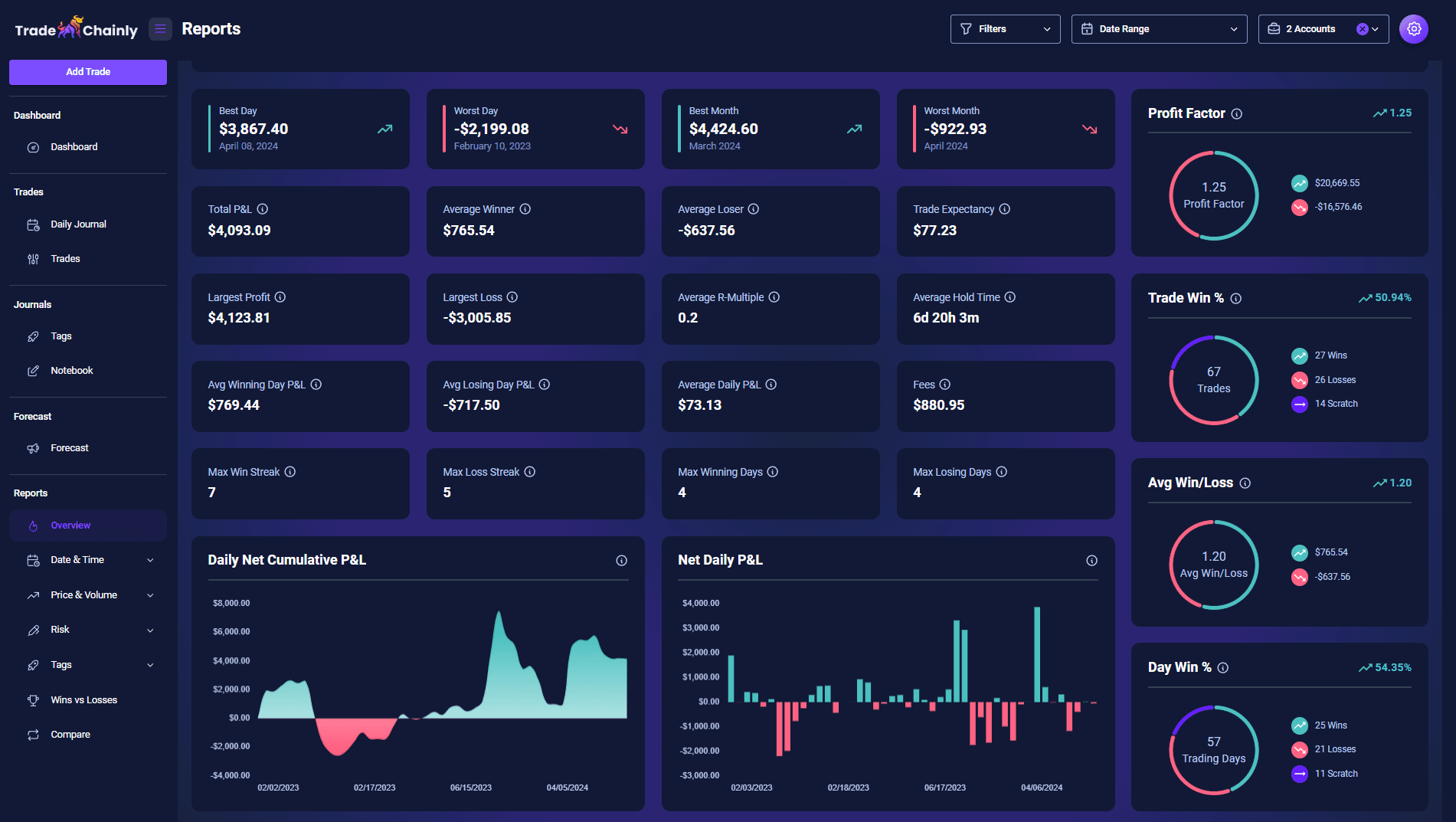

Why Most Post-Session Reviews Break Down
Why do you “review” your trades, then show up tomorrow and do the same things again?
Most traders say they review their trades. In practice, that “review” often means scrolling through a list of positions, glancing at PnL, and writing a few vague notes like “bad entry” or “overtraded.” It feels productive, but it rarely changes how the next session is traded. Days pass, mistakes repeat, and the review becomes a ritual instead of a tool.
The problem is not effort. The problem is structure. A post trade review process only works when it turns activity into feedback. If your review does not change what you do tomorrow, it is not a process. It is documentation.
Crypto trading makes this gap even more obvious. Sessions are fast, volatility is high, and conditions shift quickly. You can take ten or twenty trades in a single day on Binance or Bybit and walk away with a mix of wins and losses that tell you nothing by themselves. Without a system, your brain fills in the story. You remember the painful losses more than the clean executions. You justify bad trades because they worked once. You ignore good trades because they felt boring. Over time, your reviews become emotional narratives instead of objective analysis.

A working post-session review is different. It does not ask, “Did I make money today?” It asks, “What patterns did my behavior create today?” It looks for repetition in setups, in mistakes, in execution quality, and in decision-making. It reduces your session to a few signals that actually matter. That is how improvement becomes measurable.
Trying to review everything breaks most traders. Charts, funding history, trade logs, news, social media. Thirty minutes later you are overwhelmed, unsure what matters, and you stop reviewing consistently. A strong review process is selective. It ignores most information and focuses on the small set of variables that drive performance.
This article is not about writing longer journal entries or becoming more disciplined with notes. It is about building a post trade review process that works even on your worst days. A process that fits into your routine, produces clear signals, and compounds over time. When reviews become simple, structured, and repeatable, they stop feeling like homework and start shaping how you trade.
Turning A Trading Session Into Feedback
Most traders confuse reviewing trades with thinking about trades. They scroll through executions, notice a few obvious mistakes, and move on. That is not a process. A process is something that produces the same type of output every time you use it. If your review looks different every day, it is not structured enough to drive improvement.
A real post trade review process has one core purpose: convert a trading session into actionable feedback. Not motivation. Not validation. Feedback. You should walk away knowing one or two specific things you will change or reinforce in your next session. If nothing changes, the review failed.
There is an important difference between observing results and analyzing behavior. Results are noisy in crypto. A clean setup can lose. A reckless entry can win. When reviews are built around PnL alone, they teach the wrong lessons. Behavior is what compounds. Execution quality, adherence to rules, trade selection, and risk management are what determine long-term performance. A proper review process isolates those factors from random market outcomes.
Your session is raw material. Your trades are unprocessed data. The review process is the machine that turns that data into insight. Without the machine, you are left guessing. With it, patterns become visible. Overtrading shows up. Chasing shows up. Your strongest setups show up. Your weak time windows show up. None of that requires emotion or opinion. It comes directly from structure.
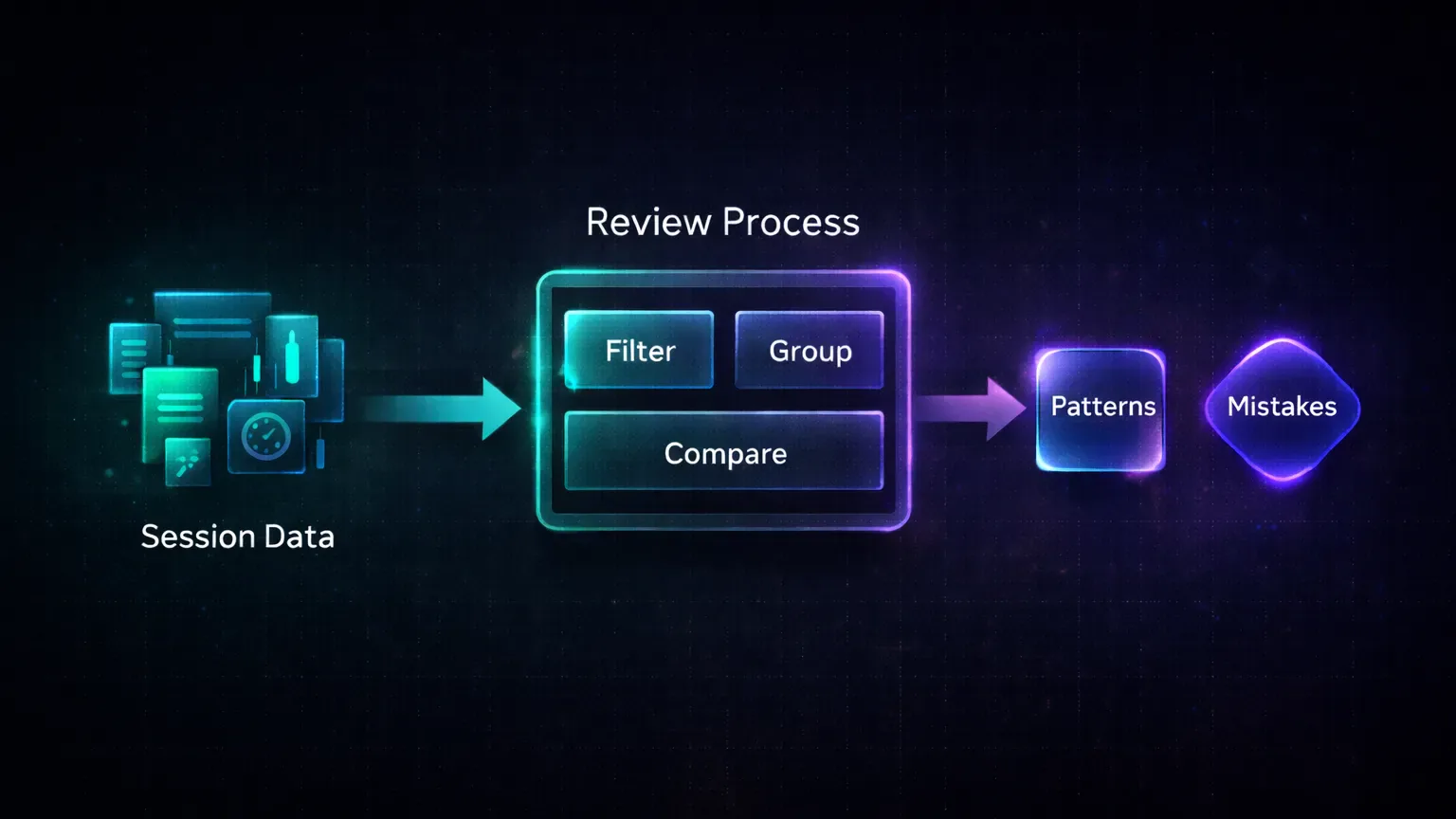
You can also tell if your reviews are real by looking at the output. A working process answers the same three questions every time: what did you execute well, what did you execute poorly, and what should you do differently next session?
If your notes jump between psychology, market commentary, and random observations, the system is broken. A process narrows your attention. It forces your brain to look at the same dimensions every time so comparisons become possible across weeks and months.
A real post trade review process is designed for sustainability. It does not depend on motivation or perfect discipline. It fits into your schedule. It can be done when you are tired, frustrated, or distracted. Crypto trading already demands a lot of mental energy. Your review system should reduce cognitive load, not add to it.
A clean process also separates data collection from interpretation. First you record facts: entries, exits, setups, mistakes, rule adherence. Then you analyze patterns. When traders mix those steps, bias takes over. They explain away mistakes before the data even has a chance to speak.
This is why most post-session reviews fail. They feel reflective but produce no structure. They generate stories instead of signals. A working review process replaces storytelling with measurement and turns experience into something you can actually build on.
Diagnosing Performance With Three Review Layers
A strong post trade review works because it separates your performance into layers. Most traders mix everything together and end up confused about what actually needs fixing. When you break your session into distinct layers, patterns become obvious and improvement becomes much easier to target.
There are three layers that matter in every session: execution, strategy, and behavior.
Execution is about how well you carried out your plan. This includes entries, exits, position sizing, stop placement, and order management. You are not judging whether the trade won or lost. You are judging whether it was executed according to your rules. A losing trade can still be a perfect execution. A winning trade can be a mistake that happened to work. This layer tells you whether your mechanics are solid or sloppy.
Strategy is about what you chose to trade. This includes setup selection, market conditions, timing, and context. Did you trade your strongest setups or everything that moved? Did you trade during your optimal hours or force trades during low-quality periods? Strategy errors are selection errors. They show up when you consistently choose poor opportunities even if your execution is technically correct.
Behavior is about discipline and emotional control. This includes overtrading, revenge trading, hesitation, FOMO, and breaking risk rules. Behavioral issues often hide inside execution or strategy mistakes, but they have different solutions. You cannot fix behavioral problems by changing indicators or setups. You fix them by adjusting rules, limits, and routines.
Most traders only review execution. They look at entries and exits and stop there. Others only review behavior and write pages about emotions without connecting them to data. Very few traders consistently review all three layers in a structured way. That is why improvement feels random.
When you apply this framework, each trade becomes a small data point inside a bigger pattern. A session with negative PnL might still score high in execution and strategy but low in behavior due to overtrading late in the day. Another session might show perfect discipline but weak setup selection. These are very different problems that require very different fixes.
Reviews get easier when you treat them as diagnostic work. You are no longer asking, “Was today good or bad?” You are asking, “Which layer failed today, and why?”

| Review Layer | What It Measures | Examples of Metrics | Key Questions It Answers |
|---|---|---|---|
| Execution | How accurately you followed your trading rules | Entry quality, stop placement accuracy, risk per trade consistency, partial exit execution | Did I trade the plan correctly, regardless of outcome? |
| Strategy | Whether you selected high-quality opportunities | Win rate per setup, expectancy by setup, performance by session time, market condition tags | Am I trading the right setups in the right conditions? |
| Behavior | Discipline and emotional control | Number of rule breaks, trades outside plan, revenge trades, max daily risk violations | Did emotions override my rules today? |
Once you see your performance through these layers, reviews become simpler. You stop trying to fix everything at once. You target one layer at a time. Execution problems get mechanical fixes. Strategy problems get filtering and selection fixes. Behavioral problems get rule and routine fixes.
This layered structure also prevents false confidence. A green day with poor behavior is a warning, not a success. A red day with strong execution is progress, not failure. Over weeks of data, this approach reveals whether you are improving as a trader or just riding market conditions.
A post trade review process becomes useful when it turns random sessions into structured feedback that compounds.
Building Structured Data From Notes, Tags, And Patterns
Most traders start journaling with good intentions and end up with a pile of unstructured notes. “Felt hesitant.” “Chased the breakout.” “Market was choppy.” These observations are not wrong, but they are impossible to analyze at scale. After a few weeks, you cannot answer basic questions like which setups perform best, which mistakes cost you the most, or which emotions correlate with bad decisions. The information exists, but it is trapped in free text.
Unstructured journaling fails because it treats every session as a story instead of as data. Stories feel useful in the moment, but they do not accumulate. Data does. When reviews are built on standardized categories, patterns emerge automatically. You stop relying on memory and start relying on evidence.
The shift is simple in concept and powerful in practice. Instead of writing whatever comes to mind, you describe each trade and session using the same small set of labels every time. These labels act as coordinates. They let you group similar trades, compare sessions, and measure progress.
You only need four types of structure, and they stay the same across months. Setup tags describe why you entered the trade. Breakout, pullback, range rejection, trend continuation, liquidity sweep, funding arbitrage, and so on. Over time, these tags show which ideas actually make money and which only feel good. Mistake tags describe what went wrong when a trade did not follow the plan. Late entry, early exit, oversized position, ignored stop, revenge trade, trading outside session hours. Mistake tags expose the real cost of discipline errors. Market condition tags describe the environment you were trading in. High volatility, low volatility, trending, ranging, news-driven, funding imbalance. Many setups only work in specific conditions. Without tagging them, you will never see that connection. Behavior or emotion tags describe your internal state. Hesitant, impatient, confident, frustrated, FOMO-driven. When combined with mistake tags, these show which emotions precede rule breaks.
Notice what is missing. There is no long narrative. No paragraphs explaining how the market felt. The structure forces clarity. You are reducing complex sessions into consistent categories that your brain can analyze later.
This does not mean you cannot write notes. It means notes become supporting detail instead of the core system. The tags carry the analytics. The notes add context when something unusual happens.

Once your reviews are structured this way, the quality of insight changes. You can ask precise questions. Which setup has the highest expectancy over the last 50 trades? Which mistake appears most often on losing days? Do I break rules more during certain session hours? Does frustration correlate with overtrading?
These questions cannot be answered with free-form journaling. They require structured data.
Platforms like TradeChainly become useful here, not because of features, but because structure is enforced naturally. Trades are imported automatically, tags are applied consistently, and reports surface patterns without manual work. The same approach can be done in spreadsheets, but automation removes friction and keeps reviews sustainable.
When your journal becomes structured, reviews stop being memory-based and start becoming statistical. You no longer trust how a session felt. You trust what the data shows. That is the shift that turns journaling into a real performance tool.
Running a 15-Minute Post-Session Review Routine
A review process only works if you actually do it. That means it must be short, predictable, and mentally light. You should never be wondering what to look at or where to start. The moment your session ends, the process should run almost automatically.
Fifteen minutes is enough to extract everything that matters from a trading session. More time usually leads to overthinking. Less time leads to skipping structure. The goal is not to analyze every trade deeply. The goal is to capture patterns while the session is still fresh and turn them into clean data.
| Time Block | Action | What You Are Doing | Why It Matters |
|---|---|---|---|
| 0–3 min | Session snapshot | Record total trades, net PnL, win rate, and session notes like volatility or news | Creates a high-level context without emotional storytelling |
| 3–6 min | Tag all trades | Apply setup tags, mistake tags, and market condition tags to each trade | Turns raw executions into structured data |
| 6–9 min | Behavior check | Mark any rule breaks, emotional trades, or deviations from plan | Separates discipline issues from technical ones |
| 9–12 min | Pattern scan | Look for repetition in mistakes, setups, or behavior | Identifies the one thing that mattered most today |
| 12–15 min | Action selection | Write one small rule or adjustment for the next session | Converts review into improvement |
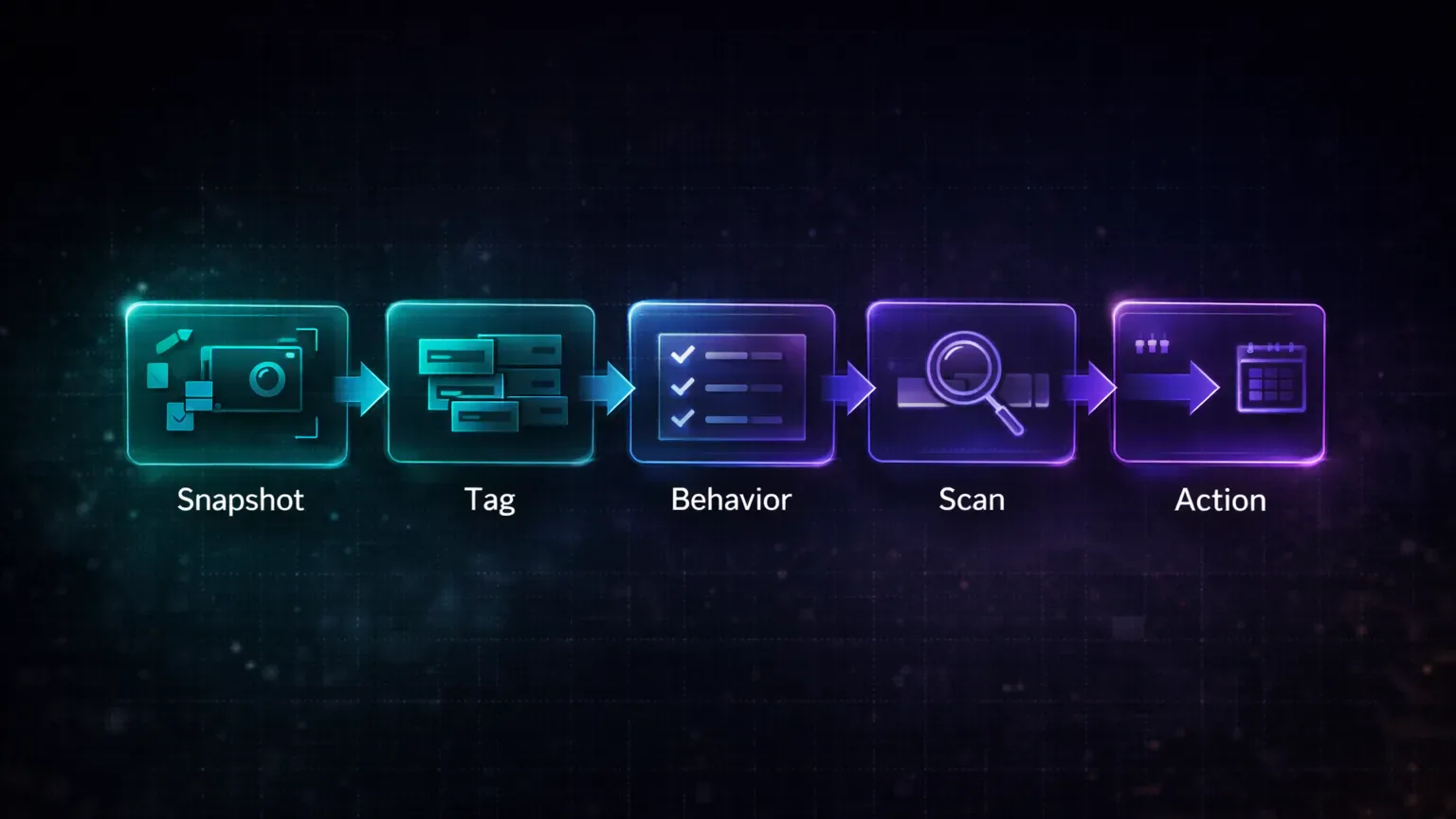
This routine is intentionally narrow. You are not opening charts again. You are not replaying every trade. You are not questioning your strategy. You are simply labeling, categorizing, and extracting one lesson.
The first three minutes prevent emotional distortion. Instead of thinking “today was terrible” or “today was great,” you anchor the session in simple facts. How many trades did you take? What was the net result? What was the general market condition? This creates neutrality.
The next three minutes are the most important. Tagging is where sessions become comparable. When every trade is labeled the same way every day, your journal becomes a dataset instead of a diary. This step is where most traders fail because it feels boring. Boring is good. Boring means it is systematic.
The behavior check is where honesty matters. You are not judging yourself. You are recording whether you followed your own rules. Did you exceed your max daily risk? Did you take trades outside your plan? Did you revenge trade after a loss? These are binary facts, not opinions.
The pattern scan is quick. You are not analyzing deeply. You are simply asking, “What repeated itself today?” It might be:
- The same mistake appearing three times
- One setup dominating both wins and losses
- Discipline breaking late in the session
Finally, the action selection keeps the process grounded. One action only. Not five. Not a complete strategy overhaul. A single adjustment that improves tomorrow by one percent. For example, you might stop trading after two consecutive losses, remove a weak setup from your watchlist, or reduce size on the first trade of the session.
This is where many traders overcomplicate things. Improvement comes from small corrections repeated often, not from massive changes applied rarely.
Once this routine becomes habitual, reviews stop feeling optional. They become part of the trading session itself. You trade, then you extract feedback. That feedback shapes the next session. That loop is what builds consistency.
Turning Reviews Into Action That Changes Tomorrow
A review that does not change your behavior is just analysis. The entire point of a post trade review process is to create small, controlled adjustments that improve future sessions. If you leave your review feeling informed but unchanged, the system is incomplete.
This is where most traders sabotage themselves. They discover five problems and try to fix all five at once. That creates cognitive overload and inconsistency. Improvement works best when it is narrow. One session, one adjustment. That is it.
Your action should always meet three conditions. It must be specific, measurable, and easy to execute. “Trade better” is useless. “Stop trading after two consecutive losses” is actionable. “Avoid FOMO” is vague. “No market orders on breakouts” is concrete.
The action must also map to one of the three review layers. Execution actions adjust how you place or manage trades. Strategy actions adjust what you choose to trade. Behavior actions adjust when you stop, reduce risk, or pause.
This keeps fixes aligned with the actual problem. If your review shows clean execution but poor setup selection, the solution is filtering, not discipline. If execution and strategy are solid but behavior breaks late in the session, the solution is a rule that protects you from yourself.
Another mistake is turning actions into permanent rules too early. Think in experiments. Apply the adjustment for five sessions. Observe the effect. Keep it if performance or discipline improves. Discard it if it does not. This prevents your rule set from becoming bloated and rigid.
This is also where structured journaling systems show their real value. When your trades, tags, and reports update automatically, you can see whether an action worked without relying on memory. You can compare before and after periods objectively. TradeChainly, for example, makes this easier by surfacing behavior patterns through tags and performance reports, so actions are evaluated with data instead of feelings.
Over time, this creates a powerful loop: Review → One adjustment → Trade → Measure → Refine
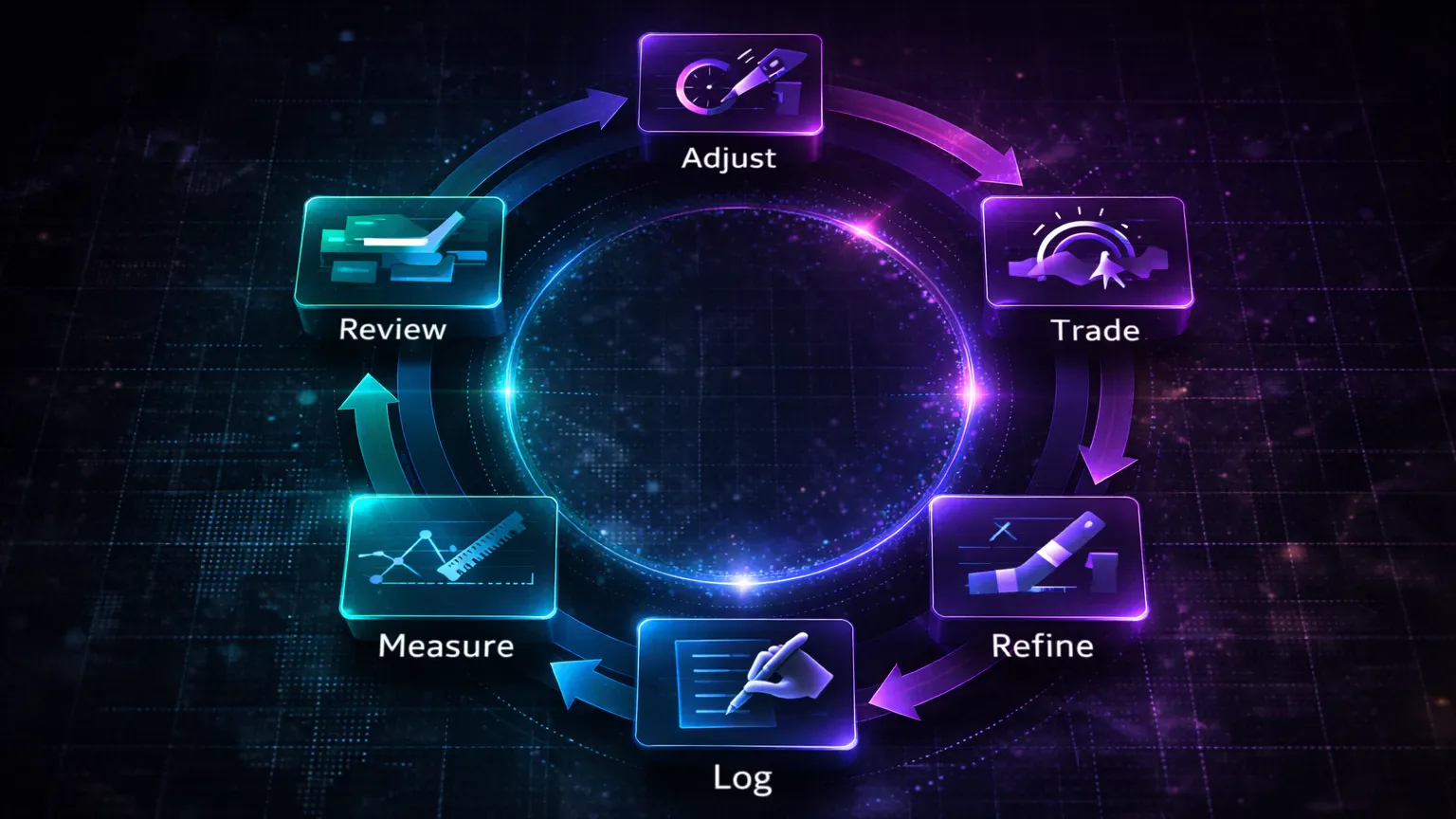
That loop is what turns journaling from reflection into engineering. You are no longer hoping to improve. You are testing changes against real performance data and keeping what works.
Making Consistency Compounding, Not Optional
A post trade review process does not need to be deep, emotional, or time-consuming to be effective. It needs to be consistent. Fifteen focused minutes after every session will do more for your trading than occasional long reviews that happen only when you feel motivated.
The traders who improve fastest are not the ones who analyze the hardest. They are the ones who close the feedback loop every single day. They trade, they extract patterns, they apply one small correction, and they repeat. Over weeks and months, those small adjustments compound into better discipline, cleaner execution, and stronger strategy selection.
When your reviews become predictable, they stop feeling like work. They become part of your trading routine. You stop relying on memory, emotions, or hope. You rely on structure and data.
Whether you use a spreadsheet, a notebook, or a platform like TradeChainly, the principle is the same. Your review process must turn sessions into signals and signals into action. That is what transforms trading from repetition into skill.
If your current reviews feel random or unproductive, simplify them. Add structure. Reduce the time. Focus on one change per session. The results will show up quietly, then permanently.